Introduction
Body fat loss can feel confusing when every week brings a new diet, workout trend, or “secret” method. The truth is much simpler. If you want lasting body fat loss, you need a plan you can actually follow, not a short burst of extreme effort.
For most beginners and intermediate exercisers, the goal is not just to lose weight fast. It is to lose fat while keeping muscle, energy, and motivation. That is what creates a leaner body, better health, and results you can maintain.
Table of Contents
What body fat loss really means
Why a calorie deficit matters
The best workouts for body fat loss
Nutrition habits that make fat loss easier
Mistakes that slow progress
Actionable tips
FAQ
Conclusion
What Body Fat Loss Really Means
Body fat loss is different from simple weight loss. Your body weight can change because of water, food volume, muscle gain, or fat loss. That is why the number on the scale does not always tell the full story.
If your main goal is body fat loss, focus on improving body composition. That means reducing fat while keeping as much lean muscle as possible. This is especially important because muscle helps you look firmer, perform better, and support a healthy metabolism.
A good example is someone who loses only a small amount of scale weight but notices looser clothes, a smaller waist, and better muscle definition. That is often a sign of successful body recomposition.
Why a Calorie Deficit Matters
At the center of body fat loss is energy balance. To lose fat, you need to eat fewer calories than your body uses over time. This is called a calorie deficit.
That does not mean starving yourself. In fact, aggressive dieting often backfires. Very low-calorie plans can increase hunger, reduce training performance, and make it harder to stay consistent. A moderate deficit is usually the better choice because it supports steady progress without draining your energy.
A practical approach is to reduce calorie intake slightly while increasing daily movement. This creates a manageable deficit and feels less extreme.
Build a Moderate Deficit
A sustainable pace is usually better than chasing dramatic weekly changes. Slow fat loss often leads to better muscle retention and fewer rebound problems later.
Here is what helps:
Eat slightly less than your maintenance calories.
Keep portions reasonable instead of cutting entire food groups.
Be patient and track trends over several weeks, not days.
Prioritize Protein
Protein matters during body fat loss because it helps preserve muscle and keeps you fuller for longer. Many people fail not because their plan is “wrong,” but because they are hungry all the time.
Simple protein sources include:
Eggs
Greek yogurt
Chicken
Fish
Lean beef
Tofu
Beans and lentils
Aim to include a protein source in each meal. This makes fat loss feel much easier.
The Best Workouts for Body Fat Loss
You do not need endless cardio to lose body fat. The best training plan combines strength training, movement, and some cardiovascular work.
Strength training should be the foundation. When you lift weights or train with resistance, you give your body a reason to keep muscle while losing fat. That helps you look leaner and supports long-term metabolism.
Good beginner-friendly movements include:
Squats
Push-ups
Rows
Lunges
Shoulder presses
Hip hinges
If you train three to four times per week with progressive overload, you can make excellent progress.
Cardio Helps, But It Is Not Magic
Cardio can support body fat loss by increasing calorie burn and improving heart health. Walking, cycling, jogging, and rowing are all useful options.
That said, cardio should support your plan, not carry it. Many people overestimate how many calories they burn during exercise and then eat more than they realize. A better strategy is to use cardio as a tool while keeping nutrition in check.
Walking is especially underrated. A daily step goal can improve calorie expenditure without adding too much stress or recovery demand.
Nutrition Habits That Make Fat Loss Easier
You do not need a perfect diet. You need repeatable habits.
Start by building meals around whole, filling foods. When most of your diet comes from minimally processed foods, controlling calories becomes much easier. These foods usually provide more volume, fiber, and nutrients for fewer calories.
A simple plate method works well:
Half the plate with vegetables or fruit
One quarter with protein
One quarter with quality carbs such as rice, potatoes, oats, or whole grains
Add healthy fats in sensible amounts
This does not mean you must avoid treats forever. A sustainable fat loss plan leaves room for flexibility. If you enjoy dessert or restaurant meals sometimes, you are more likely to stay consistent.
Control Portions Without Obsession
Portion control does not have to become stressful. You can improve awareness by:
Eating slowly
Using smaller plates when helpful
Serving food once instead of grazing
Planning snacks instead of eating randomly
For example, someone trying to improve body fat loss might swap mindless evening snacking for a planned high-protein snack such as yogurt with fruit. That single habit can reduce calories without feeling restrictive.
Mistakes That Slow Progress
Many fat loss struggles come from common mistakes, not lack of effort.
One major mistake is relying on motivation alone. Motivation comes and goes. Habits are what carry you through busy weeks, social events, and low-energy days.
Another mistake is doing too much too soon. Starting with daily hard workouts and a very strict diet often leads to burnout. A better plan is one you can follow even when life gets messy.
Other common errors include:
Skipping strength training
Eating too little protein
Drinking many calories without noticing
Sleeping too little
Judging progress only by the scale
Track More Than Body Weight
The scale can help, but it should not be your only tool. Better progress markers include:
Waist measurements
Progress photos
Gym performance
Energy levels
How your clothes fit
A real-life example: a beginner may stay at nearly the same body weight for two weeks but lose waist size and gain strength. That can still mean body fat loss is happening.
Actionable Tips
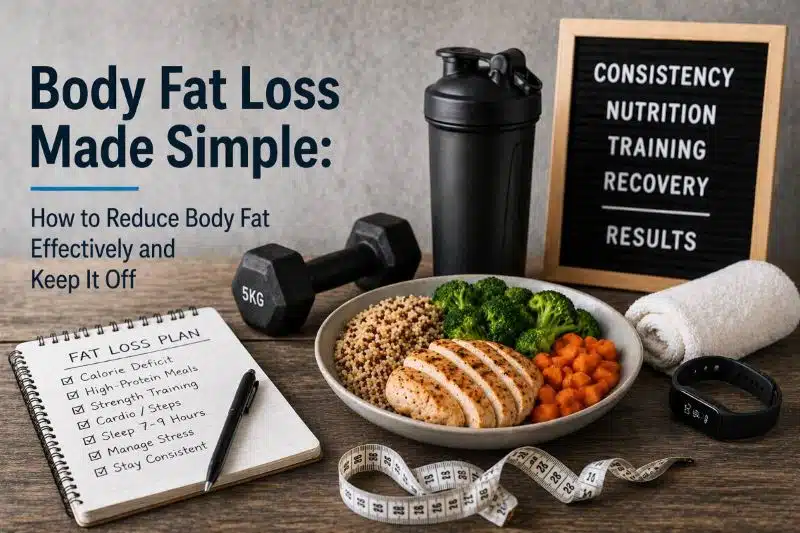
Strength train at least three times per week.
Include protein in every meal.
Walk more each day, especially if you sit for work.
Keep mostly whole foods at home to reduce impulsive snacking.
Sleep well, because poor sleep often increases hunger and cravings.
Measure progress every two to four weeks instead of every day.
Choose a plan you can follow for months, not just for one intense week.
FAQ
Is body fat loss the same as weight loss?
No. Weight loss includes changes from water, muscle, and food weight, while body fat loss specifically means reducing stored fat.
How fast should I aim to lose body fat?
A steady, moderate pace is usually best. Faster is not always better, especially if it leads to muscle loss, fatigue, or rebound eating.
Do I need to cut carbs to lose body fat?
No. You can lose body fat with carbs in your diet as long as your total calorie intake supports a deficit and your meals are balanced.
What is the best exercise for body fat loss?
There is no single best exercise. A combination of strength training, daily movement, and some cardio works best for most people.
Why am I training hard but not losing body fat?
The most common reasons are eating more than expected, inconsistent habits, low daily movement outside the gym, poor sleep, or expecting results too quickly.
Conclusion
Effective body fat loss is not about suffering through extreme diets or trying random shortcuts. It is about building a smart calorie deficit, training to keep muscle, and repeating simple habits long enough for results to show.
If you want your body fat loss results to last, focus on consistency over perfection. Start with a few key habits, stick with them, and let your progress build week by week.
