
Introduction
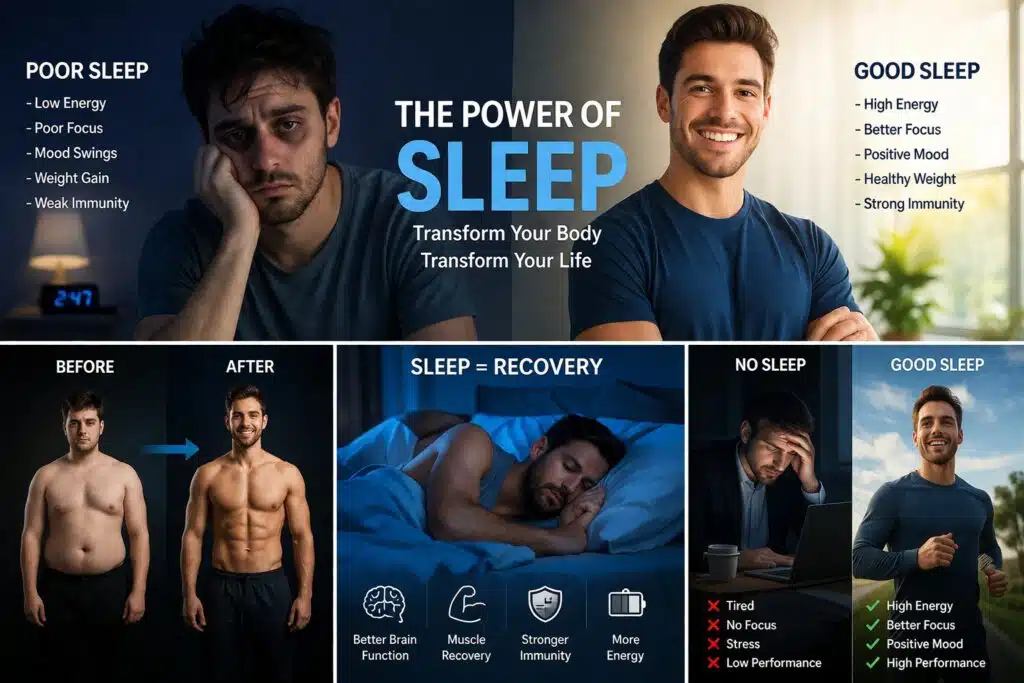
Ask any fitness enthusiast about the three pillars of success, and you’ll likely hear “diet, exercise, and consistency.” But there’s a critical fourth pillar that most people ignore: sleep. While pumping iron and counting calories feel productive, the real magic happens when your head hits the pillow. Your body doesn’t build muscle in the gym—it builds muscle during recovery, and that recovery depends almost entirely on quality sleep.
Many fitness beginners obsess over their workout routine and macros while treating sleep like an afterthought. They stay up late scrolling social media, sacrifice hours of rest to work longer, or think that pushing through fatigue shows dedication. The irony? This mindset sabotages their fitness gains. In this article, we’ll explore the science behind sleep and athletic performance, showing you why prioritizing rest isn’t lazy—it’s strategic.
Why Sleep Is Critical for Workout Performance
Your workout is just the stimulus. Sleep is where the adaptation happens. Here’s why quality rest is non-negotiable for fitness success:
Energy Levels and Stamina
Sleep directly fuels your body’s energy reserves. During deep sleep, your body restores glycogen—the primary carbohydrate stored in muscles that powers your workouts. When you’re well-rested, you have more energy to crush your training sessions. Conversely, poor sleep depletes these energy stores, leaving you feeling sluggish and weak at the gym.
Think of glycogen as your muscle’s fuel tank. A full tank means explosive lifts and sustained endurance. An empty tank means struggling with basic movements. That’s why athletes who get adequate sleep perform significantly better in both strength and endurance activities.
Strength and Endurance Performance
Research consistently shows that sleep directly impacts your physical performance. Athletes who get proper rest react faster, lift heavier weights, run longer distances, and maintain better form throughout their workouts. The difference isn’t subtle—studies have demonstrated measurable improvements in strength, speed, and endurance simply from optimizing sleep.
When you’re sleep-deprived, your nervous system can’t fire optimally. Your muscles don’t generate as much force, and your body defaults to slower, less efficient movement patterns. This isn’t a mindset issue; it’s neurology.
Mental Focus and Coordination
Fitness isn’t just physical—it’s mental. A well-rested brain maintains better focus, makes sharper decisions, and coordinates movements more precisely. This means safer workouts with better form and fewer mistakes. Your motor cortex—the brain region controlling movement—actually “rehearses” the movement patterns you practiced, strengthening the neural pathways that control coordination and technique.
This neural consolidation only happens during quality sleep. Skip sleep, and you’re not just tired—you’re literally undoing the motor learning from your workouts.
Sleep and Muscle Growth: The Recovery Revolution
Building muscle isn’t complicated: create micro-tears through resistance training, provide adequate protein and calories, then let your body repair itself stronger. The problem? That repair happens almost exclusively during sleep.
How Growth Hormone Powers Muscle Recovery
During deep sleep, your body releases a flood of growth hormone—often called the “fitness fairy godmother” of hormones. This growth hormone is absolutely essential for muscle repair and recovery after workouts. It signals your body to prioritize rebuilding damaged muscle tissue and making it stronger and more resilient.
Without adequate deep sleep, your body simply doesn’t produce enough growth hormone. The muscle tissue damaged during your workout sits there, unrepaired, leading to prolonged soreness, weakness, and frustration.
The Muscle Repair Process
Here’s what happens during quality sleep: Your body enters repair mode, tissue that was damaged during training gets rebuilt, and hormones like testosterone are optimized. But the process is even more specific than that. During deep sleep, muscle protein synthesis—the process your body uses to build new muscle proteins—accelerates dramatically. This is where actual muscle growth occurs.
A landmark study found that restricting sleep to just 4 hours per night for five nights reduced myofibrillar protein synthesis by approximately 18–19% compared to normal sleep. This direct suppression of muscle-building capacity explains why sleep-deprived people often plateau in their progress despite training hard and eating right.
Optimal Sleep Duration for Athletes
For general fitness enthusiasts, 7–9 hours of sleep per night is the optimal range. This window allows enough time for multiple complete sleep cycles, including the deep sleep stages where growth hormone is released and muscle repair occurs.
If you’re an serious athlete or doing high-intensity training, you might benefit from 8–10 hours, as your body needs extra recovery time due to the increased training stress. The bottom line: more sleep rarely hurts, and less than 6 hours consistently impairs muscle growth and recovery.
The Dark Side: Impact of Sleep Deprivation
What happens when you don’t prioritize sleep? The consequences go far beyond feeling tired.
Chronic Fatigue and Decreased Performance
Sleep deprivation doesn’t just make you feel groggy—it actively impairs your ability to perform. You’ll notice decreased strength, slower running times, and earlier fatigue during workouts. Your muscles feel heavy, your motivation tanks, and what should be a challenging but rewarding session becomes a slog through mud.
This fatigue compounds over time. One bad night won’t destroy your progress, but chronic sleep debt creates a downward spiral: poor performance leads to less effective workouts, which leads to slower progress, which leads to frustration and often, people giving up entirely.
Elevated Injury Risk
Here’s a sobering reality: sleep deprivation significantly increases your risk of getting injured. When you’re sleep-deprived, your reaction time slows, your coordination falters, and your balance becomes compromised. During strength training, these deficits become dangerous—you might lose grip on a heavy bar, miss a landing, or collapse under load.
Additionally, sleep deprivation impairs the body’s ability to heal existing micro-injuries. Over time, minor aches and pains develop into serious injuries because your body never gets adequate recovery time.
Hormonal Chaos and Fat Storage
Sleep deprivation wreaks havoc on your hormonal balance. Cortisol (your stress hormone) remains elevated, leptin (fullness signal) drops, and ghrelin (hunger signal) spikes. The result? You become hungrier, store more fat, and struggle to lose weight even while training hard. Your body shifts into a catabolic state where it’s actually breaking down muscle for energy instead of building it.
Additionally, elevated cortisol actively interferes with muscle protein synthesis, making it harder to build muscle despite your best efforts in the gym.
Sleep Quality Matters: Good Sleep vs. Poor Sleep
How Many Hours of Sleep Do You Need?
The answer depends on your fitness level and training intensity, but science gives us clear guidelines.
For General Fitness Enthusiasts: 7–9 hours per night is the sweet spot. This provides enough time for multiple complete sleep cycles (each lasting about 90 minutes), ensuring you get sufficient deep sleep where most recovery occurs.
For Serious Athletes: 8–10 hours is often beneficial. Athletes in high-intensity training programs accumulate more microtrauma and need extra recovery time. Professional athletes often prioritize sleep as seriously as they prioritize training, and for good reason.
Individual Variation: Some people genuinely function well on 7 hours; others need 9. Track your performance—if you’re constantly fatigued despite training, your sleep might be insufficient. Also consider that as you age or train harder, your sleep needs increase.
The Role of Sleep Stages in Fitness
Not all sleep is equal. Different stages serve different purposes.
Light Sleep (Stages 1–2): This is the transition into sleep and lighter sleeping stages. While important for overall rest, light sleep doesn’t provide the deep recovery athletes need. It accounts for about 50% of total sleep.
Deep Sleep (Slow-Wave Sleep): This is where the magic happens. Growth hormone peaks, protein synthesis accelerates, and major tissue repair occurs. Deep sleep accounts for about 15–20% of total sleep in young adults but decreases with age. Maximizing deep sleep through good sleep hygiene is crucial for fitness goals.
REM Sleep (Rapid Eye Movement): This stage is vital for cognitive function, mood regulation, and neural consolidation—including the motor learning from your workouts. Your brain essentially “replays” movement patterns, strengthening the neural pathways that control coordination and technique.
Practical Tips to Improve Sleep Quality for Better Workouts
Establish a Consistent Sleep Routine
Your body thrives on consistency. Go to bed and wake up at the same time every day—even on weekends. This trains your circadian rhythm (your body’s internal clock) to naturally produce melatonin at the right times, making sleep easier and deeper. After just two weeks of consistency, most people report significantly better sleep quality.
Minimize Screen Time Before Bed
Phones, tablets, and computers emit blue light, which suppresses melatonin production and tricks your brain into thinking it’s daytime. Stop using screens at least one hour before bed. Instead, try reading, stretching, or meditation. Your sleep quality—and your recovery—will improve noticeably.
Optimize Your Nutrition for Sleep
What you eat affects how you sleep. Avoid large meals close to bedtime, but don’t go to bed hungry. Consider a light snack combining carbs and protein (like Greek yogurt with berries) 1–2 hours before sleep. This stabilizes blood sugar and provides amino acids needed for nighttime recovery.
Limit caffeine after 2 PM, as it has a half-life of 5 hours—meaning half of a 2 PM coffee is still in your system at 7 PM, affecting sleep quality.
Create a Sleep-Friendly Environment
Your bedroom should be cool (around 65–68°F), dark, and quiet. Invest in blackout curtains, use a white noise machine if needed, and keep your bed reserved for sleep (not work or scrolling). A good mattress and pillows matter more than most people realize.
Consider Sleep Support Supplements
If you’re doing everything right but still struggling with sleep, supplements can help. Quality sleep support products can enhance deep sleep and speed up recovery. Try Yu Sleep for better recovery and deeper sleep, which is specifically designed to support athletes and active individuals. Yu Sleep contains ingredients that promote deeper sleep stages, helping your body maximize the recovery time you’ve dedicated to rest.
FAQ: Sleep and Fitness Performance
Q: Can I make up for lost sleep on the weekend?
A: Partially, but it’s not ideal. While catching up on sleep helps, chronic sleep debt during the week still impairs performance and muscle growth. Consistency is more important than one massive sleep session. Think of it like nutrition—you can’t eat healthy on weekends and expect to offset a week of junk food.
Q: Does napping hurt nighttime sleep?
A: Short naps (20–30 minutes) can boost recovery without disrupting nighttime sleep. Longer naps can make nighttime sleep harder. If you need to nap, do it early in the afternoon, not evening.
Q: How long after a workout should I sleep?
A: Your body begins recovery immediately, so sooner is better. Ideally, get a good night’s sleep the same night you trained. If you’re training late in the evening, that’s another reason to move workouts earlier in the day—it gives your body more time to cool down before sleep.
Q: Does alcohol improve sleep?
A: No. Alcohol might make you fall asleep faster, but it severely disrupts sleep quality, reducing deep sleep and REM sleep. You’ll wake up feeling less rested despite getting “enough” hours.
Q: How does sleep affect fat loss?
A: Dramatically. Poor sleep increases cortisol and hunger hormones while decreasing fullness hormones. This makes you overeat and store more fat. Additionally, sleep deprivation impairs muscle protein synthesis, so your body preferentially burns muscle instead of fat. For fat loss, sleep is as important as diet and exercise.
Integrating Sleep with Your Fitness Tools
To truly optimize your fitness, use our BMI Calculator to establish your baseline fitness metrics, then track your progress as you prioritize sleep alongside training and nutrition. Many people are surprised to discover their body composition improves more with better sleep than with minor diet tweaks.
Similarly, use our Calorie Calculator to ensure you’re eating enough to support your training and recovery. Proper nutrition combined with adequate sleep creates the ideal environment for muscle growth and performance improvements.
Conclusion
Sleep isn’t a luxury or something to sacrifice for productivity—it’s a performance-enhancing tool as important as your training program and diet. The research is unequivocal: quality sleep improves strength, accelerates muscle recovery, prevents injury, and optimizes hormones crucial for fitness success.
If you’re frustrated with slow progress despite working hard, the missing piece might not be a new workout program or supplement—it might be sleep. Start tonight: establish a consistent bedtime, optimize your bedroom environment, limit screens before bed, and aim for 7–9 hours of uninterrupted rest. Your muscles will recover faster, your workouts will feel stronger, and your fitness gains will accelerate noticeably within 2–3 weeks.
Remember, greatness isn’t just built in the gym. It’s built during the quiet hours when your body repairs, adapts, and grows stronger. Make sleep a priority, and you’ll transform not just your fitness results, but your overall health and vitality.
Key Takeaways
Sleep fuels performance: 7–9 hours per night ensures optimal energy, strength, and endurance during workouts
Growth happens during sleep: Deep sleep releases growth hormone and maximizes muscle protein synthesis—the actual muscle-building process
Sleep deprivation kills gains: Just 5 nights of 4-hour sleep reduces muscle protein synthesis by 18–19%, directly impairing muscle growth
Recovery is multifaceted: Sleep optimizes hormones, reduces inflammation, consolidates motor learning, and prevents injury
Consistency beats perfection: A regular sleep schedule is more important than occasional long sleep sessions
