
Introduction
Many people blame a “slow metabolism” when fat loss feels difficult. Sometimes metabolism does play a role, but not in the way social media often suggests. Most of the time, the real issue is a mix of calorie intake, daily activity, muscle mass, sleep, and consistency.
Understanding BMR and metabolism gives you a much clearer view of how fat loss works. Once you know what actually affects calorie burn, you can stop chasing gimmicks and start focusing on habits that move the needle.
Table of Contents
What BMR means
What metabolism really includes
How metabolism affects fat loss
Factors that influence calorie burn
Metabolism myths to stop believing
Actionable tips
FAQ
Conclusion
What BMR Means
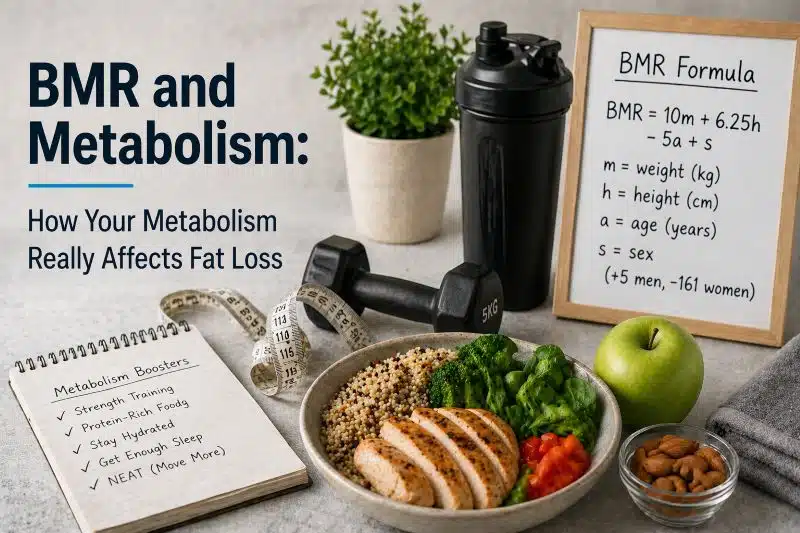
BMR stands for basal metabolic rate. It is the number of calories your body needs at complete rest to keep you alive. This includes breathing, circulation, body temperature regulation, and basic organ function.
In simple terms, BMR is the energy cost of staying alive before exercise or daily movement is added. That means even if you stayed in bed all day, your body would still burn calories.
BMR is a big part of total daily calorie burn, but it is not the whole picture.
What Metabolism Really Includes
When people say “metabolism,” they usually mean how many calories their body burns in a day. That total includes several parts:
BMR, which is the largest part for most people
Daily movement, such as walking, standing, and chores
Structured exercise
The energy used to digest food
This matters because metabolism is not fixed. Some parts change based on how active you are, how much muscle you have, how much you eat, and how well you recover.
That is why two people of similar size can have different total calorie needs.
How BMR and Metabolism Affect Fat Loss
Fat loss happens when your body uses more energy than it receives from food over time. Your metabolism affects how large or small that gap is.
If your daily calorie burn is higher, it may be easier to create a deficit without feeling overly restricted. If your calorie burn is lower, you may need more awareness around portions and activity.
But this does not mean you are stuck with a “bad metabolism.” Many people underestimate how much control they have over the habits that influence total daily energy expenditure.
Muscle Mass Matters
One of the most important factors in BMR and metabolism is lean muscle mass. Muscle tissue requires energy to maintain, so people with more muscle often burn more calories overall than those with less muscle.
This does not mean lifting weights will instantly transform your metabolism. The effect is real, but it builds over time. Still, strength training is one of the smartest long-term strategies for improving body composition and supporting calorie burn.
For beginners, even modest muscle gain can make a difference in how the body looks and performs during a fat loss phase.
Daily Movement Is Often the Hidden Factor
Many people focus only on workouts, but everyday movement can have a major impact on metabolism. Walking, standing, cleaning, taking stairs, and moving around more during the day can significantly change calorie expenditure.
This is why someone who trains for one hour but sits the rest of the day may burn fewer calories than expected. On the other hand, a person who walks often and stays active outside the gym may support fat loss more easily.
If fat loss has stalled, increasing daily steps is often one of the simplest solutions.
Dieting Can Affect Metabolism
Long periods of aggressive dieting can reduce calorie burn. As body weight drops, the body usually needs fewer calories. On top of that, people often move less when they are tired and underfed.
This is sometimes called metabolic adaptation. It does not mean your metabolism is broken. It usually means your body is adjusting to lower energy intake and body size.
The answer is not panic. The answer is smarter planning:
Avoid extreme deficits
Keep protein high
Continue strength training
Use diet breaks when appropriate
Be patient with slower progress
Sleep, Stress, and Recovery Matter Too
BMR and metabolism are not only about food and exercise. Sleep and stress also influence results.
Poor sleep can increase hunger, reduce training performance, and make you less active during the day. Chronic stress can also affect appetite, cravings, and recovery. Even if calorie burn is not massively changed, these factors often make fat loss harder in real life.
That is why sustainable fat loss is never just a math problem. Your lifestyle shapes how easy or difficult that math becomes.
Metabolism Myths to Stop Believing
There are many myths around BMR and metabolism. Some of the biggest ones include the idea that eating one special food will “boost” metabolism dramatically or that skipping one meal permanently slows fat loss.
The truth is much less dramatic:
No single food melts fat
Tiny meal timing tricks do not beat consistent habits
Sweating more does not mean you are burning more fat
Fast metabolisms are not always the main reason some people stay lean
Supplements cannot replace a calorie deficit and regular activity
A cup of coffee or a spicy meal may have a small temporary effect, but it will not overcome poor overall habits.
A Real-Life Example
Consider two office workers with similar body weight. One trains three times per week, walks after meals, stands often, and sleeps well. The other does one hard workout on the weekend but is mostly inactive and sleeps poorly.
Even if their BMR is similar, their total daily calorie burn and fat loss progress can look very different. This is why lifestyle patterns matter more than quick fixes.
Actionable Tips
Strength train at least two to four times per week.
Increase daily steps before adding extreme cardio.
Eat enough protein to support muscle retention.
Avoid crash diets that leave you exhausted and less active.
Sleep consistently to support appetite control and recovery.
Reassess calorie intake as body weight changes over time.
Focus on habits that raise total daily movement, not only gym sessions.
FAQ
What is the difference between BMR and metabolism?
BMR is the calories your body burns at complete rest. Metabolism usually refers to your total daily calorie burn, which includes BMR, movement, exercise, and digestion.
Can I speed up my metabolism?
You can support a healthier metabolism by building muscle, moving more, sleeping well, and avoiding extreme dieting. There is no magic shortcut.
Does eating more often boost metabolism?
Meal frequency has a much smaller effect than total calorie intake, food quality, and daily activity. Eating more often does not automatically increase fat loss.
Why does fat loss slow down over time?
As you lose weight, your body usually needs fewer calories. You may also move less without realizing it. This makes the calorie deficit smaller than before.
Is a slow metabolism the reason I cannot lose fat?
Sometimes metabolism plays a role, but more often the main issues are inaccurate calorie intake, low daily movement, inconsistent habits, or unrealistic expectations.
Conclusion
BMR and metabolism matter, but they are not mysterious forces working against you. They are simply part of the energy equation that drives fat loss.
Instead of chasing metabolism hacks, focus on the habits that actually help: strength training, daily movement, enough protein, quality sleep, and a realistic calorie plan. Those are the real metabolism boosters that create lasting results.
