
An Electrolyte Calculator can help you understand your electrolyte needs and learn more about important minerals such as sodium, potassium, magnesium, and calcium.
Electrolytes are minerals that carry an electrical charge and play important roles in fluid balance, nerve signaling, muscle contraction, and many other processes in the body.
This guide explains what electrolytes are, why they matter, how hydration and exercise affect electrolyte needs, and when electrolyte replacement may be useful.
What Is an Electrolyte Calculator?
An Electrolyte Calculator is a health and nutrition tool designed to help estimate electrolyte requirements based on factors such as hydration, activity, exercise duration, environmental conditions, and other personal information.
Electrolytes include minerals such as sodium, potassium, magnesium, and calcium. The exact amount a person needs can vary depending on diet, physical activity, sweating, climate, and individual circumstances.
An electrolyte calculator should therefore be used as an educational estimate rather than a precise measurement of your body’s electrolyte status.
What Are Electrolytes?
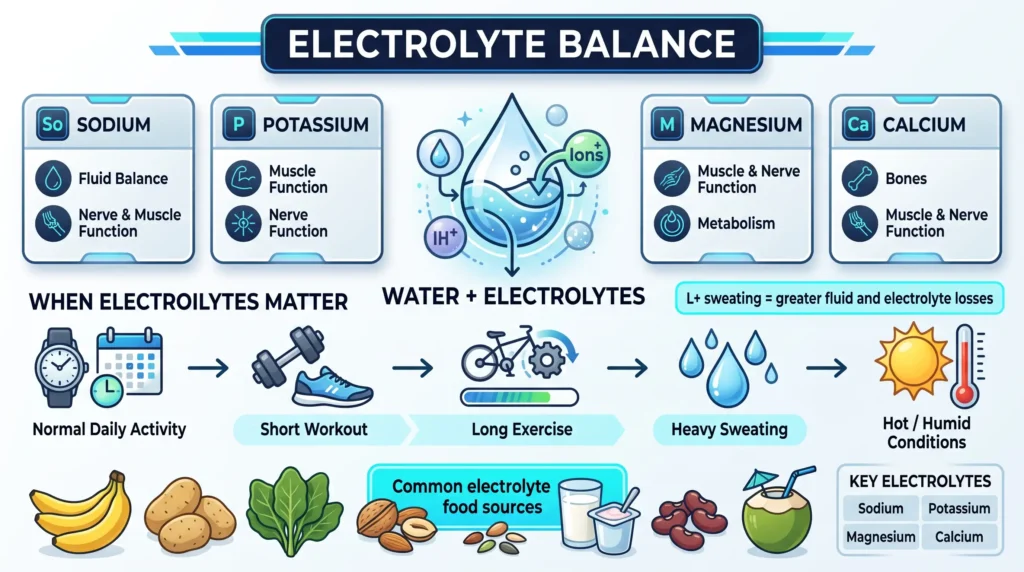
Electrolytes are minerals that dissolve in body fluids and carry an electrical charge. They are essential for several important functions throughout the body.
Important electrolytes include:
- Sodium: helps regulate fluid balance and supports nerve and muscle function.
- Potassium: plays an important role in muscle, nerve, and heart function.
- Magnesium: supports muscle and nerve function and participates in many metabolic processes.
- Calcium: contributes to bones, muscles, nerves, and normal cellular function.
Why Are Electrolytes Important?
Electrolytes help maintain the body’s fluid balance and support normal nerve and muscle activity.
When you exercise, especially in hot or humid conditions, you can lose water and electrolytes through sweat. The amount lost varies considerably between individuals.
This is why hydration and electrolyte intake can become particularly important during prolonged or intense physical activity.
Electrolytes and Hydration
Water and electrolytes work together to maintain fluid balance. Drinking water is important for hydration, but electrolyte needs depend on the situation and are not the same for everyone.
For everyday activities and normal meals, most healthy people can obtain electrolytes through a balanced diet.
During prolonged exercise, heavy sweating, illness involving fluid loss, or exposure to hot environments, electrolyte requirements may be different.
To estimate your general daily fluid needs, you can also use the Water Intake Calculator .
Electrolytes During Exercise
Physical activity increases fluid loss through sweating. Sweat contains water as well as electrolytes, particularly sodium.
The amount of sodium and other electrolytes lost through sweat varies from person to person. Exercise duration, intensity, temperature, humidity, clothing, and individual sweat rate can all influence fluid and electrolyte losses.
For short or moderate workouts, normal meals and water may often be sufficient. Longer or high-intensity exercise sessions may require more deliberate fluid and electrolyte planning.
Which Electrolytes Are Lost Through Sweat?
Sweat contains several electrolytes, but sodium is generally the most prominent electrolyte lost through sweating.
Smaller amounts of potassium, magnesium, calcium, and other minerals may also be present.
Because sweat composition differs between individuals, there is no single electrolyte replacement amount that works perfectly for everyone.
Sodium and Electrolyte Balance
Sodium is particularly important for fluid balance and is one of the primary electrolytes found in sweat.
However, more sodium is not automatically better. Excessive sodium intake can be a concern, especially for people who have specific health conditions or have been advised to limit sodium.
You can learn more about sodium intake with the Sodium Intake Calculator .
Potassium and Electrolytes
Potassium is another important electrolyte involved in normal muscle and nerve function.
Many foods naturally provide potassium, including fruits, vegetables, legumes, potatoes, dairy products, and other nutrient-rich foods.
Most people should focus on obtaining potassium from a balanced diet unless a healthcare professional recommends otherwise.
Magnesium and Electrolyte Balance
Magnesium participates in hundreds of biochemical reactions and contributes to normal muscle and nerve function.
Good dietary sources include nuts, seeds, legumes, whole grains, and certain green vegetables.
For a more detailed look at magnesium intake, explore the Magnesium Intake Calculator .
Calcium as an Electrolyte
Calcium is best known for its role in bones and teeth, but it also contributes to muscle contraction, nerve signaling, and other physiological functions.
Dairy products, fortified foods, certain fish, tofu, and some vegetables can contribute to dietary calcium intake.
When Do You Need Electrolytes?
Whether you need an electrolyte drink or supplement depends on the circumstances.
- Long-duration endurance exercise.
- Heavy sweating.
- Exercise in hot or humid conditions.
- Repeated training sessions with substantial fluid losses.
- Certain situations involving significant fluid loss.
For normal daily activity, electrolyte supplements are not necessarily required for everyone.
Electrolyte Drinks vs. Water
Water is an excellent choice for everyday hydration. Electrolyte drinks may become more useful when substantial sweating or fluid loss occurs.
| Situation | General Hydration Approach |
|---|---|
| Normal daily activity | Water and a balanced diet are generally sufficient. |
| Short workout | Water is often sufficient for many people. |
| Long endurance workout | Fluid and electrolyte replacement may be useful. |
| Heavy sweating | Electrolyte replacement may become more relevant. |
| Hot or humid conditions | Fluid and electrolyte losses may increase. |
Signs of Possible Electrolyte Imbalance
Electrolyte disturbances can have many causes and symptoms can vary. Possible symptoms may include:
- Muscle cramps or weakness.
- Fatigue.
- Headache.
- Nausea.
- Dizziness.
- Confusion or unusual changes in mental status.
- Changes in heart rhythm in more serious cases.
These symptoms can have many different causes and should not automatically be attributed to electrolyte deficiency.
Severe symptoms such as confusion, fainting, seizures, severe weakness, or significant heart rhythm problems require urgent medical attention. An online calculator should never be used to diagnose an electrolyte disorder.
How Much Sodium Do You Need?
Sodium requirements vary according to health status, diet, activity, and other factors. For the general population, health authorities commonly recommend limiting sodium intake rather than deliberately consuming large amounts.
People who sweat heavily during prolonged exercise may have different sodium replacement needs than someone who is mostly sedentary.
This is one reason an electrolyte calculator should be interpreted in context rather than treated as a fixed prescription.
Electrolytes and Endurance Sports
Endurance activities such as long-distance running, cycling, hiking, and extended sports sessions can produce substantial sweat losses.
During these activities, athletes may need a structured hydration strategy that considers fluid intake, sodium replacement, exercise duration, environmental conditions, and individual sweat rate.
Combining electrolyte planning with an appropriate training strategy can help athletes better manage long sessions.
You can also use the Running Pace Calculator to plan running intensity and pacing.
Electrolytes and Calories
Some electrolyte drinks contain carbohydrates and calories, while others contain little or no energy.
If you are tracking calories, carbohydrates, or macronutrients, remember to include electrolyte beverages when they contain meaningful amounts of calories or sugar.
The Calorie Calculator can help you estimate your daily calorie needs.
You can also use the Macro Calculator to explore your estimated macronutrient targets.
How to Use an Electrolyte Calculator
Step 1: Enter Your Basic Information
Depending on the calculator, enter information such as age, body weight, activity level, exercise duration, and environmental conditions.
Step 2: Consider Exercise and Sweat Loss
Longer and more intense exercise generally produces greater sweat losses. Hot and humid conditions can also increase fluid loss.
Step 3: Review the Estimated Result
The calculator provides an estimate that can help you understand your general electrolyte and hydration requirements.
Step 4: Compare the Result With Your Diet
Consider how much sodium, potassium, magnesium, and other electrolytes you already obtain from food and beverages.
Step 5: Adjust Based on Your Situation
Your actual needs can change with exercise, weather, sweating, diet, and health status. Use the result as a starting point rather than a medical prescription.
Best Food Sources of Electrolytes
You do not always need a sports drink to obtain electrolytes. A balanced diet can provide many important minerals.
| Electrolyte | Food Sources |
|---|---|
| Sodium | Salt, soups, dairy products, breads, and many prepared foods. |
| Potassium | Potatoes, bananas, beans, vegetables, fruits, and dairy. |
| Magnesium | Nuts, seeds, legumes, whole grains, and leafy greens. |
| Calcium | Dairy products, fortified foods, tofu, and some fish. |
Common Electrolyte Mistakes
- Assuming everyone needs electrolyte supplements every day.
- Drinking large amounts of plain water during prolonged exercise without considering electrolyte losses.
- Ignoring the sodium and sugar content of sports drinks.
- Using electrolyte supplements without considering dietary intake.
- Treating calculator estimates as medical diagnoses.
Frequently Asked Questions
What is an Electrolyte Calculator?
An Electrolyte Calculator estimates electrolyte and hydration requirements using information such as activity, exercise, body weight, and environmental conditions.
What are the main electrolytes?
Important electrolytes include sodium, potassium, magnesium, and calcium. Each has different roles in maintaining normal body function.
Do I need electrolytes every day?
Most healthy people can obtain electrolytes through a balanced diet and do not necessarily need electrolyte supplements every day.
Are electrolytes important during exercise?
They can be particularly relevant during prolonged or intense exercise when significant amounts of fluid and sodium may be lost through sweat.
Is water enough for a workout?
For many short or moderate workouts, water is sufficient. Longer sessions and heavy sweating may require a more deliberate hydration and electrolyte strategy.
Which electrolyte is lost most through sweat?
Sodium is generally the most prominent electrolyte lost through sweat, although sweat also contains other minerals.
Can you get electrolytes from food?
Yes. Foods such as fruits, vegetables, dairy products, legumes, nuts, seeds, and other whole foods provide important electrolytes.
Can I drink too many electrolytes?
Yes. Excessive intake of certain electrolytes can be harmful, particularly for people with specific medical conditions or impaired kidney function.
Are electrolyte drinks healthy?
It depends on the product and the situation. Some are useful during prolonged exercise, while others may contain unnecessary sugar or sodium for everyday use.
How can I calculate my electrolyte needs?
An Electrolyte Calculator can provide an estimate based on factors such as activity, exercise duration, body weight, sweating, and environmental conditions.