
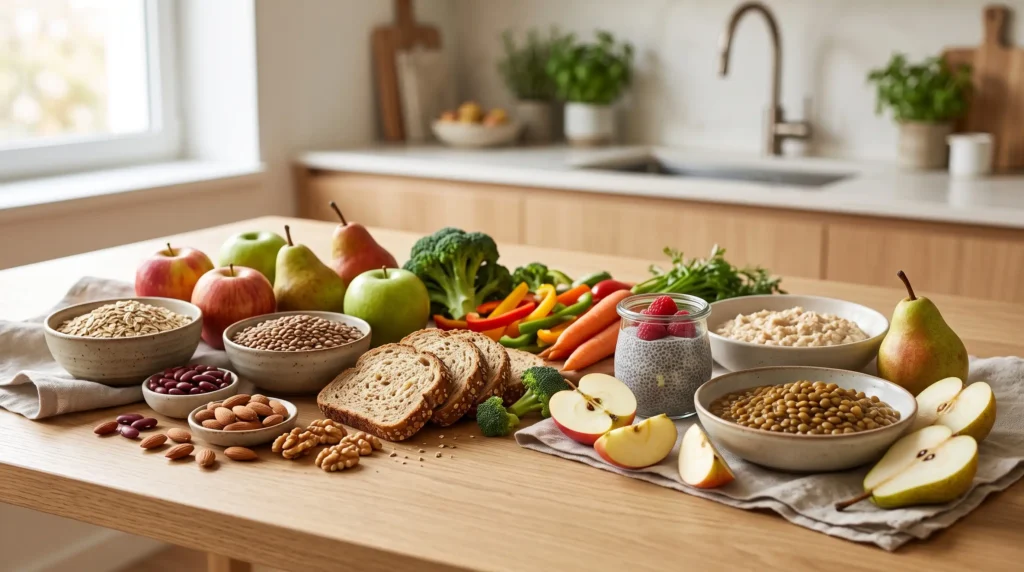
Dietary fiber is an important part of a balanced diet, but not all fiber works in exactly the same way. The two main types are soluble fiber and insoluble fiber.
Both types are found naturally in many plant foods, and both can contribute to a healthy diet. However, they behave differently in the digestive system and may have different effects on digestion, blood sugar, cholesterol, and bowel regularity.
So, which is better: soluble or insoluble fiber?
For most people, the answer is both.
Rather than focusing on getting only one type, a varied diet containing fruits, vegetables, legumes, whole grains, nuts, and seeds can help you consume a mixture of different fibers.
In this guide, we’ll explain the difference between soluble vs insoluble fiber, where to find them, how they work, and how to include more fiber in your diet.
What Is Dietary Fiber?
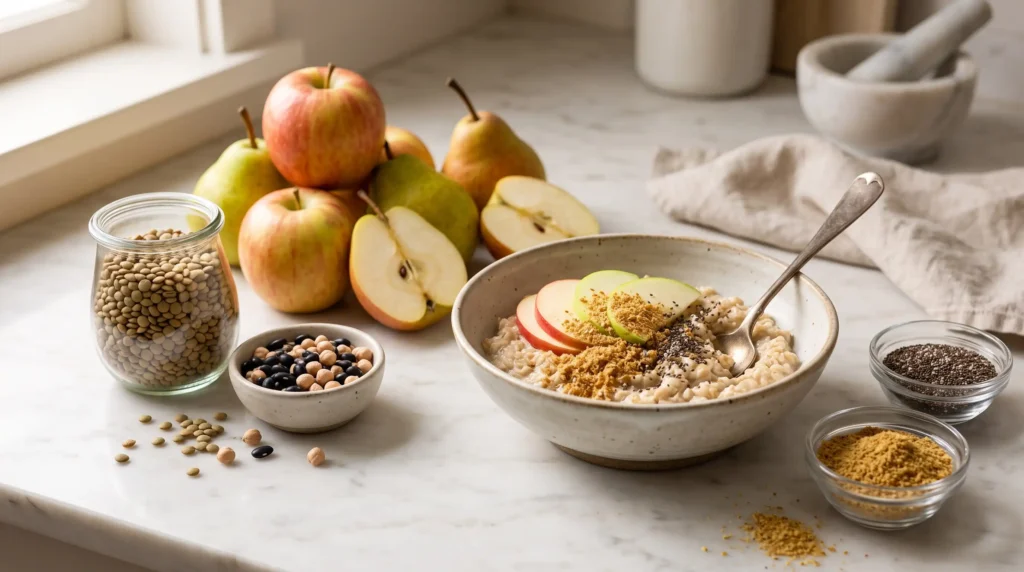
Dietary fiber is a type of carbohydrate naturally found in plant foods that the human digestive system does not completely break down.
Unlike many digestible carbohydrates, fiber passes through the digestive tract largely intact.
Fiber is found in foods such as:
- Fruits
- Vegetables
- Beans
- Lentils
- Whole grains
- Nuts
- Seeds
Fiber is generally divided into two major categories:
Soluble fiber and insoluble fiber.
These categories describe how the fiber behaves when it interacts with water.
What Is Soluble Fiber?

Soluble fiber dissolves in water and can form a gel-like substance in the digestive tract.
This type of fiber is found in many plant foods and can be fermented by bacteria in the large intestine.
Common sources include:
- Oats
- Barley
- Beans
- Lentils
- Apples
- Pears
- Citrus fruits
- Chia seeds
- Flaxseeds
- Psyllium
Some soluble fibers can also be fermented by gut bacteria, producing compounds known as short-chain fatty acids.
How Soluble Fiber Works
When soluble fiber comes into contact with water, it can absorb water and become thicker or gel-like.
This can affect how quickly food moves through the digestive system and how quickly certain nutrients are absorbed.
Some types of soluble fiber can also help support healthy cholesterol levels and blood-glucose management when included as part of an overall healthy diet.
What Is Insoluble Fiber?
Insoluble fiber does not dissolve in water.
Instead, it helps increase the bulk of stool and can support normal movement through the digestive tract.
Common sources include:
- Whole-wheat products
- Wheat bran
- Brown rice
- Many vegetables
- Potato skins
- Nuts
- Seeds
- Some fruits
Insoluble fiber is particularly associated with maintaining bowel regularity.
How Insoluble Fiber Works
Because insoluble fiber remains relatively intact as it passes through the digestive system, it can add bulk to stool.
This can help support regular bowel movements.
However, increasing fiber too quickly without drinking enough fluids may cause digestive discomfort in some people.
Soluble vs Insoluble Fiber: Key Differences
The simplest difference is how each type interacts with water.
| Feature | Soluble Fiber | Insoluble Fiber |
|---|---|---|
| Dissolves in water | Yes | No |
| Forms a gel-like substance | Some types | No |
| Supports bowel regularity | Yes | Yes |
| Can be fermented by gut bacteria | Many types | Some types |
| Found in oats | ✅ | — |
| Found in wheat bran | — | ✅ |
| Found in beans | ✅ | ✅ |
| Found in fruits | Often | Often |
| Found in vegetables | Often | Often |
It’s important to remember that foods rarely contain only one type of fiber.
A single food can contain a combination of soluble and insoluble fiber.
Which Fiber Is Better?
Neither type is universally better.
Soluble and insoluble fiber perform different roles, and a healthy diet can include both.
Instead of trying to choose between them, focus on eating a wide variety of plant foods.
For example, you could get different types of fiber from:
- Oatmeal
- Berries
- Apples
- Lentils
- Beans
- Vegetables
- Whole grains
- Nuts
- Seeds
This approach provides a broader range of fiber types and other nutrients.
Soluble Fiber and Cholesterol
Certain types of soluble fiber can help support healthy cholesterol levels.
Fibers such as beta-glucan, found in oats and barley, have been studied for their effects on cholesterol.
Soluble fiber can interact with substances involved in cholesterol metabolism and may reduce the amount of cholesterol absorbed or recycled through the digestive system.
However, fiber is only one part of cholesterol management.
Overall dietary pattern, physical activity, body weight, genetics, and other factors can also influence cholesterol levels.
Soluble Fiber and Blood Sugar
Soluble fiber can also influence how quickly carbohydrates are digested and absorbed.
Because some soluble fibers form a gel-like substance, they can slow the movement of food through the digestive system.
This may contribute to a slower rise in blood glucose after a meal.
Foods naturally containing fiber—such as beans, lentils, whole grains, fruits, and vegetables—can therefore be useful components of a balanced eating pattern.
However, adding fiber does not make a high-sugar or highly processed diet automatically healthy.
The overall quality of the diet still matters.
Insoluble Fiber and Digestion
Insoluble fiber is particularly well known for its role in digestive regularity.
It can increase stool bulk and help food and waste move through the digestive tract.
Good sources include:
- Whole grains
- Wheat bran
- Vegetables
- Nuts
- Seeds
- Fruit skins
For someone trying to increase fiber intake, adding more whole plant foods can naturally increase both soluble and insoluble fiber.
Fiber and Gut Health
Fiber is also connected to the microorganisms living in the digestive tract.
Certain fibers can be fermented by gut bacteria and contribute to the production of short-chain fatty acids.
This is one reason dietary diversity is important.
Instead of relying on one particular fiber supplement or one food, eating a variety of plant foods can provide different types of fibers and other compounds.
A varied diet might include:
Whole grains + legumes + vegetables + fruits + nuts + seeds
This combination can provide a broad range of dietary fibers.
Best Foods for Soluble Fiber
If you want to increase your intake of soluble fiber, consider adding foods such as:
Oats
Oats are a well-known source of beta-glucan, a type of soluble fiber.
Barley
Barley also contains beta-glucan and can be added to soups, salads, or grain-based meals.
Beans and Lentils
Legumes can provide a combination of soluble and insoluble fiber.
Apples and Pears
These fruits contain fiber, particularly when eaten with their skin.
Chia Seeds
Chia seeds absorb water and contain a substantial amount of dietary fiber.
Flaxseeds
Ground flaxseed can be added to oatmeal, yogurt, smoothies, or other foods.
Best Foods for Insoluble Fiber
Good sources of insoluble fiber include:
Whole-Wheat Foods
Whole-wheat bread and pasta can provide more fiber than refined versions.
Wheat Bran
Wheat bran is particularly rich in insoluble fiber.
Vegetables
Many vegetables contain significant amounts of insoluble fiber.
Nuts and Seeds
Almonds, peanuts, sunflower seeds, and other nuts and seeds provide fiber along with healthy fats and other nutrients.
Fruit Skins
Keeping edible fruit skins on can increase the fiber content of meals.
Do Beans Contain Both Types of Fiber?
Yes.
Beans and other legumes contain a mixture of fiber types.
For example, foods such as:
- Black beans
- Kidney beans
- Chickpeas
- Lentils
- Split peas
can contribute both soluble and insoluble fiber.
This is one reason legumes are such useful foods for increasing overall dietary fiber.
How Much Fiber Should You Eat?
Fiber needs vary depending on factors such as age and sex.
Rather than trying to calculate a single number for everyone, it’s useful to look at your individual needs and overall dietary pattern.
If you’re not sure how much fiber you’re currently getting, our Fiber Calculator can help estimate your daily fiber needs.
You can then compare that estimate with your usual food intake.
How to Increase Fiber Without Digestive Discomfort
If your current diet is relatively low in fiber, increasing it suddenly may cause:
- Bloating
- Gas
- Abdominal discomfort
- Changes in bowel movements
A gradual increase is often easier to tolerate.
1. Increase Fiber Gradually
Add one or two high-fiber foods at a time rather than dramatically changing your diet overnight.
2. Drink Enough Fluids
Fiber and fluids work together, particularly when increasing fiber intake.
3. Eat a Variety of Plant Foods
Don’t rely exclusively on one food or fiber supplement.
4. Choose Whole Foods
Fruits, vegetables, legumes, whole grains, nuts, and seeds provide fiber along with vitamins, minerals, and other beneficial compounds.
5. Pay Attention to Your Body
If a particular food consistently causes digestive discomfort, consider reducing the amount and discussing persistent symptoms with a healthcare professional.
Can You Get Too Much Fiber?
More fiber isn’t necessarily better for everyone.
Very high fiber intake, particularly when increased rapidly, can cause digestive symptoms such as:
- Gas
- Bloating
- Abdominal discomfort
- Changes in bowel habits
Some people may also need individualized dietary advice because of digestive conditions or other health circumstances.
The goal should be an appropriate amount of fiber that fits your individual needs and is well tolerated.
Fiber From Food vs Fiber Supplements
Most people can obtain fiber from a variety of whole foods.
However, fiber supplements are also available and may provide specific types of fiber.
Examples include:
- Psyllium
- Methylcellulose
- Inulin
- Wheat dextrin
Supplements are not automatically better than food.
Whole foods provide fiber together with other nutrients and plant compounds.
If you’re considering a fiber supplement, especially if you have ongoing digestive symptoms or take medications, it’s a good idea to discuss it with a healthcare professional.
Soluble vs Insoluble Fiber for Weight Management
Fiber can be useful as part of a balanced approach to weight management.
High-fiber foods can contribute to fullness and often require more chewing than many highly processed foods.
Foods such as:
- Beans
- Lentils
- Vegetables
- Whole grains
- Fruits
can help build meals that are both nutrient-dense and satisfying.
However, fiber itself isn’t a magic weight-loss ingredient.
Body weight is influenced by overall energy intake, physical activity, sleep, genetics, and many other factors.
For a more complete approach, you can combine your fiber intake with your estimated calorie needs using our Calorie Calculator and TDEE Calculator.
What Happens If You Don’t Eat Enough Fiber?
A diet consistently low in fiber may contribute to poor bowel regularity and can make it harder to maintain a healthy overall dietary pattern.
Low-fiber diets often contain fewer fruits, vegetables, legumes, and whole grains.
Instead of focusing only on a fiber number, consider whether your diet contains a variety of minimally processed plant foods.
A simple goal is to gradually increase the variety of plants you eat throughout the week.

A Simple High-Fiber Day
Here’s an example of how different fiber sources can fit into a normal day.
Breakfast
Oatmeal + berries + chia seeds
Provides soluble fiber and other plant nutrients.
Lunch
Lentil and vegetable salad + whole-grain bread
Provides a mixture of fiber types.
Snack
Apple + handful of nuts
Adds fiber from fruit and nuts.
Dinner
Brown rice + beans + mixed vegetables
Provides fiber from whole grains, legumes, and vegetables.
This type of dietary variety can naturally provide both soluble and insoluble fiber.
Soluble vs Insoluble Fiber: The Bottom Line
The question isn’t really whether soluble or insoluble fiber is better.
Both have useful roles.
Soluble fiber dissolves in water and can form a gel-like substance. Certain types can support healthy cholesterol and blood-glucose responses and can be fermented by gut bacteria.
Insoluble fiber does not dissolve in water and can help add bulk to stool and support normal bowel regularity.
The best strategy for most people is to consume a variety of fiber-rich plant foods rather than focusing exclusively on one type.
Include foods such as fruits, vegetables, legumes, whole grains, nuts, and seeds, and increase your intake gradually if your current diet is low in fiber.
Use our Fiber Calculator to estimate your daily fiber needs and explore your overall nutrition with our other Nutrition Calculators.
Medical Disclaimer: This article is for educational purposes only and does not provide medical advice. Individual dietary needs can vary. If you have persistent digestive symptoms, a diagnosed medical condition, or specific dietary restrictions, consult a qualified healthcare professional.
Frequently Asked Questions
What is the main difference between soluble and insoluble fiber?
Soluble fiber dissolves in water and can form a gel-like substance, while insoluble fiber does not dissolve in water and generally helps add bulk to stool.
Is soluble fiber better than insoluble fiber?
No. They have different properties and potential benefits. A varied diet containing both types is generally preferable to focusing on only one.
Which foods contain soluble fiber?
Oats, barley, beans, lentils, apples, pears, citrus fruits, chia seeds, flaxseeds, and psyllium are examples of foods or ingredients containing soluble fiber.
Which foods are high in insoluble fiber?
Whole grains, wheat bran, many vegetables, nuts, seeds, and fruit skins are common sources of insoluble fiber.
Do fruits contain both soluble and insoluble fiber?
Many fruits contain a mixture of fiber types. The exact amount and type varies depending on the fruit.
Do beans contain soluble or insoluble fiber?
Beans contain both soluble and insoluble fiber, making legumes a useful source of overall dietary fiber.
Can fiber help with digestion?
Yes. Different types of fiber can influence stool bulk, bowel regularity, and fermentation by gut bacteria.
Should I increase fiber quickly?
It’s generally better to increase fiber gradually, especially if your current intake is low. Drinking adequate fluids can also be important when increasing fiber.
Can fiber help with weight management?
Fiber-rich foods can contribute to fullness and help create a nutrient-dense eating pattern, but fiber alone does not cause weight loss.
Do I need a fiber supplement?
Not necessarily. Many people can obtain sufficient fiber through a varied diet. Supplements may be useful in certain situations, but individual needs differ.
Want to Know How Much Fiber You Need?
Use our free Fiber Calculator to estimate your daily fiber needs and better understand how fiber fits into your overall nutrition.
Calculate Your Daily Fiber Needs →