
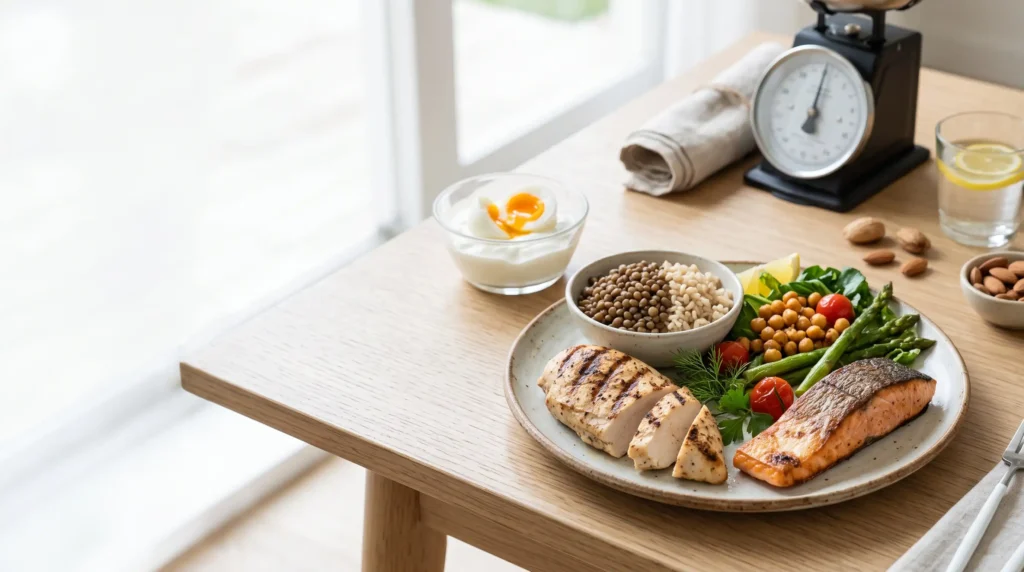
Protein is one of the most important nutrients for maintaining muscle, supporting recovery, and keeping your body functioning properly. But how much protein per day do you actually need?
The answer depends on your body weight, age, activity level, exercise routine, and goal.
For a generally healthy adult who does not exercise much, the basic recommended intake is around 0.8 grams of protein per kilogram of body weight per day. People who exercise regularly, particularly those doing resistance training, may need substantially more. Sports nutrition guidance commonly places protein intake for exercising individuals around 1.4–2.0 g/kg/day.
In this guide, you’ll learn how to calculate your daily protein needs, how much protein you may need for muscle growth or weight loss, and how to distribute protein throughout the day.
How Much Protein Do You Need Per Day?
There isn’t one protein target that works for everyone.
A useful starting point is to calculate protein based on your body weight.
| Goal / Activity | Approximate Protein Intake |
|---|---|
| Sedentary adults | 0.8 g/kg/day |
| Lightly active | 1.0–1.2 g/kg/day |
| Regular exercise | 1.2–1.6 g/kg/day |
| Muscle building | 1.4–2.0 g/kg/day |
| Strength training | 1.6–2.0 g/kg/day |
The 0.8 g/kg/day figure is the standard recommended dietary allowance for healthy adults, while sports nutrition guidance generally recommends approximately 1.4–2.0 g/kg/day for exercising individuals.
Example
If you weigh 70 kg:
- 0.8 g/kg = 56 g/day
- 1.2 g/kg = 84 g/day
- 1.6 g/kg = 112 g/day
- 2.0 g/kg = 140 g/day
Your ideal target depends on what you’re trying to accomplish.
Protein Needs by Body Weight
One of the easiest ways to estimate your protein needs is to multiply your weight in kilograms by your target protein intake.
Formula:
Daily protein = body weight (kg) × protein target (g/kg)
For example:
80 kg × 1.6 g/kg = 128 g protein per day
Protein Calculator Table
| Body Weight | 0.8 g/kg | 1.2 g/kg | 1.6 g/kg | 2.0 g/kg |
|---|---|---|---|---|
| 50 kg | 40 g | 60 g | 80 g | 100 g |
| 60 kg | 48 g | 72 g | 96 g | 120 g |
| 70 kg | 56 g | 84 g | 112 g | 140 g |
| 80 kg | 64 g | 96 g | 128 g | 160 g |
| 90 kg | 72 g | 108 g | 144 g | 180 g |
| 100 kg | 80 g | 120 g | 160 g | 200 g |
For people who regularly exercise, the higher ranges can be useful depending on training volume and goals.
Protein Intake for Muscle Building
If your goal is to build muscle, protein becomes especially important because resistance training and protein consumption work together to stimulate muscle protein synthesis.
A practical range for many people who strength train is approximately:
1.6–2.0 g of protein per kilogram of body weight per day.
For example, someone weighing 75 kg could aim for approximately:
75 × 1.6 = 120 g
to
75 × 2.0 = 150 g
of protein per day.
However, protein alone doesn’t build muscle. Progressive resistance training, adequate calories, recovery, and sleep also matter.

Is More Protein Always Better?
Not necessarily.
Once protein intake is already adequate, simply adding more protein does not guarantee additional muscle growth. Total calories, training quality, carbohydrate intake, recovery, and overall diet also influence results.
Protein for Weight Loss
Protein can be particularly useful during weight loss because it helps you maintain adequate nutrition while consuming fewer calories.
People who are dieting while exercising may choose a higher protein intake, especially when trying to preserve lean mass.
A practical range can be around:
1.6–2.0 g/kg/day
for many active individuals, although the appropriate amount depends on the person’s body composition, calorie intake, training status, and circumstances.
For example, at 80 kg:
80 × 1.6 = 128 g/day
So an 80-kg active person might use roughly 128 g of protein per day as one starting point.

Protein for Different Activity Levels
Your activity level is one of the biggest factors affecting your protein needs.
Sedentary
If you don’t exercise regularly, the basic adult recommendation of around 0.8 g/kg/day provides a useful reference point.
Walking and Light Exercise
If you’re active but mostly perform walking, recreational activities, or occasional workouts, approximately 1.0–1.2 g/kg/day can be a practical range.
Regular Fitness Training
People who train several times per week may consider approximately 1.2–1.6 g/kg/day, depending on their training and goals.
Strength Training
People focused on muscle growth and resistance training often use approximately 1.6–2.0 g/kg/day. Sports nutrition guidance places exercising individuals broadly within 1.4–2.0 g/kg/day.
How Much Protein Per Meal?
Your total daily protein intake is important, but distributing protein throughout the day can also be useful.
Sports nutrition guidance has suggested approximately 0.25 g/kg per serving, or roughly 20–40 g per meal for many exercising individuals, depending on body size and other factors.
For example, someone targeting 120 g/day could divide protein approximately like this:
- Breakfast: 30 g
- Lunch: 30 g
- Snack: 20 g
- Dinner: 40 g
This is only an example. You don’t need to eat exactly the same amount at every meal.
Best High-Protein Foods
You can get protein from both animal and plant foods.
Animal Protein Sources
- Chicken
- Turkey
- Lean beef
- Eggs
- Fish
- Sardines
- Tuna
- Salmon
- Greek yogurt
- Cottage cheese
- Milk
Plant Protein Sources
- Lentils
- Chickpeas
- Beans
- Soy
- Tofu
- Tempeh
- Peanuts
- Nuts
- Seeds
A varied diet can make it easier to obtain enough protein while also providing vitamins, minerals, fiber, and other nutrients.
Protein Before or After a Workout?
You don’t necessarily need to consume protein immediately after your workout.
Resistance exercise and protein intake can work together to stimulate muscle protein synthesis, and the effects of resistance exercise extend beyond the few minutes immediately after training.
A practical approach is to have a protein-containing meal before or after training and focus primarily on reaching your total daily protein target.

Can You Eat Too Much Protein?
More protein isn’t automatically better.
For healthy adults, protein needs vary considerably depending on activity, body size, age, and goals. Extremely high protein intakes are generally unnecessary for most people.
If you have kidney disease or another medical condition affecting protein intake, speak with your healthcare professional before substantially increasing your protein consumption.
How to Calculate Your Protein Needs
Calculating your protein requirement is simple.
Step 1: Find Your Weight
Use your current body weight in kilograms.
If you know your weight in pounds:
Weight in kg = weight in pounds ÷ 2.205
Step 2: Choose a Protein Target
For example:
- General health: 0.8 g/kg
- Active lifestyle: 1.2–1.6 g/kg
- Muscle building: 1.6–2.0 g/kg
Step 3: Multiply
For someone weighing 75 kg and targeting 1.6 g/kg:
75 × 1.6 = 120 g protein/day
Try Our Protein Calculator
Want a personalized estimate?
Use the FitCalculatorAI Protein Calculator to calculate your daily protein target based on your body weight, activity level, and fitness goal.
Frequently Asked Questions
How much protein should I eat per day?
For healthy adults, the basic recommended intake is about 0.8 g/kg/day. People who exercise regularly may need more, with sports nutrition guidance commonly recommending 1.4–2.0 g/kg/day for exercising individuals.
How much protein do I need to build muscle?
A common target for people doing resistance training is approximately 1.6–2.0 g/kg/day, although individual needs vary.
Is 100 grams of protein a day enough?
It depends on your body weight and goal. For example, 100 g may be more than enough for some smaller people but insufficient for a larger person who is training hard.
How much protein should I eat if I weigh 70 kg?
At 70 kg, examples include:
- 56 g at 0.8 g/kg
- 84 g at 1.2 g/kg
- 112 g at 1.6 g/kg
- 140 g at 2.0 g/kg
Your appropriate target depends on your activity level and goal.
How much protein should I eat to lose weight?
Active people trying to lose weight often use a higher protein intake to help support lean mass, with approximately 1.6–2.0 g/kg/day being a commonly used range.
Can I get enough protein without protein powder?
Yes. Chicken, eggs, fish, dairy, beans, lentils, chickpeas, soy, nuts, and seeds can all contribute significant amounts of protein.
Should I eat protein before or after a workout?
Either can work. The most important factor is achieving an appropriate total daily protein intake. Protein consumed around resistance exercise can support muscle protein synthesis.
Final Takeaway
So, how much protein per day do you need?
A simple starting point is:
0.8 g/kg/day for general adult nutrition
and approximately:
1.4–2.0 g/kg/day for people who exercise regularly, particularly those focused on maintaining or building muscle.
Rather than chasing the highest possible protein intake, choose a target that matches your body weight, activity level, fitness goal, and overall diet.
Calculate your personalized protein target with the FitCalculatorAI Protein Calculator.