
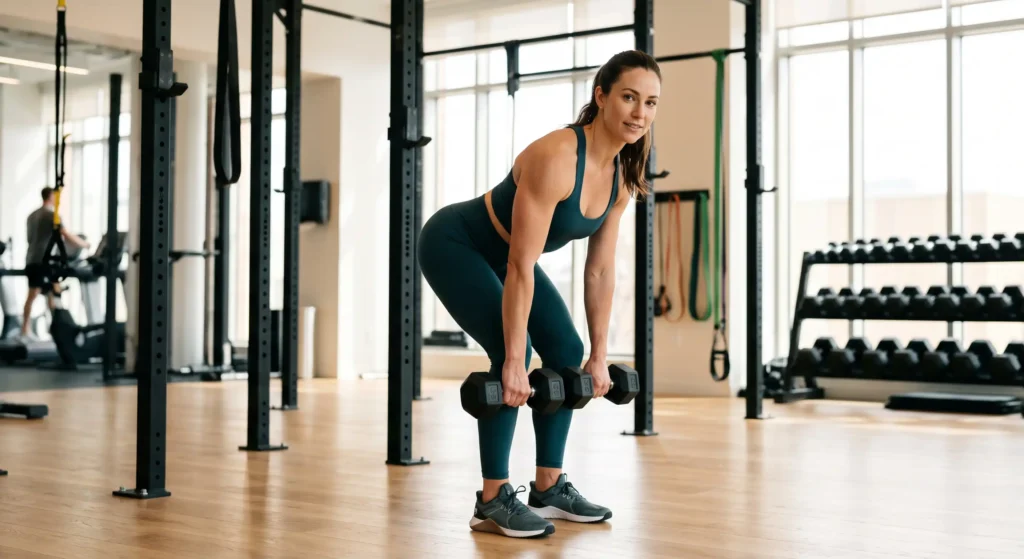
Strength training for women has become one of the most important fitness trends in 2026.
More women are moving beyond workouts focused only on burning calories and are incorporating resistance training to become stronger, improve physical function, build muscle, and support long-term health.
The shift is also reflected in the broader fitness industry. The American College of Sports Medicine (ACSM) ranked traditional strength training #7 among its 2026 worldwide fitness trends, while functional fitness training also made the top 10.
Recent fitness coverage also shows growing interest among women in lifting weights, particularly as women look for ways to support muscle strength, mobility and healthy aging.
But if you’ve never lifted weights before, starting can feel intimidating.
How heavy should you lift?
How many days should you train?
Will lifting weights make you bulky?
Can strength training help you lose fat?
This beginner’s guide explains exactly how to get started.
Quick Answer: Is Strength Training Good for Women?
Yes. Strength training can be an excellent form of exercise for women of virtually all fitness levels.
A well-designed program can help improve:
- Muscular strength
- Muscle mass
- Physical function
- Balance and coordination
- Bone health
- Exercise performance
- Body composition
- Confidence and independence
ACSM notes that resistance exercise can support muscular strength, endurance and function, while also contributing to bone density, metabolic health and mobility across the lifespan.
And you don’t need to start with heavy barbells.
Dumbbells, resistance bands, machines and even bodyweight exercises can all be useful starting points.
What Is Strength Training for Women?
Strength training is exercise where your muscles work against resistance.
That resistance can come from:
- Dumbbells
- Barbells
- Kettlebells
- Resistance bands
- Weight machines
- Cables
- Your own body weight
The goal isn’t necessarily to lift the heaviest weight possible.
Instead, you’re gradually challenging your muscles so they can adapt and become stronger.
A beginner might start with bodyweight squats and light dumbbells.
Over time, she may progress to heavier squats, rows, presses, lunges and deadlifts.
This gradual increase in difficulty is known as progressive overload.
Why Is Strength Training Becoming So Popular With Women?
For years, many women’s fitness programs focused heavily on cardio and calorie burning.
Strength training is changing that approach.
Women are increasingly interested in what their bodies can do, not just how many calories a workout burns.
Current women’s fitness coverage emphasizes strength as a broad fitness goal because it can support muscle growth, bone density, mobility and everyday function.
ACSM’s 2026 report similarly emphasizes that strength training is applicable to people of different ages and fitness levels and can be adapted through progressive and accessible programs.
Does Lifting Weights Make Women Bulky?
This is one of the biggest myths about women’s strength training.
Lifting weights does not automatically make women bulky.
Building a large amount of muscle requires consistent resistance training, sufficient nutrition and considerable time.
For most beginners, the more noticeable changes are likely to include:
- Becoming stronger
- Better muscle definition
- Improved exercise performance
- Improved body composition
- Greater confidence with weights
Muscle growth happens gradually.
If your goal is to build significant muscle mass, your training and nutrition can be adjusted accordingly.
If your goal is primarily strength and general fitness, your program can be structured differently.
Benefits of Strength Training for Women
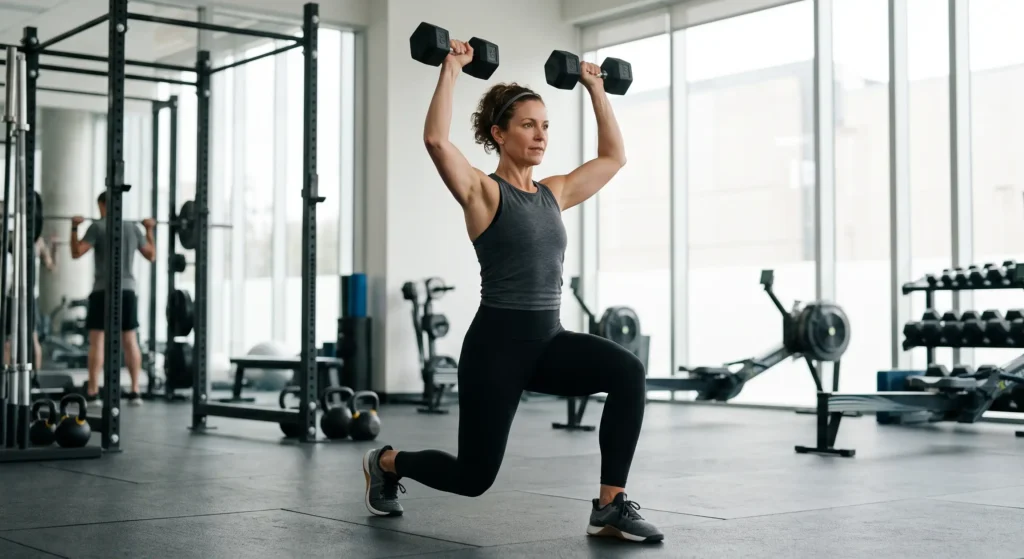
1. Build Stronger Muscles
Resistance training gives your muscles a reason to adapt.
As you progressively increase the challenge, your muscles can become stronger and better able to handle everyday activities.
That can make tasks such as carrying groceries, climbing stairs or lifting objects easier.
2. Support Bone Health
Resistance exercise places mechanical demands on the body that can support bone health.
This becomes particularly relevant as women get older.
ACSM’s 2026 material on the female strengthspan emphasizes the importance of resistance exercise across a woman’s life, from building a foundation earlier in life to helping older women preserve muscle function and independence.
3. Improve Body Composition
Strength training can help increase or maintain lean muscle while supporting fat-loss goals.
However, strength training isn’t a magic fat-burning exercise.
If your goal is weight loss, your overall calorie intake and activity level still matter.
You can use the Calorie Calculator on FitCalculatorAI to estimate your daily energy needs.
4. Improve Functional Fitness
Functional strength is useful outside the gym.
Exercises such as:
- Squats
- Lunges
- Rows
- Carries
- Pushes
- Pulls
train movements that can transfer to everyday activities.
Functional fitness is also included among ACSM’s top 10 fitness trends for 2026.
5. Support Healthy Aging
Maintaining muscle and physical function becomes increasingly important as we age.
A consistent resistance-training routine can help women maintain strength and independence over time.
This is one reason strength training isn’t only for young women or athletes.
It’s a lifelong fitness strategy.
How Many Days a Week Should a Woman Strength Train?
For a beginner, 2–3 strength-training sessions per week can be an excellent starting point.
You don’t need to train every day.
For example:
Beginner Schedule
Monday: Full-body strength
Tuesday: Walking or light cardio
Wednesday: Rest
Thursday: Full-body strength
Friday: Walking
Saturday: Optional strength or cardio
Sunday: Rest
This gives your muscles time to recover between resistance-training sessions.
If you’re completely new to exercise, even two well-structured sessions per week can be a useful starting point.
Beginner Strength Training Workout for Women
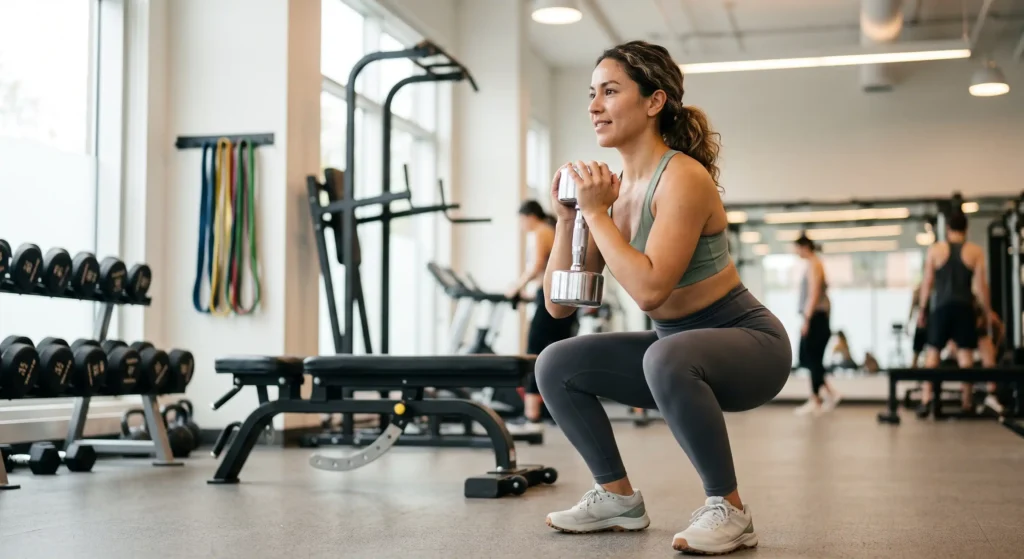
Here’s a simple full-body routine you can use as a starting framework.
1. Goblet Squat
2–3 sets × 8–12 reps
Targets:
- Quadriceps
- Glutes
- Core
2. Dumbbell Romanian Deadlift
2–3 sets × 8–12 reps
Targets:
- Hamstrings
- Glutes
- Lower back
Keep the weight controlled and focus on proper technique.
3. Dumbbell Row
2–3 sets × 8–12 reps
Targets:
- Upper back
- Lats
- Biceps
4. Dumbbell Chest Press
2–3 sets × 8–12 reps
Targets:
- Chest
- Shoulders
- Triceps
5. Reverse Lunges
2–3 sets × 8–10 reps per leg
Targets:
- Glutes
- Quadriceps
- Hamstrings
6. Dumbbell Shoulder Press
2–3 sets × 8–12 reps
Targets:
- Shoulders
- Triceps
- Upper body
7. Plank
2–3 sets × 20–45 seconds
Targets:
- Core
- Shoulders
- Abdominal muscles
You don’t have to perform every exercise in one workout forever.
As you progress, your program can become more personalized.
How Heavy Should Women Lift?
There’s no universal weight that every woman should use.
The right starting weight depends on your:
- Current strength
- Training experience
- Exercise technique
- Age
- Fitness level
- Goals
Choose a weight that allows you to perform the exercise with good form while making the final repetitions challenging.
For example, if you plan to perform 10 repetitions, you shouldn’t need to sacrifice technique just to complete the final repetition.
Good form comes before heavier weight.
What Is Progressive Overload?
Progressive overload means gradually increasing the challenge placed on your muscles.
You can progress by:
- Increasing weight
- Performing more repetitions
- Adding a set
- Improving technique
- Increasing range of motion
- Reducing unnecessary rest
- Using a more challenging variation
For example:
Week 1: 10 kg × 10 reps
Week 2: 10 kg × 12 reps
Week 3: 12 kg × 10 reps
The exact progression doesn’t need to happen every workout.
The important idea is that your training becomes progressively more challenging over time.
Strength Training for Women and Weight Loss
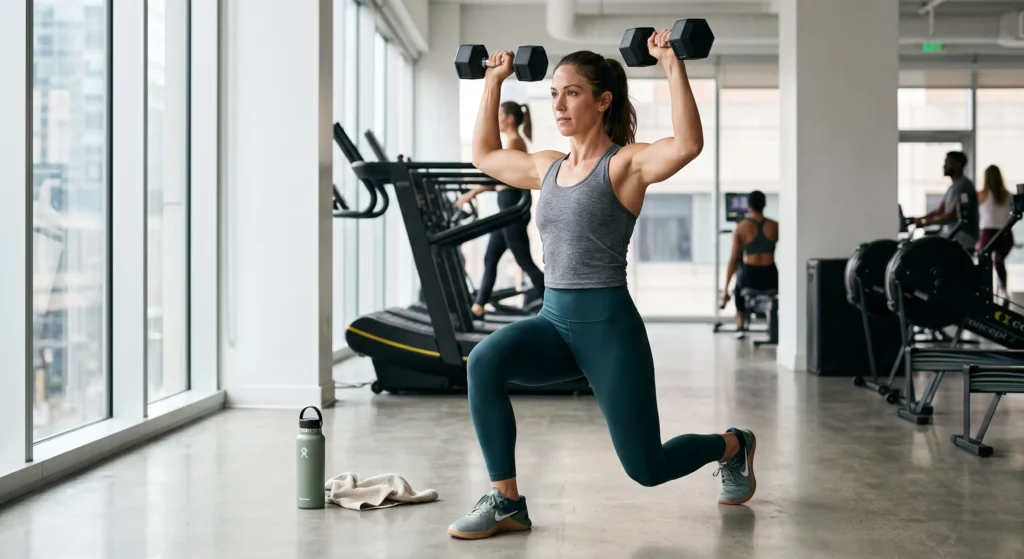
Can strength training help women lose weight?
Yes, but the bigger picture matters.
Fat loss generally requires an energy deficit over time.
That means your body uses more energy than you consume.
Strength training can be particularly useful during a weight-loss phase because it provides a strong stimulus for maintaining muscle while you’re reducing calories.
A balanced weight-loss strategy can include:
- Strength training
- Walking
- Cardio
- Adequate protein
- Appropriate calorie intake
- Sufficient sleep
Avoid trying to lose weight as quickly as possible.
A sustainable approach is usually easier to maintain.
Should Women Do Cardio or Strength Training?
You don’t necessarily need to choose one.
Strength training + cardio can be an excellent combination.
For example:
3-Day Beginner Program
Monday: Strength
Wednesday: Cardio/walking
Friday: Strength
Saturday: Optional longer walk
Or:
4-Day Program
Monday: Strength
Tuesday: Cardio
Thursday: Strength
Saturday: Cardio
The ideal balance depends on your goals.
If muscle and strength are your priorities, resistance training should receive significant attention.
If cardiovascular endurance is your main goal, you may dedicate more time to cardio.
How Much Protein Do Women Need When Strength Training?
Protein is important for muscle repair and growth.
Your ideal intake depends on factors such as:
- Body weight
- Training volume
- Goals
- Total calorie intake
- Age
Instead of choosing an arbitrary number, calculate your protein needs based on your individual circumstances.
You can use the Protein Calculator on FitCalculatorAI.
For women trying to build muscle, consistently eating enough protein throughout the day can be more practical than trying to consume a huge amount in one meal.
Good protein sources include:
- Eggs
- Greek yogurt
- Chicken
- Turkey
- Fish
- Lean beef
- Cottage cheese
- Tofu
- Tempeh
- Lentils
- Beans
Can Women Build Muscle After 40?
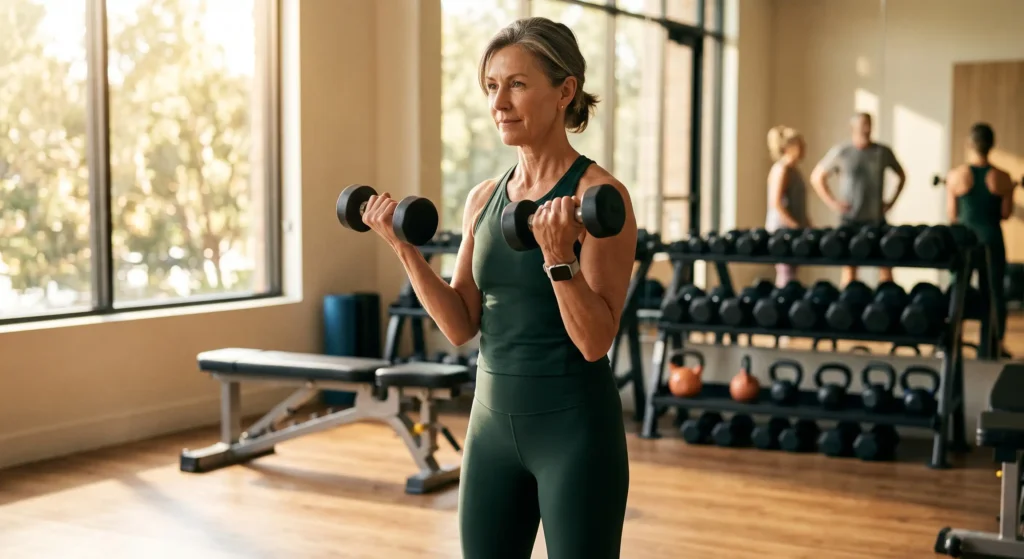
Yes.
Women can continue to develop strength and muscle as they age.
The key is adjusting training appropriately and maintaining consistency.
For women over 40, useful priorities may include:
- Progressive resistance training
- Adequate protein
- Recovery
- Mobility
- Sleep
- Proper exercise technique
Recent women’s fitness coverage continues to highlight strength training as an important strategy for maintaining strength, mobility and physical capability through midlife and beyond.
If you’re new to exercise or have health concerns, consider working with a qualified fitness professional or healthcare professional to determine an appropriate starting point.
Strength Training for Women at Home
You don’t need a commercial gym to begin.
A basic home setup can include:
- Adjustable dumbbells
- Resistance bands
- Exercise mat
- Bench or sturdy elevated surface
You can perform exercises such as:
- Squats
- Lunges
- Glute bridges
- Push-ups
- Rows
- Shoulder presses
- Romanian deadlifts
- Planks
A pair of dumbbells and resistance bands can provide a surprising amount of training variety.
Gym Strength Training vs Home Strength Training
| Home Training | Gym Training |
|---|---|
| Convenient | More equipment |
| Lower setup cost | Easier progressive loading |
| No commute | Machines and cables |
| Great for beginners | More exercise variety |
| Privacy | Access to heavier weights |
Neither option is automatically better.
The best environment is the one that helps you train consistently.
Common Strength Training Mistakes Women Should Avoid
Mistake 1: Only Using Very Light Weights
Some women stay with extremely light weights because they’re afraid of becoming bulky.
But your muscles need an appropriate training stimulus.
Gradually challenging yourself is important.
Mistake 2: Changing Workouts Every Week
You don’t need a completely new workout every session.
Repeating key exercises makes it easier to track progress.
Mistake 3: Ignoring Recovery
Muscles need recovery.
Training harder isn’t always better.
Include rest days and avoid increasing your training volume too quickly.
Mistake 4: Focusing Only on the Scale
Body weight doesn’t tell the whole story.
You can become stronger and improve your body composition without seeing dramatic changes on the scale.
Consider tracking:
- Strength
- Measurements
- Progress photos
- Workout performance
- Energy
- How your clothes fit
Mistake 5: Comparing Yourself With Social Media
Online fitness content often shows advanced athletes performing advanced exercises.
You don’t need to copy them.
Your first goal should be learning the fundamentals and becoming consistent.
How Long Does It Take to See Results From Strength Training?
Results vary significantly.
Some beginners notice improvements in strength relatively quickly because their nervous system becomes more efficient at performing movements.
Visible muscle changes generally take longer.
Your results depend on:
- Training consistency
- Exercise selection
- Progressive overload
- Protein intake
- Calories
- Sleep
- Genetics
- Starting fitness level
Instead of expecting a transformation in a few weeks, think in terms of months of consistent training.
A Simple 8-Week Strength Training Approach
Weeks 1–2: Learn
Focus on:
- Technique
- Exercise form
- Comfortable weights
- Consistency
Weeks 3–4: Build
Start gradually increasing:
- Repetitions
- Weight
- Training volume
Weeks 5–6: Progress
Track your workouts and try to improve gradually.
Weeks 7–8: Evaluate
Look at:
- Strength improvements
- Exercise technique
- Recovery
- Measurements
- Body composition
- Overall fitness
Then adjust your program.
Do Women Need Different Strength Exercises Than Men?
Not necessarily.
The fundamental resistance-training movements are useful for both women and men.
Women can benefit from:
- Squats
- Deadlifts
- Lunges
- Rows
- Presses
- Carries
- Pulling movements
- Core exercises
The difference should be based more on individual goals, experience, preferences and physical needs than on gender alone.
Frequently Asked Questions
Is strength training good for women beginners?
Yes. Beginners can start with bodyweight exercises, resistance bands, machines or light dumbbells and gradually increase the challenge.
How many times a week should women lift weights?
Two to three strength-training sessions per week can be a practical starting point for beginners.
Can strength training help women lose belly fat?
Strength training can support overall fat loss and improve body composition, but you cannot specifically choose where your body loses fat.
Will lifting weights make me bulky?
Not automatically. Significant muscle growth requires consistent training and appropriate nutrition over time.
Can women build muscle after 40?
Yes. Women can continue to build strength and muscle with appropriate resistance training, nutrition and recovery.
Is it better to lift heavy or light weights?
Both can be useful. The appropriate resistance depends on your goals, experience and exercise. What matters is providing a meaningful training stimulus while maintaining good technique.
Can I strength train at home?
Yes. Bodyweight exercises, resistance bands and dumbbells can provide effective home workouts.
Should I do cardio before or after strength training?
It depends on your primary goal. If strength is your priority, performing resistance training first can help you give more attention to lifting. You can also schedule cardio separately.
The Bottom Line
Strength training for women isn’t just about building muscle or changing your appearance.
It’s about becoming stronger, improving physical function and creating a foundation for long-term fitness.
You don’t need to start with heavy weights.
You don’t need to spend two hours in the gym.
And you don’t need a complicated program.
Start with 2–3 full-body sessions per week, learn the fundamental movements, gradually increase the challenge, eat enough protein and give your body time to recover.
Strength training is now firmly part of the broader 2026 fitness landscape, with ACSM ranking traditional strength training among the year’s top fitness trends and highlighting functional fitness as another major trend.
The best workout is ultimately the one you can perform consistently.
Related FitCalculatorAI Tools
- Protein Calculator — estimate your daily protein needs.
- Calorie Calculator — estimate your daily calorie requirements.
- Macro Calculator — calculate protein, carbs and fat targets.
- Calories Burned Calculator — estimate energy expenditure during exercise.
- Body Fat Calculator — estimate body-fat percentage.
- BMI Calculator — calculate BMI and understand your weight category.
Medical Disclaimer
This article is for educational purposes only and is not medical advice. Exercise programs should be adapted to your individual fitness level and circumstances. If you are new to exercise, pregnant, recovering from an injury, or have a medical condition, consult an appropriate healthcare professional before starting a new training program.