

Building stronger shoulders doesn’t require a complicated workout routine. With a pair of dumbbells and proper technique, you can train your shoulders at home or in the gym.
In this guide, you’ll discover five effective dumbbell shoulder exercises, how to perform each movement correctly, and how many sets and repetitions to complete. You’ll also find recommended workout equipment and practical tips to help you build a consistent shoulder training routine.
Table of Contents
What Equipment Do You Need for a Dumbbell Shoulder Workout?
You can perform most shoulder exercises with a pair of dumbbells. Beginners can start with lighter weights, while adjustable dumbbells make it easier to increase resistance as strength improves.
For a basic home shoulder workout, you’ll need:
- A pair of dumbbells suitable for your strength level.
- A stable exercise bench or chair for seated exercises.
- Enough space to move your arms freely.
- A comfortable workout area where you can maintain proper technique.
Recommended Equipment for Shoulder Workouts
1. Adjustable Dumbbells
Adjustable dumbbells are a practical choice for home workouts because you can change the weight for different exercises. They’re useful for shoulder presses, lateral raises, and other strength-training movements.
Check Adjustable Dumbbells on Amazon
2. Lightweight Dumbbells
Lighter dumbbells can be particularly useful for lateral raises and other shoulder isolation exercises. Choose weights that allow you to complete every repetition without swinging your body.
Explore Lightweight Dumbbells on Amazon
5 Best Dumbbell Shoulder Exercises
1. Dumbbell Shoulder Press
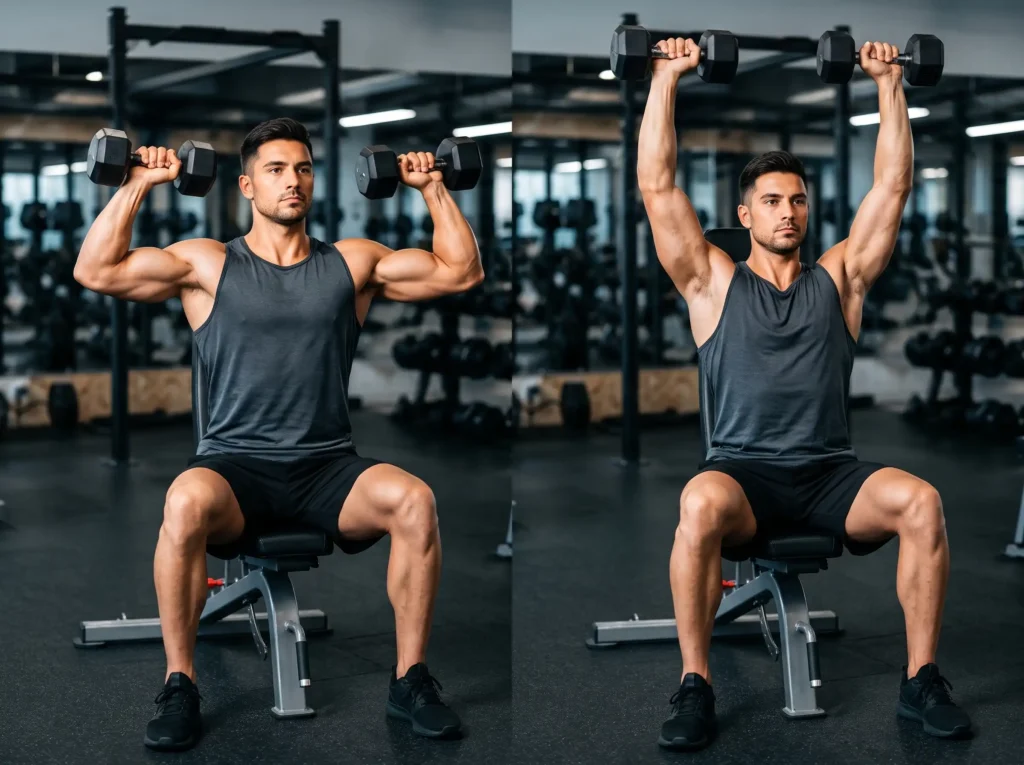
The dumbbell shoulder press is one of the most effective exercises for developing shoulder strength. It primarily targets the deltoids while also working the triceps.
This compound exercise allows you to train both shoulders together and gradually increase the resistance as you become stronger.
How to perform the exercise:
- Sit on a stable bench or stand with a dumbbell in each hand.
- Position the dumbbells near shoulder height.
- Keep your torso stable and your wrists controlled.
- Press the dumbbells overhead without excessively arching your lower back.
- Slowly lower the weights to the starting position.
Recommended sets and repetitions:
- Sets: 3
- Repetitions: 8–12
- Rest: 60–120 seconds between sets.
Common mistake: Using weights that are too heavy and leaning backward to complete repetitions. Start with a manageable weight and maintain controlled movement.
2. Dumbbell Lateral Raise
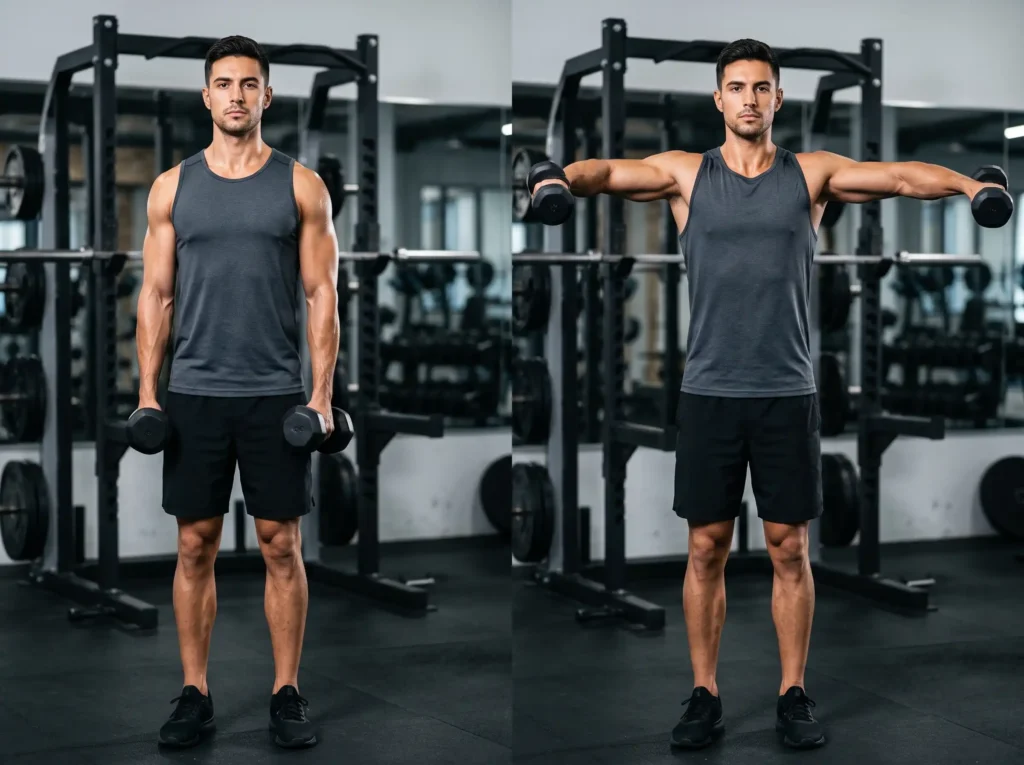
The dumbbell lateral raise focuses on the lateral deltoids, which contribute to the appearance of broader shoulders.
Unlike the shoulder press, this exercise isolates the side shoulders more directly and generally works best with lighter weights.
How to perform the exercise:
- Stand upright with a dumbbell in each hand beside your thighs.
- Keep your elbows slightly bent.
- Raise your arms out to the sides with control.
- Stop at a comfortable height, approximately shoulder level.
- Slowly lower the dumbbells without swinging your torso.
Recommended sets and repetitions:
- Sets: 3
- Repetitions: 10–15
- Rest: 60–90 seconds between sets.
Common mistake: Swinging the weights or shrugging excessively. Reduce the resistance if you cannot control the movement.
3. Dumbbell Front Raise
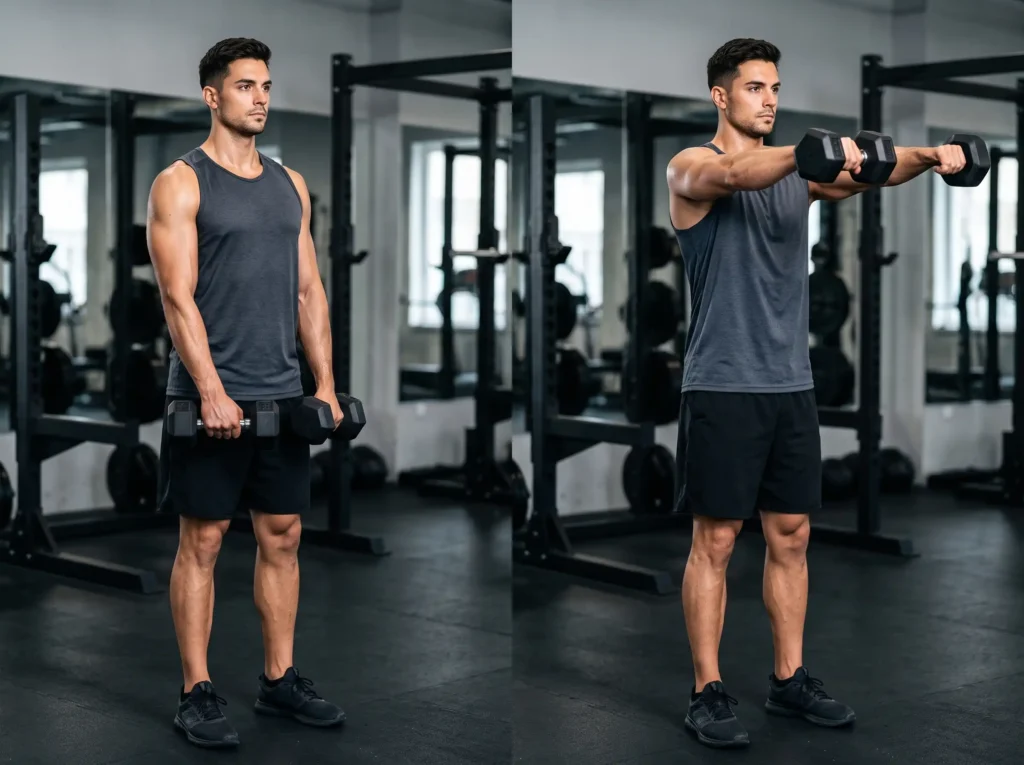
The dumbbell front raise primarily targets the anterior deltoids, located at the front of the shoulders.
This exercise can complement a shoulder routine, although the front deltoids already receive considerable work during pressing movements.
How to perform the exercise:
- Stand with a dumbbell in each hand in front of your thighs.
- Keep your elbows slightly bent and your torso stable.
- Raise the dumbbells in front of you to a comfortable height.
- Avoid leaning backward to lift the weights.
- Lower the dumbbells slowly.
Recommended sets and repetitions:
- Sets: 2–3
- Repetitions: 10–12
- Rest: 60–90 seconds between sets.
Common mistake: Using momentum or lifting the weights higher than you can comfortably control. Choose a suitable weight and maintain good technique.
4. Bent-Over Dumbbell Reverse Fly
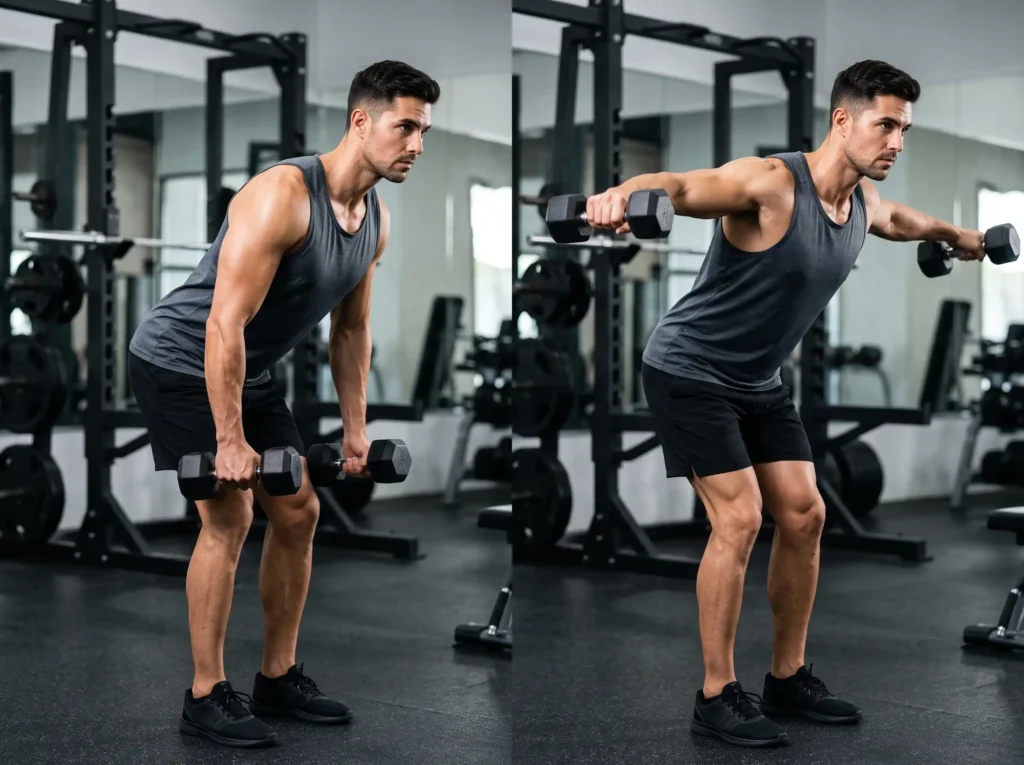
The bent-over dumbbell reverse fly targets the rear deltoids and also engages muscles in the upper back.
Including rear-shoulder exercises in your training routine helps develop a more balanced upper body instead of focusing exclusively on the front and side shoulders.
How to perform the exercise:
- Hold a dumbbell in each hand and hinge forward at your hips.
- Keep your back in a comfortable, neutral position.
- Allow the dumbbells to hang beneath your shoulders.
- Raise your arms out to the sides while keeping your elbows slightly bent.
- Lower the weights slowly to the starting position.
Recommended sets and repetitions:
- Sets: 3
- Repetitions: 10–15
- Rest: 60–90 seconds between sets.
Common mistake: Using heavy dumbbells that cause you to jerk your torso. Start lighter and concentrate on moving the weights with control.
5. Arnold Press
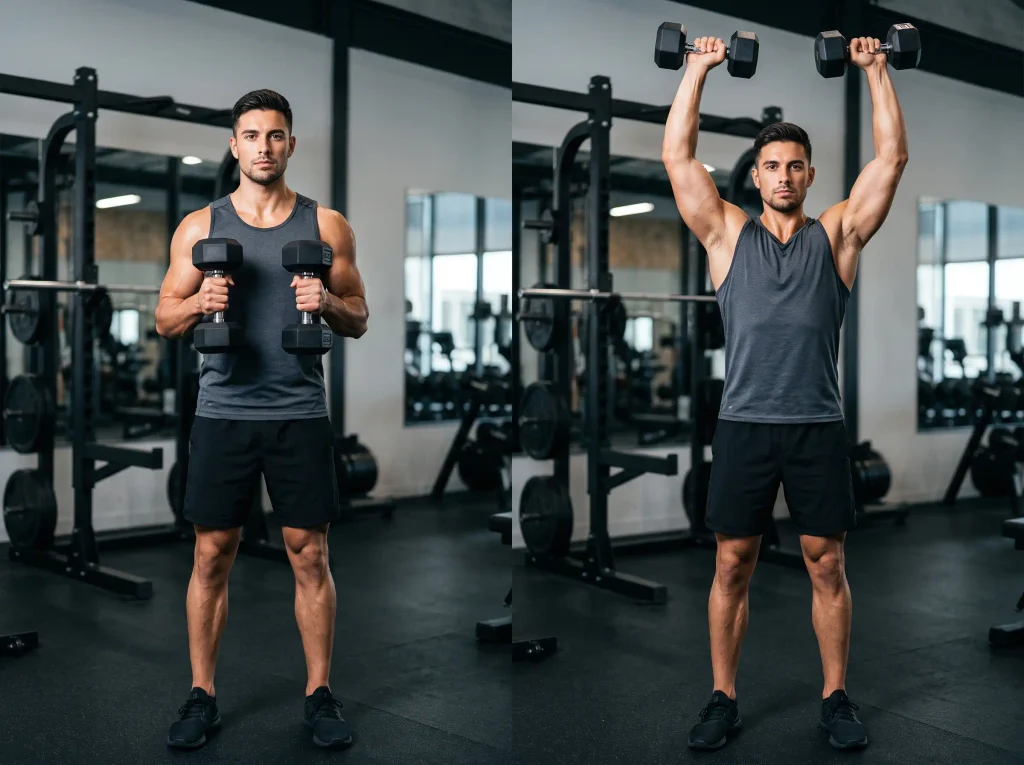
The Arnold press is a variation of the dumbbell shoulder press that incorporates rotation during the movement. It works the deltoids and triceps.
This exercise can add variety to your training, but it isn’t essential for building stronger shoulders. A regular shoulder press is an excellent alternative if the rotation feels uncomfortable.
How to perform the exercise:
- Sit or stand holding dumbbells in front of your shoulders, with your palms facing you.
- Begin pressing the dumbbells upward.
- Rotate your palms forward as you press, within a comfortable range of motion.
- Finish with the dumbbells overhead without forcing your shoulders.
- Reverse the movement slowly to return to the starting position.
Recommended sets and repetitions:
- Sets: 2–3
- Repetitions: 8–12
- Rest: 60–120 seconds between sets.
Common mistake: Forcing the rotation or using excessive weight. Stop if the movement causes shoulder pain and choose a more comfortable exercise.
Beginner Dumbbell Shoulder Workout Plan
If you’re a beginner, you don’t need to perform all five exercises in the same session. Start with three movements and focus on consistent technique.
| Exercise | Sets | Repetitions |
|---|---|---|
| Dumbbell Shoulder Press | 3 | 8–12 |
| Dumbbell Lateral Raise | 3 | 10–15 |
| Bent-Over Dumbbell Reverse Fly | 2 | 10–15 |
Rest for approximately 60–120 seconds between sets. Warm up before training and use a weight that allows you to finish your repetitions without losing control.
You can gradually add more exercises or increase resistance as your strength and experience improve.
For many beginners, training the shoulders around twice per week can work well when sessions are spaced appropriately and overall training volume is manageable.
How Heavy Should Your Dumbbells Be?
The ideal dumbbell weight depends on your current strength, training experience, and the exercise you’re performing.
Choose a weight that allows you to complete the planned repetitions with controlled technique. The final repetitions should feel challenging without requiring you to swing your body or shorten the movement.
If the exercise becomes easy and you can consistently exceed your target repetitions, consider increasing the weight slightly.
For additional strength-training guidance, visit the One Rep Max Calculator on FitCalculatorAI. Remember that estimated strength values are not exact measurements of your ability.
Tips for Building Stronger Shoulders
1. Focus on Proper Technique
Good technique helps you train the intended muscles and maintain control throughout each repetition. Avoid using momentum to lift heavier weights.
2. Increase Resistance Gradually
Progressive overload involves gradually increasing training demands over time. You can do this by adding repetitions, increasing weight, or improving movement control.
3. Train All Areas of the Shoulders
Your overall routine should address the front, side, and rear deltoids. Presses and lateral raises can be combined with rear-delt movements for more balanced development.
4. Allow Enough Recovery
Your muscles need recovery time between demanding workouts. Avoid training the same muscles intensely on consecutive days if you’re not adequately recovered.
5. Support Your Training With Nutrition
Eating enough calories and protein can help support muscle growth and recovery. Your overall nutrition, sleep, and training consistency all influence your progress.
6. Stay Consistent
You don’t need a different shoulder workout every day. Choose a manageable routine, track your progress, and give yourself enough time to improve.
For more training advice, explore our Fitness & Training resources.
Frequently Asked Questions
Can you build bigger shoulders with dumbbells?
Yes. Dumbbells can help build shoulder muscle when combined with appropriate resistance, consistent training, gradual progression, adequate nutrition, and recovery.
How many shoulder exercises should beginners do?
Two or three well-chosen exercises can be enough for a beginner shoulder workout. Focus on proper technique and manageable training volume before adding more movements.
Can I train shoulders at home?
Yes. A pair of dumbbells and enough clear space can support an effective home shoulder workout. Adjustable dumbbells are useful if you want to change resistance as you progress.
How many times per week should I train shoulders?
Many beginners can start with approximately two shoulder-training sessions per week, depending on their overall routine and recovery. The right frequency depends on training volume, experience, and individual needs.
How long does it take to build bigger shoulders?
Results vary according to genetics, training experience, nutrition, consistency, and recovery. Focus on gradual improvements over several weeks and months rather than expecting immediate changes.
Should I exercise if my shoulder hurts?
Don’t push through sharp or persistent shoulder pain. Stop the painful movement and seek advice from a qualified healthcare professional if symptoms persist or worsen.
Final Thoughts
These five dumbbell shoulder exercises provide a practical starting point for developing stronger shoulders at home or in the gym.
Begin with manageable weights, prioritize proper technique, and increase the challenge gradually. Combine consistent training with adequate nutrition and recovery to support long-term progress.
You can explore more fitness resources and training tools in the FitCalculatorAI Calculators Hub.
Disclaimer: This article is for general educational purposes only and does not replace individualized medical or fitness advice.