
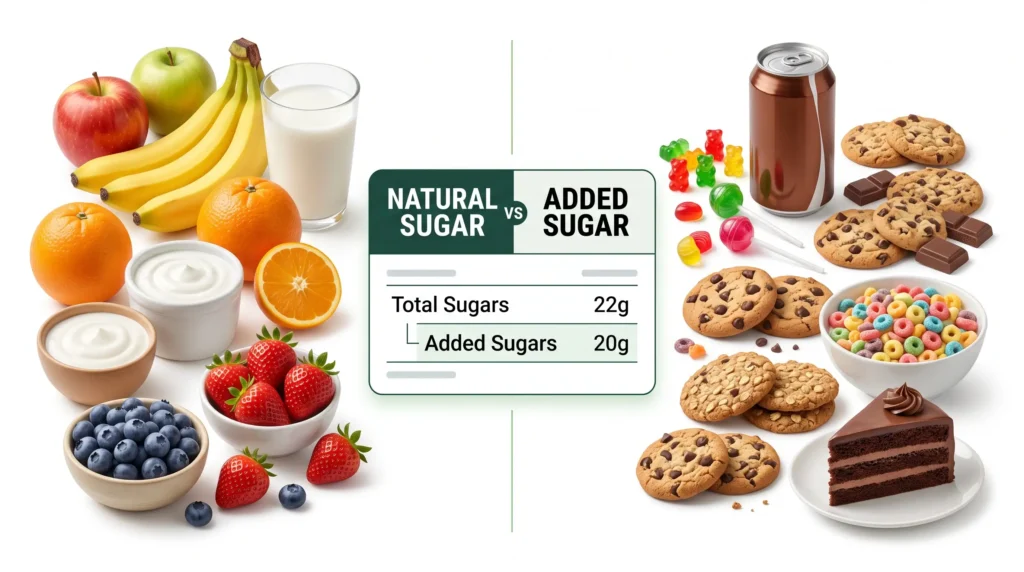
Sugar is naturally present in many foods, but it can also be added to foods and drinks during processing or preparation. Understanding how much sugar you consume can help you make more informed nutrition choices.
A Sugar Intake Calculator can help you estimate your daily sugar intake and understand how it compares with commonly recommended limits for added sugar.
This guide explains the difference between natural and added sugar, how to estimate your daily intake, how to read food labels, and practical ways to manage your sugar consumption.
What Is a Sugar Intake Calculator?
A Sugar Intake Calculator is a nutrition tool designed to estimate how much sugar you consume or how much added sugar may fit into your daily diet.
Depending on the calculator, the estimate may consider factors such as age, sex, daily calorie intake, or the amount of sugar consumed from different foods and drinks.
You can use the Sugar Intake Calculator to get a personalized estimate and learn more about managing sugar intake as part of a balanced diet.
Why Is It Important to Monitor Sugar Intake?
Sugar provides energy, but regularly consuming large amounts of added sugar can make it easier to exceed your overall calorie needs.
Monitoring sugar intake can be particularly useful when your diet contains many packaged foods, sweetened beverages, desserts, or other foods with added sugars.
- Understand your overall sugar consumption.
- Identify foods and drinks high in added sugar.
- Make informed choices when comparing products.
- Build meals with a better overall nutritional balance.
- Reduce unnecessary sources of added sugar.
Natural Sugar vs. Added Sugar
One of the most important concepts when discussing sugar intake is the difference between naturally occurring sugars and added sugars.
Natural Sugar
Natural sugars occur naturally in foods such as whole fruits, milk, and some vegetables.
These foods can also provide important nutrients such as fiber, vitamins, minerals, protein, or other beneficial compounds.
Added Sugar
Added sugars are sugars added to foods or beverages during manufacturing, processing, cooking, or preparation.
Common sources include soft drinks, sweetened cereals, desserts, candy, sweetened sauces, pastries, and many packaged snacks.
The presence of sugar on a nutrition label does not automatically mean that all of it is added sugar. The total sugar value can include both naturally occurring and added sugars.
How Much Sugar Should You Eat Per Day?
There is no single sugar limit that applies equally to every person. Recommendations generally focus on limiting added sugars rather than eliminating naturally occurring sugars from nutritious foods.
For example, the American Heart Association commonly recommends keeping added sugar relatively low, with different suggested limits for men and women.
| Group | Common Added Sugar Guidance |
|---|---|
| Adult women | About 25 g per day |
| Adult men | About 36 g per day |
These figures are general guidance rather than individualized medical requirements. Your overall diet and personal circumstances should also be considered.
How Many Calories Are in Sugar?
Sugar is a carbohydrate and provides approximately 4 calories per gram.
1 gram of sugar ≈ 4 calories
For example, 25 grams of sugar provide approximately 100 calories.
However, sugar intake should not be considered only in terms of calories. The overall nutritional quality of the foods providing those calories also matters.
Common Sources of Added Sugar
Added sugar can appear in many different foods and beverages. Some sources are obvious, while others may be less noticeable.
- Soft drinks and soda
- Sweetened fruit drinks
- Candy and chocolate
- Cakes and pastries
- Cookies and biscuits
- Sweetened breakfast cereals
- Ice cream and desserts
- Sweetened yogurt
- Sweet sauces and condiments
- Some packaged snacks
Sugar in Drinks
Sugary beverages can be an important source of added sugar because they can be consumed quickly without creating the same feeling of fullness as many solid foods.
A single bottle or large serving of a sweetened drink may contain a substantial amount of sugar.
Check the serving size before judging the sugar content of a beverage. A bottle may contain more than one serving.
How to Read Sugar on a Nutrition Label
Nutrition labels can help you understand how much sugar is present in packaged foods.
Look at the total sugar value and, when available, the added sugar value.
| Label Information | What It Means |
|---|---|
| Total Sugars | Includes naturally occurring and added sugars. |
| Added Sugars | Shows sugars added during processing or preparation. |
Always check the serving size because the listed sugar amount may apply to only one serving rather than the entire package.
Different Names for Added Sugar
Added sugar can appear under many names on ingredient lists.
- Sucrose
- Glucose
- Fructose
- Corn syrup
- High-fructose corn syrup
- Brown sugar
- Honey
- Maple syrup
- Maltose
- Dextrose
Reading the complete ingredient list can help you identify products that contain several sources of added sugar.
Sugar Intake and Daily Calories
Your overall calorie needs are influenced by factors such as age, body size, sex, and physical activity.
If you want to estimate your daily calorie requirements, use our Calorie Calculator .
You can also use the TDEE Calculator to estimate your total daily energy expenditure.
Sugar Intake and Weight Management
Added sugar can contribute calories to your diet, especially when it comes from sweetened drinks, desserts, and highly processed foods.
Regularly consuming more calories than your body uses can contribute to weight gain over time.
However, weight management depends on total energy intake, physical activity, food choices, and many other factors rather than sugar alone.
If your goal is to understand your calorie deficit, you can use our Calorie Deficit Calculator .
Sugar and Carbohydrates
Sugar is a type of carbohydrate. Carbohydrates also include starches and dietary fiber.
This means that reducing added sugar does not necessarily mean eliminating carbohydrates from your diet.
Foods such as fruits, vegetables, whole grains, legumes, and other carbohydrate-containing foods can provide important nutrients.
To learn more about your overall macronutrient targets, visit our Macro Calculator .
Tips to Reduce Added Sugar
Choose Water More Often
Replacing sugary drinks with water or unsweetened beverages can be a simple way to reduce added sugar intake.
Compare Food Labels
When choosing between similar products, compare their added sugar content and serving sizes.
Choose Less-Sweet Options
Unsweetened yogurt, plain oatmeal, and unsweetened beverages can provide more control over how much sugar you add yourself.
Be Careful With Sauces
Ketchup, barbecue sauce, sweet chili sauce, and other condiments can sometimes contain added sugar.
Eat More Whole Foods
Building meals around minimally processed foods can make it easier to control added sugar intake.
Do You Need to Avoid Sugar Completely?
For most people, completely eliminating sugar is not necessary. The more useful goal is usually to understand where sugar comes from and keep added sugar within reasonable limits.
Naturally occurring sugars in foods such as whole fruits and milk are different from large amounts of added sugar in highly processed foods and beverages.
A healthy eating pattern is about more than one nutrient. Consider calories, protein, fiber, fruits, vegetables, whole grains, healthy fats, and overall food quality.
Sugar Intake and Fiber
Foods that provide fiber can be an important part of a balanced eating pattern.
Fruits, vegetables, legumes, whole grains, nuts, and seeds are examples of foods that can contribute dietary fiber.
If you want to estimate your daily fiber needs, use our Fiber Intake Calculator .
How to Use a Sugar Intake Calculator
Using a Sugar Intake Calculator is generally straightforward. The exact inputs depend on the calculator, but the process usually involves entering information about your daily intake or personal characteristics.
- Enter the requested personal information.
- Provide your estimated food or sugar intake when required.
- Review the estimated daily sugar amount.
- Compare the result with general recommended limits.
- Identify possible areas where added sugar could be reduced.
Remember that calculator results are estimates and should be interpreted alongside the overall quality of your diet.
Common Mistakes When Tracking Sugar
- Looking only at total sugar without checking added sugar.
- Ignoring the serving size.
- Forgetting sugar in drinks.
- Not counting sauces and condiments.
- Assuming all foods containing sugar are unhealthy.
- Focusing on sugar while ignoring overall calorie and nutrient intake.
Frequently Asked Questions About Sugar Intake
What is a Sugar Intake Calculator?
A Sugar Intake Calculator is a tool that helps estimate daily sugar intake or provides guidance about how much added sugar may be appropriate based on general nutrition recommendations.
How much sugar should I eat per day?
Recommended added sugar limits vary by guideline and individual needs. Many health organizations recommend keeping added sugar relatively low as part of a balanced diet.
Is natural sugar the same as added sugar?
No. Natural sugars occur naturally in foods such as fruit and milk, while added sugars are introduced during processing or preparation.
How many calories are in one gram of sugar?
Sugar provides approximately 4 calories per gram.
Does fruit count toward my sugar intake?
Fruit contains naturally occurring sugar. It is still important to consider total carbohydrate and calorie intake, but naturally occurring sugar in whole fruit is generally considered differently from added sugar.
Can reducing added sugar help with weight management?
Reducing foods and drinks high in added sugar can make it easier for some people to control total calorie intake. Overall energy balance and dietary habits remain important.
Should I avoid sugar completely?
Completely eliminating sugar is generally not necessary for most people. A better approach is to focus on limiting excessive added sugar while maintaining a balanced diet.
Is the Sugar Intake Calculator exact?
No. Calculator results are estimates. Actual sugar intake depends on food choices, portion sizes, product formulations, and the accuracy of the information entered.