
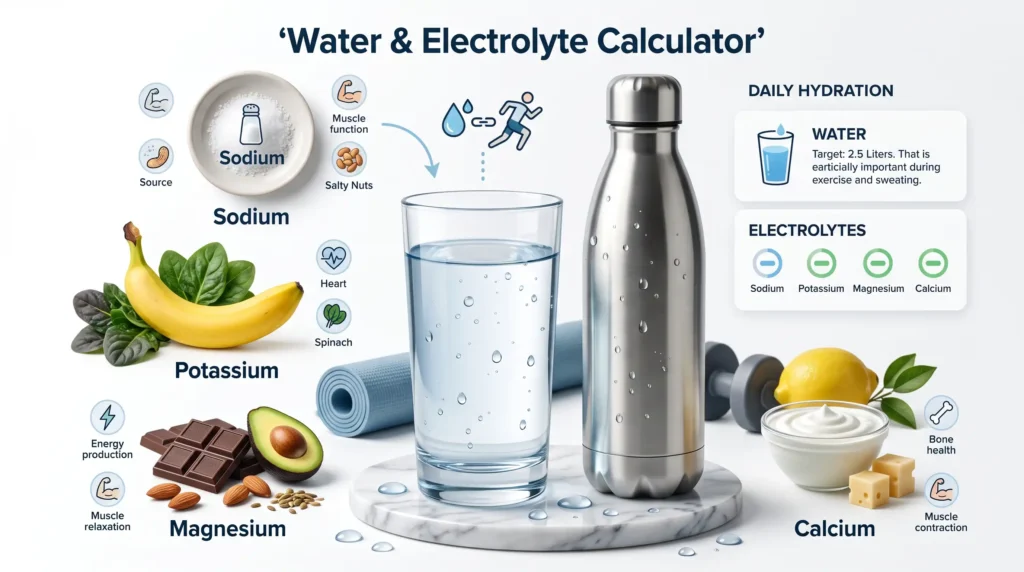
Staying hydrated is an important part of maintaining normal physical and mental function. Your fluid needs can change depending on factors such as body size, physical activity, weather, and daily habits.
The Water & Electrolyte Calculator can help you estimate your daily hydration needs and understand why electrolytes such as sodium, potassium, and magnesium matter.
This guide explains how hydration works, what electrolytes do, when your fluid needs may increase, and how to use a hydration calculator as part of a healthy daily routine.
What Is a Water & Electrolyte Calculator?
A Water & Electrolyte Calculator is a nutrition and hydration tool that provides an estimate of how much fluid and electrolytes you may need throughout the day.
Depending on the calculator, the estimate may consider factors such as body weight, activity level, exercise duration, climate, and other information related to daily hydration.
You can use the Water & Electrolyte Calculator to get a personalized estimate and use it as a starting point for planning your daily fluid intake.
Why Is Hydration Important?
Water is essential for many functions throughout the body. It helps regulate body temperature, supports normal circulation, and plays an important role in digestion and physical performance.
Even normal daily activities can result in fluid loss through breathing, sweating, and urination. Exercise and hot environments can increase these losses.
- Supports normal body temperature regulation.
- Helps maintain normal physical performance.
- Supports normal digestion and nutrient transport.
- Helps replace fluids lost through everyday activities.
- Supports normal cognitive and physical function.
What Are Electrolytes?
Electrolytes are minerals that carry an electrical charge when dissolved in body fluids. They play important roles in fluid balance, nerve signaling, and muscle function.
Important electrolytes include sodium, potassium, magnesium, calcium, chloride, and phosphate.
Water and electrolytes work together.
Hydration is not only about drinking water. Electrolytes also contribute to maintaining fluid balance and supporting normal muscle and nerve function.
Key Electrolytes and Their Roles
Sodium
Sodium is an important electrolyte involved in fluid balance and normal nerve and muscle function. Sweat can contain sodium, which is one reason prolonged exercise may increase electrolyte losses.
Potassium
Potassium contributes to normal muscle function, nerve signaling, and fluid balance. Fruits, vegetables, beans, and dairy products are among the foods that can provide potassium.
Magnesium
Magnesium contributes to normal muscle and nerve function and is involved in many processes in the body. Nuts, seeds, whole grains, and some leafy vegetables are useful dietary sources.
Calcium
Calcium is well known for its role in maintaining normal bones and teeth, but it also contributes to normal muscle function and nerve signaling.
How Much Water Do You Need Per Day?
There is no single amount of water that is perfect for every person. Daily fluid needs vary according to body size, food intake, physical activity, temperature, humidity, and other factors.
Water also comes from foods and other beverages, so total daily water intake is not necessarily the same as the amount of plain water you drink.
A hydration calculator provides an estimate rather than a universal target. Your actual needs may be higher or lower depending on your daily circumstances.
Water Intake and Body Weight
Body size can influence fluid requirements. This is why many hydration calculators use body weight as one of their inputs.
However, body weight should not be the only factor considered. Physical activity, environmental conditions, diet, and individual fluid losses can also affect hydration needs.
Hydration During Exercise
Exercise can increase fluid loss because sweating increases as the body works to regulate temperature.
The amount of fluid lost during exercise varies significantly from person to person. Exercise duration, intensity, temperature, humidity, clothing, and individual sweat rate can all make a difference.
For shorter and lower-intensity workouts, normal meals and fluids may often provide adequate electrolytes. Longer or more demanding exercise can increase the importance of replacing both fluids and electrolytes.
If you exercise regularly, pay attention to thirst, sweat loss, workout duration, and environmental conditions rather than relying on one fixed hydration number every day.
When Do You Lose More Electrolytes?
Electrolyte losses can increase when you sweat heavily for prolonged periods. This may happen during endurance exercise, intense training, or prolonged exposure to hot and humid conditions.
Sweat contains water and electrolytes, although the exact composition varies between individuals.
- Long-duration endurance exercise.
- Intense workouts with heavy sweating.
- Hot or humid environments.
- Outdoor physical activity in warm weather.
- Activities where fluid losses are significant.
Water vs. Electrolyte Drinks
Water is an excellent choice for everyday hydration for many people. Electrolyte beverages can be useful in certain situations, particularly when substantial fluid and electrolyte losses occur.
However, not every workout requires a sports drink or electrolyte supplement.
| Situation | Possible Hydration Choice |
|---|---|
| Normal daily activities | Water and regular meals |
| Short, moderate workout | Water may often be sufficient |
| Long or intense exercise | Fluids plus appropriate electrolytes may be useful |
| Hot and humid conditions | Pay closer attention to fluid and electrolyte losses |
Signs That You May Need More Fluids
Thirst is one useful signal that your body needs fluids. Urine color can also provide a rough indication of hydration status, although it is affected by factors such as food, supplements, and medications.
During exercise, excessive sweating and a noticeable reduction in body weight can indicate substantial fluid loss.
Hydration needs should be considered in context rather than based on one symptom alone.
Can You Drink Too Much Water?
More water is not always better. Consuming excessive amounts of water, particularly over a short period, can dilute sodium levels in the blood and may lead to a serious condition known as hyponatremia.
This is one reason it is important to avoid forcing large amounts of water beyond your body’s needs.
Hydration should be balanced. Drinking an excessive amount of water is not a healthier strategy than drinking an appropriate amount based on your individual needs.
How to Use a Water & Electrolyte Calculator
Using a hydration calculator is generally simple. The exact inputs depend on the calculator, but the process commonly involves entering information about your body and activity.
- Enter your body weight.
- Select your typical activity level.
- Provide exercise information when requested.
- Consider your environmental conditions when applicable.
- Review the estimated daily water requirement.
- Review the suggested electrolyte information.
Use the result as a practical reference rather than an exact medical prescription.
Hydration Tips for Everyday Life
Keep Water Accessible
Keeping a reusable water bottle nearby can make it easier to drink regularly throughout the day.
Drink With Meals
Drinking water with meals is a simple way to make hydration part of your normal routine.
Increase Attention During Exercise
Pay closer attention to fluid losses when exercising for long periods or training in hot conditions.
Eat Water-Rich Foods
Fruits and vegetables can contribute to total daily fluid intake because they naturally contain substantial amounts of water.
Hydration and Nutrition
Hydration is only one part of a healthy nutrition strategy. Your overall diet also includes calories, protein, carbohydrates, fats, fiber, vitamins, and minerals.
If you want to estimate your daily calorie needs, try our Calorie Calculator .
You can also use the Macro Calculator to estimate your daily protein, carbohydrate, and fat targets.
Hydration and Fitness Goals
Proper hydration can support normal exercise performance and help you maintain a consistent training routine.
If your goal is weight management, hydration should be considered alongside your total calorie intake and activity level.
The TDEE Calculator can help estimate your total daily energy expenditure.
Common Hydration Mistakes
- Waiting until you are extremely thirsty before drinking.
- Assuming everyone needs the same amount of water.
- Drinking excessive amounts of water unnecessarily.
- Ignoring increased fluid losses during prolonged exercise.
- Assuming every workout requires an electrolyte drink.
- Forgetting that food also contributes to total fluid intake.
Frequently Asked Questions
What is a Water & Electrolyte Calculator?
It is a hydration tool that estimates daily fluid needs and, depending on the calculator, provides guidance about electrolytes based on factors such as body weight and activity.
How much water should I drink per day?
Water needs vary between individuals. Body size, activity, climate, diet, and fluid losses can all affect daily requirements.
Do I need electrolytes every day?
Most people can obtain electrolytes through a normal balanced diet. Additional electrolyte replacement may be more relevant when substantial fluid and electrolyte losses occur.
Are electrolyte drinks necessary during every workout?
Not necessarily. For many shorter workouts, water and normal meals may be sufficient. Longer or more demanding exercise can increase fluid and electrolyte requirements.
Does coffee count toward hydration?
Beverages containing water contribute to overall fluid intake. The amount of caffeine and the size of the beverage should still be considered as part of your overall diet.
Can I drink too much water?
Yes. Excessive water consumption, especially over a short period, can dilute blood sodium levels and may be dangerous. Hydration should be balanced rather than excessive.
Are water calculator results exact?
No. Hydration calculators provide estimates. Actual needs can change depending on exercise, weather, sweating, nutrition, and individual circumstances.