
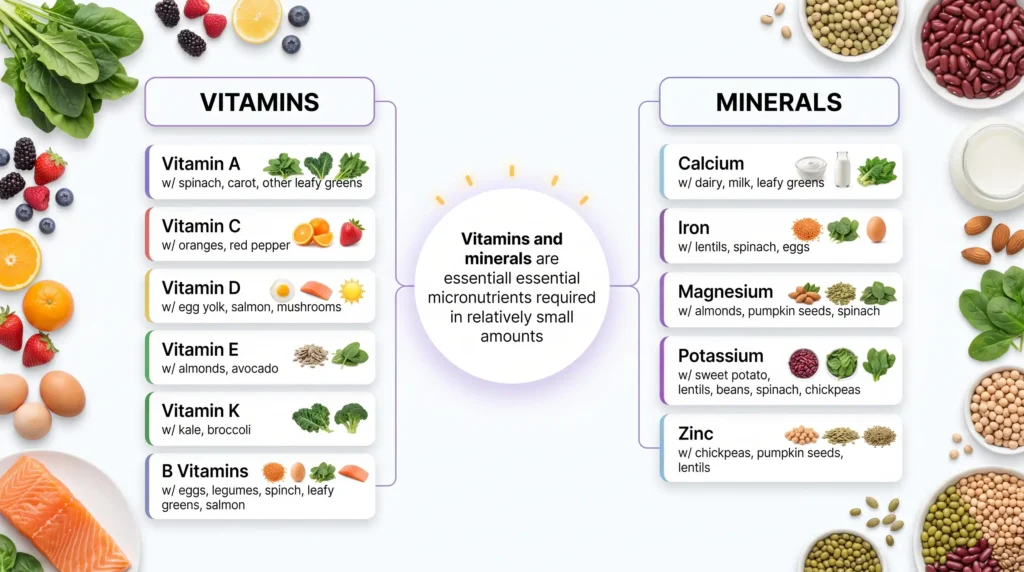
Vitamins and minerals are essential micronutrients that the body needs in relatively small amounts. Although they do not provide calories like protein, carbohydrates, and fat, they support many important processes throughout the body.
A Micronutrient Calculator can help you estimate your daily vitamin and mineral needs based on factors such as age, sex, and other personal characteristics.
This guide explains what micronutrients are, why they matter, which vitamins and minerals are important, how daily needs vary, and how to use a micronutrient calculator as part of a balanced diet.
What Is a Micronutrient Calculator?
A Micronutrient Calculator is a nutrition tool designed to estimate recommended daily amounts of selected vitamins and minerals.
Unlike macronutrients such as protein, carbohydrates, and fat, micronutrients are generally required in much smaller quantities. However, they are involved in numerous biological processes.
You can use the Micronutrient Calculator to get an estimate of your daily micronutrient requirements and identify nutrients that are important to pay attention to in your diet.
What Are Micronutrients?
Micronutrients are vitamins and minerals that the body needs to function normally. They include both water-soluble and fat-soluble vitamins as well as essential dietary minerals.
Unlike carbohydrates, protein, and fat, micronutrients do not primarily serve as a source of energy. Instead, they participate in processes such as metabolism, immune function, bone health, blood formation, and normal nervous system function.
Micronutrients are small in quantity but important in function.
A varied diet can help provide a broad range of vitamins and minerals without relying on a single food or supplement.
Vitamins vs. Minerals
Vitamins
Vitamins are organic compounds that the body needs for normal physiological processes. They are commonly divided into water-soluble and fat-soluble vitamins.
Minerals
Minerals are inorganic elements that contribute to functions such as bone structure, fluid balance, nerve signaling, muscle function, and oxygen transport.
| Category | Examples |
|---|---|
| Vitamins | A, C, D, E, K, B vitamins |
| Minerals | Calcium, iron, magnesium, potassium, zinc |
Why Are Micronutrients Important?
Micronutrients are involved in many processes that help maintain normal health and body function.
- Support normal immune function.
- Contribute to energy metabolism.
- Support normal bones and teeth.
- Help maintain normal nervous system function.
- Contribute to normal muscle function.
- Support normal blood formation.
- Help protect cells from oxidative stress.
Important Vitamins to Know
Vitamin A
Vitamin A contributes to normal vision, immune function, and the maintenance of normal skin and other tissues. Food sources include eggs, dairy products, and orange or dark-green vegetables.
Vitamin C
Vitamin C contributes to normal immune function and collagen formation. Fruits and vegetables, particularly citrus fruits, berries, peppers, and other produce, can provide vitamin C.
Vitamin D
Vitamin D contributes to normal calcium absorption and helps support bones and normal muscle function. Food sources include fatty fish, eggs, and fortified foods.
Vitamin E
Vitamin E contributes to protecting cells from oxidative stress. Nuts, seeds, and plant oils are among its dietary sources.
Vitamin K
Vitamin K contributes to normal blood clotting and maintenance of normal bones. Green leafy vegetables are important dietary sources.
Important Minerals to Know
Calcium
Calcium is important for maintaining normal bones and teeth and also contributes to normal muscle function and nerve signaling.
Iron
Iron contributes to normal oxygen transport and energy metabolism. Meat, seafood, legumes, and fortified foods can provide dietary iron.
Magnesium
Magnesium contributes to normal muscle and nerve function and is involved in many biochemical reactions.
Potassium
Potassium contributes to normal muscle and nervous system function and helps maintain normal blood pressure.
Zinc
Zinc contributes to normal immune function, DNA synthesis, and protection of cells from oxidative stress.
Do Micronutrient Needs Change With Age?
Yes. Nutrient requirements can change throughout life. Children, teenagers, adults, older adults, and pregnant or breastfeeding women may have different nutritional requirements.
Sex can also influence recommended amounts for certain nutrients. For example, iron requirements can differ substantially between some adult groups.
This is why a micronutrient calculator can use personal information to provide a more relevant estimate than a single universal number.
Micronutrients and a Balanced Diet
A balanced diet is generally the best foundation for obtaining vitamins and minerals.
- Eat a variety of fruits and vegetables.
- Include whole grains and other nutrient-rich carbohydrates.
- Choose varied protein sources.
- Include healthy sources of dietary fats.
- Use different foods rather than relying on one food repeatedly.
Your overall calorie and macronutrient intake also matters. If you want to estimate your daily calorie needs, try our Calorie Calculator .
Micronutrients and Macronutrients
Macronutrients and micronutrients are both important parts of nutrition, but they serve different roles.
| Nutrient Type | Examples | Main Role |
|---|---|---|
| Macronutrients | Protein, carbohydrates, fat | Energy and structural functions |
| Micronutrients | Vitamins and minerals | Regulation and normal body processes |
You can use the Macro Calculator to estimate your daily macronutrient targets.
Food Sources of Micronutrients
Different foods provide different combinations of vitamins and minerals. Eating a varied diet can help increase the range of micronutrients you consume.
| Food Group | Examples of Nutrients |
|---|---|
| Leafy green vegetables | Vitamin K, folate, magnesium |
| Citrus and other fruits | Vitamin C, folate, potassium |
| Dairy foods | Calcium, vitamin B12, vitamin D when fortified |
| Fish and seafood | Vitamin D, B12, selenium, iodine |
| Nuts and seeds | Magnesium, vitamin E, zinc |
| Legumes | Iron, magnesium, folate, potassium |
Micronutrients and Dietary Fiber
Many foods that provide fiber also contain useful vitamins and minerals. Fruits, vegetables, legumes, whole grains, nuts, and seeds can contribute both fiber and micronutrients.
If you want to estimate your daily fiber needs, use our Fiber Intake Calculator .
Do You Need Vitamin Supplements?
Not everyone needs vitamin or mineral supplements. Many people can meet their nutritional requirements through a varied diet.
Supplements can be useful in specific situations, but taking large doses of vitamins or minerals without a clear reason is not necessarily beneficial.
More is not always better with micronutrients. Some vitamins and minerals can accumulate in the body or cause adverse effects when consumed in excessive amounts.
Micronutrient Deficiency
A nutrient deficiency occurs when the body does not receive enough of a particular nutrient over time.
Symptoms can vary greatly depending on the nutrient involved and may overlap with many other conditions. A calculator cannot diagnose a deficiency.
If you suspect that you have a nutrient deficiency, appropriate medical or nutritional assessment may be necessary.
How to Use a Micronutrient Calculator
Using a Micronutrient Calculator is generally simple. The exact inputs depend on the tool, but the process commonly involves entering basic personal information.
- Enter your age.
- Select your sex when requested.
- Provide other requested information.
- Review the estimated vitamin and mineral requirements.
- Compare the results with your typical dietary intake.
The results should be treated as general nutrition guidance rather than a medical diagnosis or individualized prescription.
Tips for Getting More Micronutrients From Food
Eat a Variety of Vegetables
Different vegetables provide different combinations of vitamins, minerals, antioxidants, and other beneficial compounds.
Include Different Fruits
Rotating your fruit choices can provide a broader range of micronutrients and dietary compounds.
Choose Nutrient-Dense Protein Sources
Fish, eggs, dairy products, meat, legumes, nuts, and seeds can contribute a range of important nutrients.
Include Whole Foods Regularly
Minimally processed foods can help create a varied and nutrient-rich eating pattern.
Micronutrients and Fitness
Micronutrients also play important roles in normal muscle function, energy metabolism, bone health, and other processes relevant to physical activity.
However, consuming more vitamins and minerals than you need does not automatically improve exercise performance.
If you are planning your nutrition around training, your total calorie and macronutrient needs should also be considered.
The TDEE Calculator can help estimate your daily energy expenditure.
Common Micronutrient Mistakes
- Focusing on one vitamin while ignoring overall diet quality.
- Assuming supplements are always better than food sources.
- Taking high doses without professional guidance.
- Eating a very limited variety of foods.
- Ignoring serving sizes and overall dietary intake.
- Using a calculator as a diagnosis for nutrient deficiency.
Frequently Asked Questions
What is a Micronutrient Calculator?
A Micronutrient Calculator is a nutrition tool that estimates daily vitamin and mineral requirements based on personal information and general nutritional reference values.
What are micronutrients?
Micronutrients are vitamins and minerals that the body needs in relatively small amounts to support normal physiological functions.
What is the difference between micronutrients and macronutrients?
Macronutrients include protein, carbohydrates, and fat and are required in larger amounts. Micronutrients include vitamins and minerals and are generally needed in much smaller quantities.
Which foods are high in micronutrients?
Fruits, vegetables, legumes, whole grains, nuts, seeds, dairy products, eggs, fish, seafood, and other nutrient-rich foods can provide a wide variety of vitamins and minerals.
Can a Micronutrient Calculator detect deficiencies?
No. A calculator can estimate nutritional requirements, but it cannot diagnose a vitamin or mineral deficiency.
Do I need supplements to meet my micronutrient needs?
Not necessarily. Many people can obtain adequate vitamins and minerals through a varied diet. Supplement needs depend on individual circumstances.
Can I get too many vitamins or minerals?
Yes. Excessive intake of certain vitamins and minerals can cause adverse effects. This is particularly important with high-dose supplements.
Are micronutrients important for exercise?
Yes. Vitamins and minerals contribute to normal energy metabolism, muscle function, bone health, and other physiological processes involved in physical activity.