
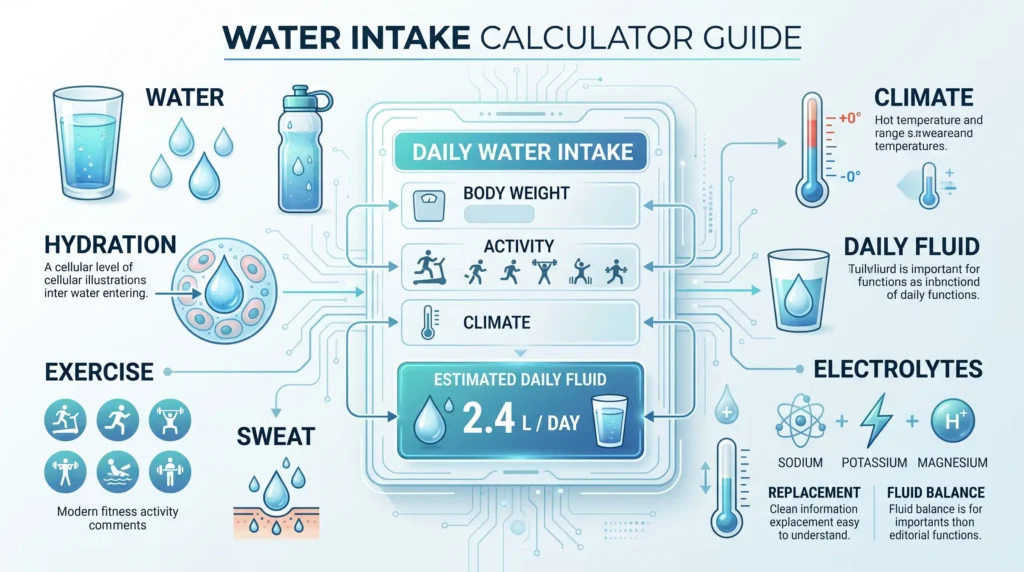
Water is essential for many functions in the body, including temperature regulation, circulation, digestion, and normal physical performance. Staying adequately hydrated is especially important when you exercise, sweat heavily, or spend time in hot environments.
A Water Intake Calculator can provide a simple estimate of how much fluid you may need throughout the day based on factors such as body weight, activity, and other personal considerations.
In this guide, you’ll learn how daily water intake is estimated, how much water you may need, signs of dehydration, hydration during exercise, and practical ways to stay hydrated.
What Is a Water Intake Calculator?
A Water Intake Calculator is an online tool designed to estimate your daily fluid needs. It can use information such as body weight, activity level, exercise duration, and environmental conditions to produce a personalized starting estimate.
Water requirements are not exactly the same for everyone. Your needs can change from day to day depending on activity, temperature, sweating, food intake, and other factors.
You can use the Water Intake Calculator to quickly estimate a daily hydration target.
Why Is Water Important?
Water plays an important role in normal body function. It is involved in processes including maintaining body temperature, transporting nutrients, supporting digestion, and helping the body maintain normal fluid balance.
During physical activity, the body also loses water through sweat. Replacing fluids can therefore become increasingly important as exercise duration and sweating increase.
How Much Water Do You Need Per Day?
There is no single amount of water that is ideal for every person. Daily fluid requirements depend on several variables.
- Body size and weight.
- Physical activity.
- Temperature and climate.
- How much you sweat.
- Food and beverage intake.
- Age and individual circumstances.
Some commonly used hydration formulas estimate fluid needs according to body weight. These formulas can be useful as a starting point, but they should not be interpreted as an exact medical requirement.
How Does a Water Intake Calculator Work?
Many hydration calculators begin with body weight and then adjust the estimate based on activity or other factors.
Example calculation:
If a calculator uses a weight-based hydration formula, your body weight is multiplied by a selected fluid-per-weight factor to produce an estimated daily intake.
Different calculators can use different formulas. Therefore, two water calculators may provide slightly different estimates while still being reasonable starting points.
Water Intake by Body Weight
Body weight is one of the variables commonly used to estimate hydration needs.
| Body Weight | Example Starting Range |
|---|---|
| 50 kg | Approximately 1.5–2.0 L/day |
| 60 kg | Approximately 1.8–2.4 L/day |
| 70 kg | Approximately 2.1–2.8 L/day |
| 80 kg | Approximately 2.4–3.2 L/day |
| 90 kg | Approximately 2.7–3.6 L/day |
These figures are examples of how weight-based estimates can vary and should not be treated as fixed requirements for every individual.
Water Intake and Exercise
Physical activity can increase fluid losses because the body produces sweat to help regulate temperature.
The amount of fluid you lose during exercise depends on exercise intensity, duration, temperature, humidity, clothing, and individual sweat rate.
For this reason, someone completing a long outdoor run in hot weather may require more fluid than someone performing a short indoor workout.
If you want to estimate energy expenditure from exercise, you can also use the Calories Burned Calculator .
Hydration Before Exercise
Starting exercise adequately hydrated can help you avoid beginning a workout already experiencing significant fluid loss.
Rather than drinking a very large amount of water immediately before exercising, it is generally more practical to maintain regular fluid intake throughout the day.
Keep water available during the day and drink regularly rather than waiting until you become very thirsty.
Hydration During Exercise
During shorter and lower-intensity workouts, drinking according to thirst may often be sufficient for many people.
Longer or more intense sessions, especially in hot conditions, can result in greater fluid and electrolyte losses.
In these situations, hydration planning becomes more important.
For workouts involving substantial sweating, you may also want to explore the Water & Electrolyte Calculator to consider hydration and electrolyte needs together.
Hydration After Exercise
After exercise, replacing fluids lost through sweating can support normal recovery and help restore fluid balance.
If you have lost a noticeable amount of body weight during a workout, that change can provide an indication that you experienced meaningful fluid loss.
For athletes and people who regularly perform long-duration exercise, hydration strategies can be individualized according to sweat rate, exercise duration, and environmental conditions.
Signs You May Need More Fluids
Thirst is one of the body’s natural signals that fluid intake may need attention. Other changes can also provide useful information about hydration status.
- Feeling unusually thirsty.
- Dry mouth.
- Dark or concentrated urine.
- Reduced urination.
- Fatigue during activity.
- Headache in some circumstances.
These signs are not specific to dehydration and can have other causes. Severe or persistent symptoms should be discussed with a qualified healthcare professional.
Urine Color and Hydration
Urine color can provide a general indication of hydration status, although it is not a perfect measurement.
Pale yellow urine is often associated with adequate hydration, while darker urine can occur when urine is more concentrated.
However, medications, supplements, foods, and certain health conditions can change urine color, so it should not be used as the only measure of hydration.
Water vs Other Fluids
Plain water is an excellent source of fluid, but total fluid intake can also come from other beverages and water-rich foods.
Milk, soups, fruits, vegetables, and other foods can contribute to daily fluid intake.
The nutritional value of different beverages can vary significantly, so hydration should be considered alongside overall dietary quality.
Do You Need Electrolytes?
Electrolytes such as sodium and potassium play important roles in fluid balance and normal physiological function.
For many normal daily activities, a balanced diet provides substantial amounts of electrolytes. However, electrolyte replacement may become more relevant during prolonged exercise or situations involving substantial sweating.
Your electrolyte needs depend on the duration and intensity of exercise, sweat rate, environment, and individual factors.
You can also learn more about sodium intake using the Sodium Intake Calculator .
Water Intake in Hot Weather
Hot and humid conditions can increase sweating and therefore increase fluid losses.
If you exercise outdoors during hot weather, pay particular attention to thirst, sweat rate, exercise duration, and the availability of fluids.
Avoid assuming that a fixed water target is appropriate every day. Hydration requirements can change significantly with environmental conditions.
Water Intake and Running
Runners should consider hydration as part of their overall training strategy, particularly when preparing for longer distances.
A short easy run may require a very different hydration strategy from a long-distance run in warm weather.
Your running pace and distance can also help you understand how long you will be exercising.
Use the Running Pace Calculator to calculate your running pace and estimate finish times.
Water Intake and Nutrition
Hydration is only one part of a healthy nutrition strategy. Your calorie, protein, carbohydrate, fat, and micronutrient intake can also influence your overall diet.
If you are planning your daily nutrition, the Calorie Calculator can help estimate your daily calorie needs.
For people who are physically active, the Protein Calculator can provide an estimate of daily protein requirements.
How to Stay Hydrated Throughout the Day
You do not need to drink your entire daily water intake at once. Spreading fluid intake throughout the day can be a more practical approach.
- Drink water regularly throughout the day.
- Keep a reusable water bottle nearby.
- Drink with meals.
- Drink before, during, and after longer workouts when appropriate.
- Pay attention to thirst and changes in urine concentration.
- Increase attention to hydration during hot weather.
Can You Drink Too Much Water?
Yes. More water is not always better.
Drinking excessive amounts of water, especially over a short period, can dilute the sodium concentration in the blood and may lead to a potentially serious condition called hyponatremia.
Avoid forcing yourself to drink excessive amounts of water simply because a calculator gives you a target.
Hydration needs should be adjusted according to your circumstances, activity, environment, and professional medical advice when needed.
Who May Need Individual Hydration Advice?
A general water calculator is intended as an estimate rather than personalized medical advice.
People with certain medical conditions or those taking medications that affect fluid balance may need individualized guidance.
If you have been instructed by a healthcare professional to restrict or increase fluid intake, follow that advice instead of relying on a general calculator.
Frequently Asked Questions
How much water should I drink per day?
Your daily fluid needs depend on factors such as body size, activity, climate, food intake, and individual circumstances. A Water Intake Calculator can provide a useful starting estimate.
How does a Water Intake Calculator work?
Most water intake calculators use variables such as body weight and may adjust the estimate based on physical activity and other factors.
Is drinking 2 liters of water a day enough?
It may be appropriate for some people but not for everyone. Fluid requirements vary according to body size, activity, climate, diet, and other individual factors.
Do I need more water when I exercise?
Exercise can increase fluid losses through sweating, so fluid needs may increase depending on workout duration, intensity, temperature, humidity, and individual sweat rate.
Do electrolytes replace water?
No. Electrolytes and water serve different but related roles. During prolonged or very sweaty exercise, replacing both fluid and relevant electrolytes may be useful.
Can I drink too much water?
Yes. Excessive water intake can dilute blood sodium and, in severe cases, cause hyponatremia. Avoid consuming excessive amounts of water simply to reach a fixed target.
Is urine color a good way to check hydration?
Urine color can provide a general indication of hydration, but it is not a perfect measurement and can be affected by foods, supplements, medications, and health conditions.
Should I drink more water in hot weather?
Hot conditions can increase sweating and fluid losses, so hydration needs may increase. Pay attention to thirst, activity duration, and environmental conditions.