
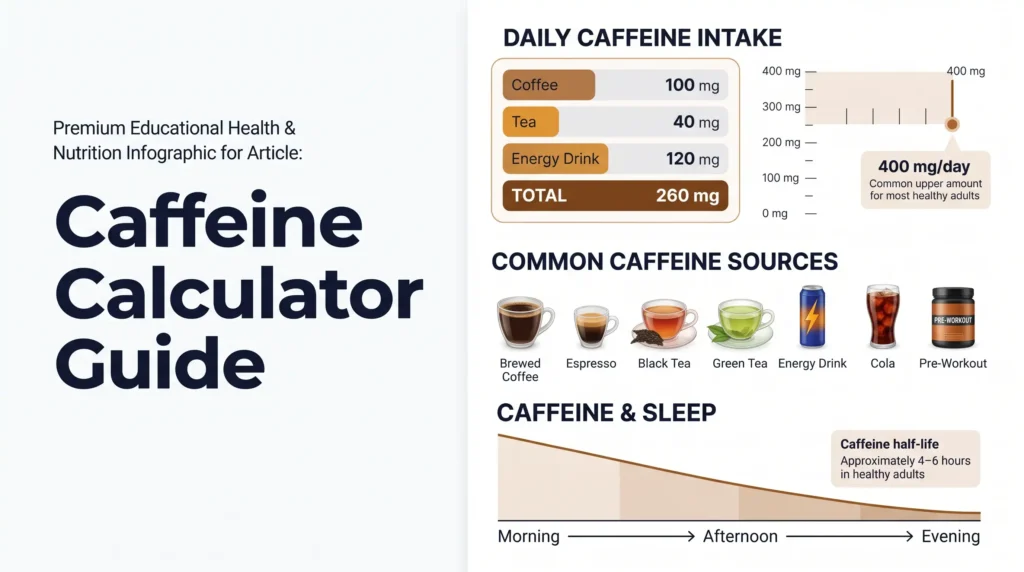
A Caffeine Calculator can help you estimate how much caffeine you consume from coffee, tea, energy drinks, soda, pre-workout products, and other caffeinated beverages.
Caffeine is one of the most widely consumed stimulants in the world. It can increase alertness and temporarily reduce feelings of fatigue, but individual responses can vary significantly.
This guide explains how to calculate caffeine intake, common caffeine amounts in popular drinks, recommended daily limits, caffeine timing, and practical ways to manage your daily intake.
Table of Contents
What Is a Caffeine Calculator?
A Caffeine Calculator is a nutrition and lifestyle tool that estimates your total caffeine intake from the drinks and products you consume during the day.
Instead of looking at each beverage separately, a caffeine calculator helps you add different sources together and understand your approximate daily caffeine consumption.
This can be especially useful if you drink several cups of coffee, use pre-workout supplements, consume energy drinks, or combine multiple caffeinated products.
Why Track Your Caffeine Intake?
Caffeine can affect people differently. Some people can consume caffeine without major problems, while others may experience nervousness, a faster heartbeat, digestive discomfort, or difficulty sleeping.
Tracking your intake can help you identify how much caffeine you consume and whether your intake may be contributing to unwanted effects.
Monitoring caffeine intake may be useful for:
- Understanding your daily caffeine consumption.
- Managing coffee and tea intake.
- Monitoring energy drink consumption.
- Planning caffeine around workouts.
- Reducing caffeine gradually.
- Protecting sleep quality by avoiding late caffeine.
Keeping a simple record of your drinks and supplements can make it easier to understand your overall caffeine consumption.
How Much Caffeine Is Safe Per Day?
For most healthy adults, approximately 400 mg of caffeine per day is commonly referenced as an upper amount.
This is a general guideline rather than a target that everyone should reach. Some people may experience side effects at much lower amounts.
Important: Caffeine tolerance varies between individuals. The amount that feels comfortable for one person may cause unwanted effects in another.
When calculating your daily intake, remember to include caffeine from all sources, including coffee, tea, energy drinks, soda, chocolate products, and pre-workout supplements.
If you are sensitive to caffeine or experience unwanted effects, you may need to consume less than the general guideline.
Caffeine Recommendations During Pregnancy
Caffeine intake during pregnancy requires additional caution. A commonly referenced recommendation is to limit caffeine to approximately 200 mg per day during pregnancy.
Because pregnancy can change caffeine metabolism and individual circumstances vary, pregnant individuals should discuss caffeine intake with their healthcare professional.
Remember that caffeine from all beverages and supplements contributes to the daily total.
Caffeine Amounts in Common Drinks
Caffeine content varies considerably depending on serving size, preparation method, brand, and product formulation.
The following table provides approximate amounts for common caffeinated drinks.
| Drink or Product | Typical Caffeine Amount |
|---|---|
| Brewed coffee | Approximately 80–120 mg per 8 oz |
| Espresso | Approximately 60–75 mg per shot |
| Black tea | Approximately 30–50 mg per 8 oz |
| Green tea | Approximately 20–40 mg per 8 oz |
| Energy drinks | Varies significantly by brand and serving size |
| Cola | Approximately 25–40 mg per 12 oz |
These values are approximate. Always check the product label when calculating your actual caffeine intake.
Serving sizes are important because a large beverage may contain substantially more caffeine than a small one. Some containers also contain multiple servings, so check whether the listed amount applies to one serving or the entire container.
How Does a Caffeine Calculator Work?
The basic principle is simple: the caffeine content of each caffeinated drink or product is added together to estimate your total daily caffeine intake.
Example:
| Caffeinated Product | Caffeine Amount |
|---|---|
| Coffee | 100 mg |
| Tea | 40 mg |
| Energy drink | 120 mg |
| Total | 260 mg |
In this example, the estimated daily caffeine intake is 260 mg.
If you consume several products throughout the day, recording each source makes it easier to understand your total intake.
For the most accurate estimate, use the caffeine amounts listed on product labels whenever possible.
Caffeine and Coffee
Coffee is one of the most common sources of caffeine. However, caffeine content can vary depending on the coffee type, brewing method, serving size, and brand.
A large coffee can contain considerably more caffeine than a small serving, even when both are described simply as coffee.
Different preparation methods can also produce different caffeine concentrations. Espresso, filtered coffee, instant coffee, and cold brew should not automatically be assumed to contain the same amount of caffeine per serving.
For accurate tracking, use the caffeine amount shown on the product label or information provided by the coffee shop when available.
Caffeine and Tea
Tea naturally contains caffeine, although the amount can vary according to the type of tea and preparation method.
Black tea generally contains more caffeine than many green teas, while herbal teas are often naturally caffeine-free unless additional caffeine ingredients are included.
Other factors can influence the amount of caffeine in your cup, including:
- The type of tea leaves.
- The amount of tea used.
- The water temperature.
- The brewing time.
- The serving size.
If you regularly drink tea throughout the day, remember to include every serving when estimating your total caffeine intake.
Caffeine and Energy Drinks
Energy drinks can contain significant amounts of caffeine, and serving sizes vary widely between products.
Some products also contain other stimulants or ingredients, making it particularly important to check the nutrition and ingredient labels.
Tip: Always check whether the label lists caffeine per serving or per container. A container may contain multiple servings.
If you consume an energy drink alongside coffee or tea, include all these sources when calculating your daily total.
Caffeine and Pre-Workout Supplements
Many pre-workout supplements contain caffeine because caffeine can increase alertness and perceived energy during exercise.
If you use a pre-workout product, include its caffeine content when calculating your total daily intake.
Pay particular attention to the recommended serving size. Using more than the recommended amount may increase your caffeine consumption and the likelihood of unwanted effects.
You can also use the Supplement Stack Calculator to organize information about multiple supplements.
Remember that combining pre-workout supplements with coffee, energy drinks, or other caffeinated products can increase your total daily intake more than you might expect.
Caffeine Before Exercise
Caffeine is commonly consumed before exercise because it can temporarily increase alertness and reduce the perception of effort in some people.
However, more caffeine does not necessarily mean better workout results. Higher doses can increase the likelihood of unwanted effects such as jitteriness, anxiety, digestive discomfort, or sleep problems.
Individual tolerance and workout timing are important considerations.
If you exercise in the afternoon or evening, consider how caffeine may affect your sleep later that night. A supplement that makes you feel more alert during training may also make it harder to fall asleep.
Caffeine and Sleep
One of the most important reasons to monitor caffeine timing is its potential effect on sleep.
Caffeine has a relatively long half-life, meaning that a significant amount can remain in the body several hours after consumption.
Consuming caffeine late in the day may make it harder for some people to fall asleep or may reduce sleep quality.
If caffeine affects your sleep, consider reducing afternoon and evening caffeine and observe whether your sleep improves.
You may also find it useful to:
- Drink caffeinated beverages earlier in the day.
- Reduce the size of your usual coffee.
- Replace some caffeinated drinks with decaffeinated alternatives.
- Track your caffeine intake alongside your sleep habits.
The appropriate timing depends on individual sensitivity, consumption levels, and sleep schedule.
How Long Does Caffeine Stay in Your Body?
Caffeine is metabolized gradually rather than disappearing immediately after consumption.
The average half-life of caffeine in healthy adults is often estimated at around 4–6 hours, although it can vary considerably between individuals.
A half-life is the time required for the amount of a substance in the body to decrease by approximately half. It does not mean that all caffeine disappears after that period.
Pregnancy, certain medications, smoking status, liver function, and other factors can influence caffeine metabolism.
Because caffeine can remain in your body for several hours, the timing of consumption matters as well as the total amount you drink.
Signs You May Be Consuming Too Much Caffeine
Excessive caffeine can cause unwanted effects, particularly in people who are sensitive to caffeine.
Possible signs include:
- Restlessness or nervousness.
- Jitters or shakiness.
- Difficulty sleeping.
- Increased heart rate or palpitations.
- Headache.
- Digestive discomfort.
- Anxiety or irritability.
These symptoms can have causes other than caffeine, so they should not automatically be attributed to your intake.
If you experience severe or concerning symptoms, seek appropriate medical advice rather than relying on a caffeine calculator.
How to Reduce Caffeine Intake
If you consume a lot of caffeine and want to reduce your intake, gradually decreasing your consumption may be easier than stopping suddenly.
Here are some practical strategies:
- Reduce the number of caffeinated drinks gradually.
- Choose smaller serving sizes.
- Replace some drinks with decaffeinated alternatives.
- Avoid combining several caffeinated products.
- Check labels for hidden caffeine sources.
- Move caffeine earlier in the day if sleep is affected.
Reducing caffeine too quickly after regular consumption can cause temporary withdrawal symptoms, including headaches, tiredness, and difficulty concentrating.
A gradual approach may help make the transition more manageable.
Caffeine Tolerance and Individual Differences
Regular caffeine consumption can influence how strongly a person responds to caffeine.
Genetics, habitual caffeine use, body size, medications, pregnancy, and other factors can affect caffeine metabolism and sensitivity.
Some people may feel alert after a relatively small amount of caffeine, while others may consume more without noticing the same effects.
However, feeling less stimulated does not necessarily mean caffeine has no effect on your body or sleep.
Therefore, a daily caffeine number should be viewed as a guideline rather than a guarantee that a particular amount will be comfortable for everyone.
Caffeine and Hydration
Moderate caffeinated drinks can contribute to daily fluid intake. However, water should remain an important part of your overall hydration strategy.
If you exercise regularly, spend time in hot weather, or sweat heavily, your fluid requirements may differ from those of someone with a less active lifestyle.
If you want to estimate your daily fluid requirements, use the Water Intake Calculator.
Remember that hydration needs vary according to activity, environment, body size, and individual circumstances.
Caffeine, Calories, and Nutrition
Caffeine itself contains very few calories, but many caffeinated drinks contain added sugar, milk, cream, syrups, or other ingredients that can significantly increase their calorie content.
For example, a sweetened coffee beverage may contain substantially more calories than black coffee even if their caffeine content is similar.
If you regularly consume flavored coffee drinks or energy drinks with added sugar, consider tracking both your caffeine intake and your overall nutritional intake.
Use the Calorie Calculator to estimate your daily calorie requirements.
You can also explore the Nutrition Facts Calculator to better understand calories and nutrients in foods and drinks.
How to Use a Caffeine Calculator
A Caffeine Calculator can help you estimate your daily intake by combining the caffeine amounts from your different drinks and products.
Step 1: Identify Your Caffeine Sources
List all caffeinated drinks and supplements you consume during the day.
Include coffee, tea, energy drinks, soda, chocolate products, and pre-workout supplements when applicable.
Step 2: Check the Caffeine Amount
Look at the product label and identify the amount of caffeine per serving.
Pay attention to the serving size. The amount listed may apply to a single serving rather than the entire container.
Step 3: Enter the Amount Into the Calculator
Enter the caffeine amount and number of servings into the calculator.
If different products contain different amounts of caffeine, record each product separately.
Step 4: Add All Daily Sources
The calculator can help estimate your total daily caffeine consumption.
For example, if you drink two coffees and one energy drink, include the caffeine from all three products rather than calculating each one independently.
Step 5: Compare Your Intake With General Guidelines
Use the result as a general reference and consider your personal tolerance, sleep, lifestyle, and health circumstances.
A result below a commonly referenced daily limit does not guarantee that you will experience no side effects. Your response to caffeine is also important.
Frequently Asked Questions
What Is a Caffeine Calculator?
A Caffeine Calculator estimates your total daily caffeine intake from coffee, tea, energy drinks, soda, pre-workout products, and other caffeinated sources.
How Much Caffeine Can Adults Have Per Day?
For most healthy adults, around 400 mg of caffeine per day is commonly referenced as an upper amount. Individual tolerance can vary, and some people may experience effects at lower amounts.
How Much Caffeine Is in a Cup of Coffee?
An 8-ounce serving of brewed coffee commonly contains around 80–120 mg of caffeine, although the actual amount can vary significantly depending on the coffee and preparation method.
How Much Caffeine Is in an Espresso?
A typical espresso shot contains approximately 60–75 mg of caffeine, although the amount depends on the serving size, coffee beans, and preparation.
Does Caffeine Affect Sleep?
Yes. Caffeine can remain in the body for several hours and may interfere with sleep, particularly when consumed later in the day or when someone is sensitive to caffeine.
How Long Does Caffeine Stay in the Body?
Caffeine has an average half-life of roughly 4–6 hours in healthy adults, although metabolism can vary considerably between individuals.
Is Caffeine Good Before a Workout?
Caffeine may improve alertness and reduce perceived effort during exercise for some people. However, individual response, timing, and dosage should be considered.
How Much Caffeine Is Recommended During Pregnancy?
A commonly referenced limit during pregnancy is about 200 mg of caffeine per day. Pregnant individuals should discuss caffeine intake with their healthcare professional.
Can Caffeine Cause Dehydration?
Moderate caffeinated beverages can contribute to fluid intake. However, water remains an important part of maintaining adequate hydration.
How Can I Reduce Caffeine Consumption?
Gradually reducing caffeinated drinks, choosing smaller servings, switching some drinks to decaffeinated options, and avoiding late caffeine can help reduce intake.
Related FitCalculatorAI Tools
Explore these related calculators to better understand your nutrition, hydration, calories, and supplement intake.
- Calorie Calculator — Estimate your daily calorie needs.
- Water Intake Calculator — Estimate daily hydration needs.
- Nutrition Facts Calculator — Explore calories and nutrients in foods and drinks.
- Supplement Stack Calculator — Organize information about multiple supplements.
- Supplement Cost Calculator — Estimate supplement spending over time.
- Protein Calculator — Estimate daily protein requirements.
Disclaimer
This guide provides general educational information and is not medical advice. Caffeine sensitivity and tolerance vary between individuals.
People who are pregnant, have certain medical conditions, take medications, or experience concerning symptoms should consult a qualified healthcare professional. Calculator results are estimates and should not replace professional medical advice.