
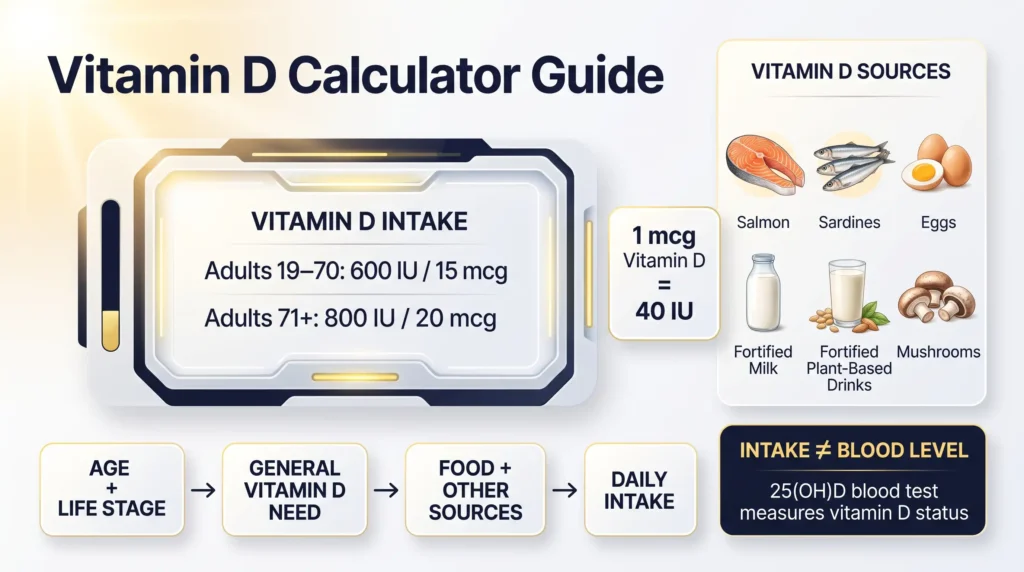
A Vitamin D Calculator can help you understand general vitamin D intake and learn more about this important nutrient.
Vitamin D plays an important role in calcium absorption, bone health, muscle function, and normal immune system function. Your vitamin D status can be influenced by diet, sunlight exposure, age, lifestyle, and other individual factors.
This guide explains how vitamin D requirements are estimated, where vitamin D comes from, the difference between vitamin D intake and blood levels, and how to use a Vitamin D Calculator responsibly.
What Is a Vitamin D Calculator?
A Vitamin D Calculator is an online nutrition tool designed to help estimate or understand daily vitamin D requirements based on general dietary reference information.
Depending on the calculator, it may consider factors such as age, sex, dietary intake, or other information relevant to vitamin D nutrition.
The result is intended as an educational estimate. It should not be used to diagnose vitamin D deficiency or determine an individual’s medical treatment.
Why Is Vitamin D Important?
Vitamin D is an essential nutrient that helps the body absorb calcium and supports normal bone development and maintenance.
It also contributes to normal muscle function and normal immune system function.
Vitamin D is important for several functions, including:
- Supporting calcium absorption.
- Maintaining normal bones and teeth.
- Supporting normal muscle function.
- Contributing to normal immune system function.
- Supporting normal phosphorus metabolism.
How Much Vitamin D Do You Need?
Vitamin D requirements vary depending on age and life stage. Dietary reference values are generally expressed in micrograms (mcg) or International Units (IU).
For many adults, a commonly referenced recommended dietary allowance is 15 mcg (600 IU) per day. Adults over 70 years may have a recommended intake of approximately 20 mcg (800 IU) per day.
These values are general dietary reference values and are not necessarily the same as the amount an individual may need based on a medical evaluation.
Vitamin D conversion:
1 microgram (mcg) of vitamin D = 40 IU.
Vitamin D Recommendations by Age
| Age Group | General Recommended Intake |
|---|---|
| Infants 0–12 months | 10 mcg (400 IU) per day |
| Children and Teens 1–18 years | 15 mcg (600 IU) per day |
| Adults 19–70 years | 15 mcg (600 IU) per day |
| Adults over 70 years | 20 mcg (800 IU) per day |
| Pregnancy and Breastfeeding | 15 mcg (600 IU) per day |
These are general reference values and individual recommendations can differ depending on health status and professional assessment.
What Are the Main Sources of Vitamin D?
Vitamin D is different from many other vitamins because the body can produce vitamin D when skin is exposed to ultraviolet B (UVB) radiation from sunlight.
Vitamin D can also come from certain foods and dietary supplements.
Sunlight
Sun exposure can contribute to vitamin D production in the skin. However, the amount produced can vary significantly depending on season, latitude, skin pigmentation, clothing, sunscreen use, age, and other factors.
Sun exposure should not be used as a reason to intentionally increase ultraviolet exposure without considering skin cancer risk.
Fatty Fish
Fatty fish such as salmon, sardines, trout, and mackerel can provide vitamin D along with protein and healthy fats.
Egg Yolks
Egg yolks contain smaller amounts of vitamin D and can contribute to dietary intake.
Fortified Foods
Some milk, plant-based beverages, cereals, and other foods may be fortified with vitamin D. The exact amount depends on the product, so checking the nutrition label is useful.
Vitamin D Intake vs. Vitamin D Blood Levels
One of the most important things to understand is that a Vitamin D Calculator estimates dietary requirements or intake. It does not measure vitamin D in your blood.
Vitamin D status is commonly assessed using a blood test measuring 25-hydroxyvitamin D, also known as 25(OH)D.
Your daily vitamin D intake and your blood vitamin D level are two different measurements. A calculator cannot replace a blood test when vitamin D status needs to be medically assessed.
Factors That Can Affect Vitamin D Status
Vitamin D status can be influenced by many factors, which is why a simple calculator cannot perfectly predict an individual’s vitamin D level.
- Age.
- Sun exposure.
- Season and geographic location.
- Skin pigmentation.
- Clothing and sunscreen use.
- Dietary vitamin D intake.
- Body composition.
- Absorption of nutrients.
- Some medical conditions.
- Certain medications.
Vitamin D and Calcium
Vitamin D and calcium work closely together. Vitamin D helps the body absorb calcium from the digestive tract, making adequate vitamin D important for normal bone health.
A balanced diet should provide appropriate amounts of both nutrients rather than focusing on vitamin D alone.
If you want to explore other micronutrients, you can use the Micronutrient Calculator to learn more about vitamins and minerals.
Vitamin D and Magnesium
Magnesium is another important mineral involved in normal physiological processes related to vitamin D metabolism.
A balanced diet should provide a variety of essential vitamins and minerals rather than relying on one nutrient in isolation.
You can explore magnesium requirements with the Magnesium Intake Calculator .
Vitamin D From Food
Food sources can contribute to daily vitamin D intake, although naturally occurring vitamin D is found in relatively few foods.
| Food | Vitamin D Contribution |
|---|---|
| Salmon | Rich dietary source |
| Sardines | Good dietary source |
| Trout | Good dietary source |
| Egg Yolks | Contains smaller amounts |
| Fortified Milk | Amount varies by product |
| Fortified Plant-Based Drinks | Amount varies by product |
Should You Take a Vitamin D Supplement?
Whether someone should take a vitamin D supplement depends on their diet, lifestyle, health status, age, and other individual factors.
A calculator should not automatically be interpreted as a recommendation to start supplementation.
Check the supplement label carefully and consider discussing vitamin D supplementation with a qualified healthcare professional, especially if you have a medical condition, take medications, are pregnant, or have been told that your vitamin D level is low.
Can You Get Too Much Vitamin D?
Vitamin D is fat-soluble, which means excessive intake from supplements can accumulate in the body.
Very high vitamin D intake can cause excessive calcium levels in the blood and may lead to serious health problems.
For adults, the commonly referenced tolerable upper intake level is 100 mcg (4,000 IU) per day unless a healthcare professional recommends otherwise.
This upper limit includes vitamin D from all sources and should not be confused with a recommended daily intake.
Vitamin D and Overall Nutrition
Vitamin D is only one component of a healthy nutrition plan. Calories, protein, carbohydrates, fats, fiber, vitamins, and minerals all contribute to overall dietary quality.
You can use the Nutrition Facts Calculator to explore nutrition information in foods and meals.
For daily calorie needs, the Calorie Calculator can help estimate calorie requirements.
Vitamin D and Fitness
Vitamin D is relevant to fitness because it contributes to normal muscle function and overall health.
However, taking additional vitamin D does not automatically improve athletic performance in people who already have adequate vitamin D status.
A complete fitness nutrition strategy should also consider adequate calories, protein, hydration, and micronutrients.
For protein requirements, try the Protein Calculator .
How Accurate Is a Vitamin D Calculator?
A Vitamin D Calculator can provide a useful general estimate based on established nutritional reference values.
However, it cannot account for every factor that influences vitamin D status.
In particular, it cannot determine how much vitamin D your body produces from sunlight or accurately predict your blood 25(OH)D concentration.
Therefore, calculator results should be viewed as educational information, not as a diagnosis or individualized treatment plan.
How to Support Healthy Vitamin D Intake
- Include vitamin D food sources in a balanced diet.
- Check nutrition labels on fortified foods.
- Maintain an overall nutrient-dense eating pattern.
- Avoid taking unnecessarily high doses of vitamin D supplements.
- Consider professional testing if vitamin D deficiency is suspected.
- Follow medical advice when supplementation has been prescribed.
Frequently Asked Questions
What is a Vitamin D Calculator?
A Vitamin D Calculator is an online nutrition tool that helps estimate general vitamin D requirements or intake based on information such as age and life stage.
How much vitamin D do adults need per day?
A commonly referenced recommendation is 15 mcg (600 IU) per day for adults up to age 70 and 20 mcg (800 IU) per day for adults over 70.
What foods contain vitamin D?
Fatty fish, egg yolks, and fortified foods such as some milk and plant-based beverages can contribute vitamin D to the diet.
Can sunlight provide vitamin D?
Yes. The skin can produce vitamin D when exposed to UVB radiation. The amount produced varies according to many factors, including season, location, skin pigmentation, clothing, and sunscreen use.
Can a Vitamin D Calculator detect deficiency?
No. A calculator cannot diagnose vitamin D deficiency. Vitamin D status is generally evaluated using a blood test measuring 25-hydroxyvitamin D.
Is 4,000 IU of vitamin D safe every day?
4,000 IU (100 mcg) per day is commonly referenced as the adult tolerable upper intake level. Individual medical recommendations can differ, so high-dose supplementation should be discussed with a healthcare professional.
Does vitamin D help muscle function?
Vitamin D contributes to normal muscle function. Maintaining adequate vitamin D is part of overall nutritional health, but supplementation does not necessarily provide additional benefits when vitamin D status is already adequate.
Can I get enough vitamin D from food alone?
Some people can obtain vitamin D through food, fortified products, and other sources, while others may need supplementation depending on individual circumstances. Dietary intake varies considerably between people.