
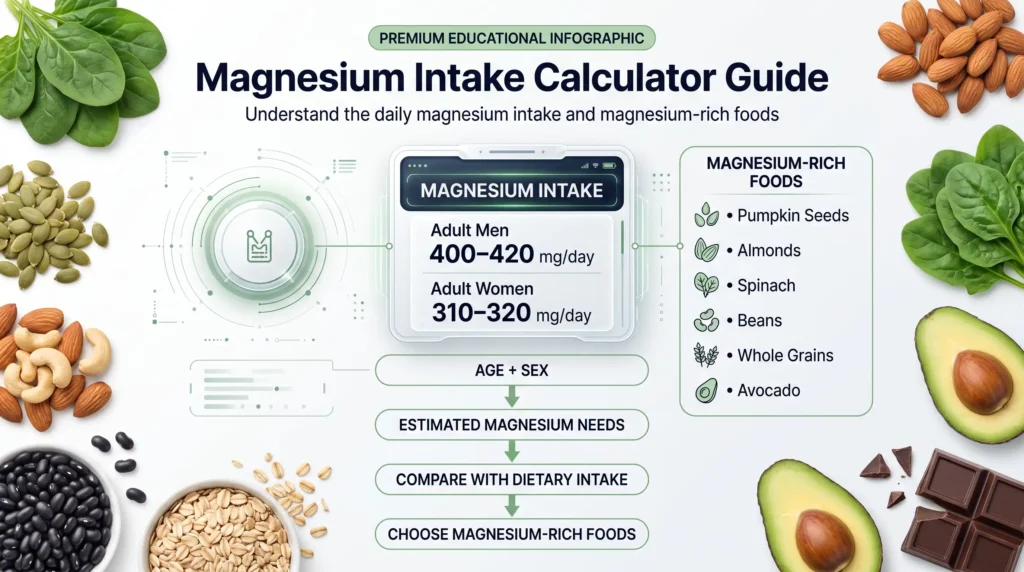
A Magnesium Intake Calculator can help you estimate your daily magnesium intake and compare it with general recommended intake levels.
Magnesium is an essential mineral involved in many processes in the body, including normal muscle and nerve function, energy metabolism, and bone health.
This guide explains how magnesium intake is estimated, which foods provide magnesium, how daily needs can vary, and what to consider when using magnesium supplements.
What Is a Magnesium Intake Calculator?
A Magnesium Intake Calculator is a nutrition tool designed to estimate how much magnesium a person may need or consume each day.
Depending on the calculator, the estimate may consider factors such as age, sex, and other information relevant to daily nutrient requirements.
The result can provide a useful starting point for understanding magnesium intake and identifying whether your diet provides foods that are naturally rich in this mineral.
Why Is Magnesium Important?
Magnesium is an essential mineral that the body needs for normal physiological functions.
It is involved in hundreds of enzyme reactions and contributes to normal muscle and nerve function, energy production, and other biological processes.
Magnesium also plays an important role in maintaining normal bones and supporting normal electrolyte balance.
Magnesium is associated with several important functions, including:
- Normal muscle function.
- Normal nerve function.
- Energy metabolism.
- Normal bone health.
- Normal electrolyte balance.
- Normal protein synthesis.
How Much Magnesium Do You Need?
Magnesium requirements vary depending on age and sex, and needs can also change during certain life stages.
For adults, general recommended dietary allowance values are commonly around 310–320 mg per day for adult women and 400–420 mg per day for adult men, depending on age.
Pregnancy can increase magnesium requirements, while breastfeeding recommendations can differ depending on age.
Because nutritional recommendations can vary by country and population, use the result of a magnesium calculator as a general nutritional estimate rather than a personalized medical prescription.
Magnesium Intake by Age and Sex
Magnesium needs are not identical for everyone. Age and sex are important factors used in dietary reference values.
| Life Stage | General Daily Magnesium Intake |
|---|---|
| Adult Men | Approximately 400–420 mg/day |
| Adult Women | Approximately 310–320 mg/day |
| Pregnancy | Requirements may be higher depending on age |
| Breastfeeding | Requirements vary by age |
These values are general reference ranges and should not be interpreted as individual medical recommendations.
How Does a Magnesium Intake Calculator Work?
A magnesium calculator typically uses nutritional reference information to estimate a person’s daily magnesium requirement.
Basic calculators may ask for age and sex. More advanced nutrition tools may incorporate additional dietary information.
Typical calculation process:
Enter your personal information → estimate daily magnesium needs → compare your intake with the recommended range.
The calculator does not diagnose magnesium deficiency. A person’s actual magnesium status can depend on many factors beyond a simple dietary calculation.
Foods High in Magnesium
One of the easiest ways to increase magnesium intake is to include magnesium-rich foods in a balanced diet.
| Food Group | Examples |
|---|---|
| Nuts and Seeds | Almonds, cashews, pumpkin seeds, chia seeds |
| Legumes | Beans, lentils, chickpeas |
| Whole Grains | Oats, whole wheat, brown rice |
| Leafy Greens | Spinach and other dark green vegetables |
| Other Foods | Avocado, some fish, and dark chocolate |
Magnesium From Food vs. Supplements
Magnesium can be obtained from both food and dietary supplements.
For many people, a varied diet can provide a substantial amount of the magnesium they need.
Supplements may be useful in specific circumstances, but they should not automatically be added simply because a calculator produces a particular daily target.
Consider magnesium-rich foods as part of your regular diet before relying on supplements. If you are considering a magnesium supplement, check the product label and discuss it with a qualified healthcare professional when appropriate.
Common Magnesium-Rich Foods
Nuts and Seeds
Nuts and seeds can provide meaningful amounts of magnesium while also supplying other nutrients and healthy fats.
Beans and Legumes
Beans, lentils, and chickpeas can contribute magnesium along with plant-based protein and dietary fiber.
Whole Grains
Whole grains such as oats and brown rice can contribute to daily magnesium intake as part of a balanced diet.
Leafy Green Vegetables
Dark green vegetables are another useful source of magnesium and provide additional vitamins, minerals, and fiber.
Magnesium and a Balanced Diet
Magnesium is only one part of overall nutrition. Looking at one nutrient in isolation does not provide a complete picture of dietary quality.
A balanced eating pattern should include a variety of vegetables, fruits, whole grains, protein-rich foods, and appropriate sources of healthy fats.
You can use the Micronutrient Calculator to explore other vitamins and minerals that contribute to overall nutritional intake.
Magnesium and Electrolytes
Magnesium is one of several minerals involved in maintaining normal electrolyte balance.
Sodium and potassium are also important electrolytes, particularly when considering hydration and fluid balance.
If you want to explore electrolyte intake, the Water & Electrolyte Calculator can provide another useful nutritional reference.
The Sodium Intake Calculator can also help you explore daily sodium intake.
Magnesium and Exercise
People who exercise regularly may pay particular attention to magnesium because the mineral contributes to normal muscle and energy metabolism.
However, exercising does not automatically mean that everyone needs additional magnesium supplements.
A well-balanced diet remains an important foundation for meeting nutritional needs.
Your broader fitness nutrition plan can also be explored using the Calorie Calculator and Macro Calculator .
What Happens If Magnesium Intake Is Too Low?
Consistently inadequate magnesium intake can contribute to inadequate nutritional status.
Severe magnesium deficiency is uncommon in otherwise healthy people, but certain health conditions, medications, or other circumstances can affect magnesium status.
Symptoms associated with significant magnesium deficiency can include weakness, loss of appetite, nausea, or muscle and nervous system abnormalities.
Symptoms can have many different causes, so they should not be used alone to diagnose magnesium deficiency.
Can You Get Too Much Magnesium?
Magnesium naturally present in food is generally not a concern for healthy people because the kidneys help regulate magnesium balance.
However, high amounts of magnesium from dietary supplements or medications can cause problems, particularly when taken in excessive amounts.
One commonly reported effect of excessive supplemental magnesium is diarrhea and gastrointestinal discomfort.
The recommended intake of magnesium and the tolerable upper intake level for supplemental magnesium are not the same thing. The upper limit applies to magnesium from supplements and medications, not magnesium naturally present in food.
How to Improve Your Magnesium Intake
If your diet appears low in magnesium-rich foods, small dietary changes may help increase your intake.
- Add nuts or seeds to meals when appropriate.
- Include beans, lentils, or chickpeas.
- Choose whole grains more often.
- Add dark green vegetables to meals.
- Include a variety of nutrient-dense foods.
- Review your overall diet rather than focusing on one nutrient.
Magnesium Intake and Other Nutrients
Nutrients work together within the overall diet. For this reason, it can be useful to look at magnesium alongside other vitamins, minerals, and macronutrients.
For example, your total nutrition plan can be evaluated using the Nutrition Facts Calculator to better understand calories and nutrients in individual foods or meals.
If you are tracking fiber intake as part of your diet, the Fiber Intake Calculator can also provide a useful estimate.
How Accurate Is a Magnesium Intake Calculator?
A calculator can provide a useful estimate based on established dietary reference values and the information entered.
However, it cannot determine your actual magnesium status or diagnose a deficiency.
Individual nutritional needs can vary because of diet, health conditions, medications, life stage, and other factors.
For this reason, calculator results are best used as an educational starting point rather than a substitute for professional medical advice.
Frequently Asked Questions
What is a Magnesium Intake Calculator?
A Magnesium Intake Calculator is a nutrition tool that estimates daily magnesium requirements based on information such as age and sex and helps users understand general magnesium intake targets.
How much magnesium do adults need per day?
General recommended amounts for adults are approximately 400–420 mg per day for men and 310–320 mg per day for women, depending on age. Requirements can differ during pregnancy and breastfeeding.
What foods are high in magnesium?
Magnesium-rich foods include nuts, seeds, legumes, whole grains, dark leafy vegetables, and several other nutrient-dense foods.
Is magnesium better from food or supplements?
Food is an important source of magnesium and provides other nutrients as well. Supplements can be useful in certain situations, but they are not automatically necessary for everyone.
Can I take magnesium every day?
Whether daily magnesium supplementation is appropriate depends on the product, dose, diet, and individual circumstances. Follow the product label and seek professional advice when appropriate.
Can too much magnesium be harmful?
Excessive magnesium from supplements or medications can cause gastrointestinal effects such as diarrhea. Very high amounts can be more serious, particularly in people with impaired kidney function.
Does exercise increase magnesium needs?
Physical activity can influence nutrient requirements, but exercise alone does not mean that everyone needs magnesium supplements. Overall diet and individual circumstances are important.
Can a calculator diagnose magnesium deficiency?
No. A calculator estimates dietary requirements or intake. It cannot diagnose magnesium deficiency or determine an individual’s medical magnesium status.