
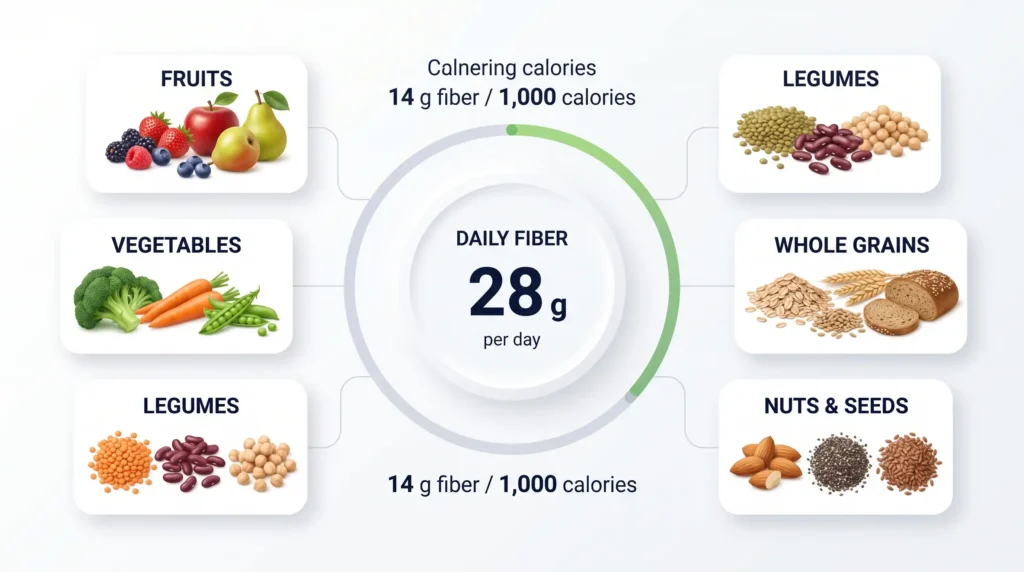
Fiber is an important part of a balanced diet, but many people do not get enough of it each day. Dietary fiber supports healthy digestion, helps promote fullness, and can be found naturally in foods such as fruits, vegetables, legumes, whole grains, nuts, and seeds.
A Fiber Intake Calculator can help you estimate how much dietary fiber you may need each day based on factors such as your age, sex, and calorie intake.
This guide explains what fiber is, how much fiber you may need, the different types of fiber, high-fiber foods, and practical ways to increase your daily intake.
What Is a Fiber Intake Calculator?
A Fiber Intake Calculator is a nutrition tool designed to estimate your recommended daily fiber intake. Instead of guessing how much fiber you need, the calculator provides a practical starting point based on your personal information.
Your fiber needs can vary depending on factors such as age, sex, overall calorie intake, and dietary habits.
You can use our Fiber Intake Calculator to get a personalized estimate of your daily fiber needs.
What Is Dietary Fiber?
Dietary fiber is a type of carbohydrate found mainly in plant-based foods. Unlike many other carbohydrates, fiber is not fully digested and absorbed in the same way.
Fiber passes through the digestive system and contributes to several important functions, including supporting normal bowel movements and helping maintain a healthy digestive environment.
Good sources of dietary fiber include vegetables, fruits, beans, lentils, whole grains, nuts, and seeds.
How Much Fiber Do You Need Per Day?
Fiber requirements vary between individuals. A commonly used general guideline for adults is to consume around 14 grams of fiber per 1,000 calories consumed.
If someone consumes 2,000 calories per day:
2,000 ÷ 1,000 × 14 = approximately 28 grams of fiber per day
This is a general guideline rather than a personalized medical recommendation. Individual needs can vary.
Recommended Fiber Intake by Age and Sex
General fiber recommendations can also vary according to age and sex. The following table provides commonly used daily targets for adults.
| Group | Approximate Daily Fiber |
|---|---|
| Adult men | About 31–34 g |
| Adult women | About 22–28 g |
| Older adults | Needs may vary with age and calorie intake |
These values are general reference points. Your personal fiber target may be different depending on your diet, calorie intake, age, and individual circumstances.
Why Is Fiber Important?
Eating enough fiber is an important part of a balanced diet. Fiber can support normal digestion and may also help you feel satisfied after meals.
Supports Digestive Health
Fiber adds bulk to stool and can help support regular bowel movements. Adequate fluid intake is also important when increasing dietary fiber.
Helps With Fullness
High-fiber foods can be more filling than many low-fiber foods. Including fiber-rich foods in meals may therefore make it easier to feel satisfied.
Supports a Balanced Diet
Many foods naturally rich in fiber also provide vitamins, minerals, antioxidants, and other useful nutrients.
Soluble vs Insoluble Fiber
Dietary fiber is often discussed in two broad categories: soluble fiber and insoluble fiber.
Soluble Fiber
Soluble fiber dissolves in water and can form a gel-like substance during digestion. It is found in foods such as oats, beans, lentils, apples, citrus fruits, and some seeds.
Insoluble Fiber
Insoluble fiber does not dissolve in water and contributes to stool bulk. Sources include many vegetables, whole grains, nuts, and seeds.
Most high-fiber foods contain a combination of different types of fiber, so eating a variety of plant foods is a practical way to increase fiber intake.
Best High-Fiber Foods
One of the easiest ways to increase your fiber intake is to include more naturally fiber-rich foods in your meals.
| Food Group | Examples |
|---|---|
| Legumes | Beans, lentils, chickpeas, peas |
| Fruits | Raspberries, pears, apples, oranges |
| Vegetables | Broccoli, carrots, Brussels sprouts, peas |
| Whole grains | Oats, whole-grain bread, barley, brown rice |
| Nuts and seeds | Almonds, chia seeds, flaxseeds, sunflower seeds |
Fiber-Rich Foods for Breakfast
Breakfast can be an easy opportunity to add more fiber to your diet. Oatmeal topped with fruit and seeds, whole-grain toast, or a fiber-rich yogurt bowl can provide a combination of nutrients.
For example, adding berries, chia seeds, or ground flaxseed to oatmeal can increase the fiber content of the meal.
Fiber-Rich Foods for Lunch and Dinner
Lunch and dinner can include fiber through vegetables, legumes, whole grains, and fruits.
- Add beans or lentils to soups and salads.
- Choose whole grains more often.
- Include vegetables with main meals.
- Eat whole fruits instead of relying only on fruit juice.
- Add nuts or seeds to suitable meals.
Fiber and Weight Loss
Fiber can be useful as part of a weight-management diet because many high-fiber foods are filling and can contribute to satisfying meals.
However, fiber itself does not automatically cause weight loss. Overall calorie intake, food choices, physical activity, sleep, and other lifestyle factors all contribute to weight management.
If your goal is weight loss, you can also use our Calorie Deficit Calculator to estimate a calorie deficit.
Fiber and Daily Calorie Intake
A useful way to estimate fiber requirements is to consider your overall calorie intake. The general guideline of approximately 14 grams per 1,000 calories provides a simple reference point.
For example, someone consuming more calories may have a higher total fiber target than someone consuming fewer calories.
If you want to estimate your overall calorie requirements first, use our Calorie Calculator .
How to Increase Fiber Intake Safely
If your current diet is low in fiber, increasing it gradually is usually more practical than making a large change overnight.
- Add one extra serving of vegetables to your meals.
- Choose whole fruits more often.
- Replace some refined grains with whole grains.
- Add beans, chickpeas, or lentils to meals.
- Include nuts and seeds where appropriate.
- Increase fiber gradually rather than suddenly.
- Drink enough fluids as you increase your fiber intake.
You do not need to get all your fiber from one food. Combining fruits, vegetables, legumes, whole grains, nuts, and seeds makes it easier to build a varied and fiber-rich diet.
Can You Eat Too Much Fiber?
More fiber is not always better. A sudden and very large increase in fiber intake can cause digestive discomfort in some people.
Common symptoms after rapidly increasing fiber can include bloating, gas, abdominal discomfort, or changes in bowel habits.
This is one reason gradual increases are generally more comfortable for many people.
Fiber and Hydration
Hydration becomes especially important when increasing dietary fiber. Fiber and fluids work together to support normal bowel function.
Rather than focusing only on a specific number of glasses per day, pay attention to thirst, activity, climate, and your overall dietary intake.
You can also estimate your general daily water needs with our Water Intake Calculator .
Fiber From Food vs Fiber Supplements
Whole foods are generally a useful first choice because they provide fiber together with other nutrients.
Fiber supplements can be useful in some situations, but they should not automatically replace a varied diet.
If you are considering a fiber supplement because of a digestive problem or a specific health concern, it is best to discuss the appropriate option with a healthcare professional.
How to Use a Fiber Intake Calculator
Using a Fiber Intake Calculator is simple. Enter the information requested by the calculator and review the estimated daily fiber target.
- Enter your age.
- Select your sex if requested.
- Enter your calorie intake when required.
- Calculate your estimated daily fiber requirement.
- Compare the result with your current dietary intake.
Remember that the result is an estimate and should be viewed as a practical nutrition guideline rather than an exact requirement.
How to Know If You Are Getting Enough Fiber
The most reliable approach is to look at your overall diet rather than relying on a single meal.
If your meals regularly contain vegetables, fruits, legumes, whole grains, nuts, and seeds, you may already be getting a substantial amount of dietary fiber.
Reading nutrition labels can also help you understand how much fiber is present in packaged foods.
Fiber and a Balanced Diet
Fiber is only one part of good nutrition. A balanced diet should also provide adequate protein, carbohydrates, fats, vitamins, minerals, and fluids.
If you are tracking your overall nutrition, our Macro Calculator can help estimate your daily protein, carbohydrate, and fat targets.
For a more specific protein target, you can also use our Protein Calculator .
Frequently Asked Questions About Fiber Intake
How much fiber should I eat per day?
Fiber needs vary between individuals. A commonly used general guideline is approximately 14 grams of fiber per 1,000 calories consumed.
What foods are highest in fiber?
Some excellent sources include beans, lentils, chickpeas, berries, pears, vegetables, oats, whole grains, nuts, and seeds.
Can fiber help with weight loss?
Fiber-rich foods can help increase fullness and may support a calorie-controlled diet, but weight loss ultimately depends on overall energy balance and other lifestyle factors.
Is too much fiber bad?
A very large or sudden increase in fiber can cause digestive discomfort for some people. Increasing fiber gradually can make the transition easier.
Should I increase fiber quickly?
It is generally better to increase fiber gradually, especially if your current intake is low.
Does fiber help digestion?
Dietary fiber supports normal bowel function and contributes to digestive health. Different types of fiber can have different effects in the digestive system.
Do I need a fiber supplement?
Not necessarily. Many people can obtain fiber through a varied diet containing vegetables, fruits, legumes, whole grains, nuts, and seeds. Supplementation may be appropriate in some circumstances and should be discussed with a healthcare professional when necessary.
How can I calculate my daily fiber intake?
You can use a Fiber Intake Calculator to estimate your daily target and then compare it with the amount of fiber you get from your food.