
Omega-3 fatty acids are important fats that play a role in overall nutrition and are commonly found in fish, seafood, plant foods, and certain dietary supplements.
An Omega-3 Intake Calculator can help you estimate your daily omega-3 intake and understand how much omega-3 you may be getting from your diet.
This guide explains the main types of omega-3 fatty acids, common food sources, EPA and DHA, ALA, daily intake considerations, and practical ways to include omega-3-rich foods in a balanced diet.
What Is an Omega-3 Intake Calculator?
An Omega-3 Intake Calculator is a nutrition tool designed to estimate your omega-3 intake based on information about your diet, food choices, or other inputs requested by the calculator.
Omega-3 is not a single fatty acid. It refers to a family of polyunsaturated fatty acids, including ALA, EPA, and DHA. Understanding these different types is important when evaluating omega-3 intake.
You can use our Omega-3 Intake Calculator to estimate your intake and use the result as a general nutrition reference.
What Are Omega-3 Fatty Acids?
Omega-3 fatty acids are polyunsaturated fats found in a variety of foods. They are considered essential components of a healthy diet, and some omega-3 fatty acids must be obtained through food.
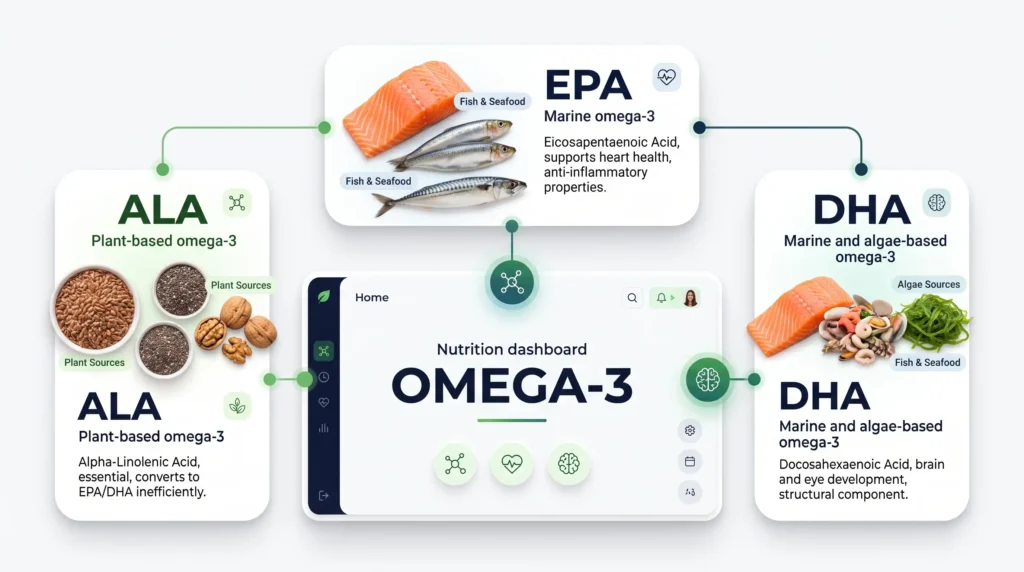
The three commonly discussed omega-3 fatty acids are ALA, EPA, and DHA.
ALA
Alpha-linolenic acid, or ALA, is an omega-3 fatty acid found mainly in plant foods. Common sources include flaxseeds, chia seeds, walnuts, and some plant oils.
EPA
Eicosapentaenoic acid, or EPA, is commonly found in fatty fish and seafood. It is also available in some fish oil and algae-based supplements.
DHA
Docosahexaenoic acid, or DHA, is another long-chain omega-3 fatty acid commonly found in fatty fish and seafood. Algae is also a source of DHA and is used in some plant-based supplements.
Why Is Omega-3 Important?
Omega-3 fatty acids are part of normal cell structures and play important roles in several processes throughout the body.
Omega-3-rich foods can also contribute to a balanced dietary fat intake when they replace less nutritious food choices.
Supports Normal Body Functions
Fatty acids are important components of cell membranes and are involved in many normal physiological processes.
Part of a Heart-Healthy Eating Pattern
Eating patterns that include fish, seafood, nuts, seeds, vegetables, fruits, and whole grains can contribute to an overall balanced diet.
Important for the Brain and Eyes
DHA is an important structural component of tissues including the brain and retina. Getting adequate essential nutrients through a balanced diet is therefore an important part of overall nutrition.
Best Food Sources of Omega-3
Omega-3 fatty acids can be obtained from both animal and plant foods. The type and amount of omega-3 varies considerably between foods.
| Food | Main Omega-3 Type |
|---|---|
| Salmon | EPA and DHA |
| Sardines | EPA and DHA |
| Mackerel | EPA and DHA |
| Herring | EPA and DHA |
| Flaxseeds | ALA |
| Chia seeds | ALA |
| Walnuts | ALA |
Omega-3 From Fish and Seafood
Fatty fish are among the richest natural food sources of EPA and DHA. Examples include salmon, sardines, mackerel, herring, and trout.
Including fish as part of a balanced eating pattern can therefore be an effective way to obtain long-chain omega-3 fatty acids.
When choosing seafood, variety is useful, and food safety guidance should also be considered, particularly for pregnant people and children.
Plant-Based Sources of Omega-3
People following vegetarian or vegan diets can obtain ALA from plant foods such as flaxseeds, chia seeds, walnuts, and certain vegetable oils.
The body can convert ALA into EPA and DHA, but this conversion is limited. Therefore, people who do not consume seafood may choose foods fortified with DHA or EPA or consider an algae-based source when appropriate.
How Much Omega-3 Do You Need?
Omega-3 recommendations depend on the specific fatty acid being discussed. ALA has established dietary reference recommendations for adults, while there is not one universal daily target for EPA and DHA that applies to everyone.
Omega-3 intake should not be reduced to a single number because ALA, EPA, and DHA are different fatty acids with different food sources and roles in nutrition.
For this reason, an Omega-3 Intake Calculator should be viewed as a practical estimation tool rather than a medical prescription.
ALA Daily Intake
ALA is an essential omega-3 fatty acid, meaning the body cannot produce enough of it on its own and it needs to come from the diet.
General adequate-intake values for ALA are commonly expressed in grams per day and differ by age and sex.
| Group | General ALA Reference |
|---|---|
| Adult men | About 1.6 g/day |
| Adult women | About 1.1 g/day |
These values are general dietary reference points and individual needs can vary.
EPA and DHA Intake
EPA and DHA are mainly obtained from fatty fish, seafood, algae, and certain supplements.
Rather than focusing only on a supplement dose, it is useful to consider your overall diet and how frequently you consume foods that provide EPA and DHA.
People with specific medical conditions or particular nutritional requirements should discuss EPA and DHA supplementation with a healthcare professional.
Omega-3 and Healthy Fats
Omega-3 fatty acids are part of the dietary fat category. Fat is an essential macronutrient and provides energy while also helping the body absorb fat-soluble vitamins.
A balanced diet should include a variety of healthy fat sources, including fish, nuts, seeds, olive oil, and other nutrient-rich foods.
If you are tracking your overall macronutrient intake, our Macro Calculator can help you estimate your daily protein, carbohydrate, and fat targets.
Omega-3 and Calories
Like all dietary fats, omega-3 fatty acids provide calories. However, the nutritional value of a food cannot be determined by calories alone.
Foods such as fatty fish, nuts, and seeds provide fats together with other nutrients, making them useful components of a varied diet.
To estimate your overall daily energy requirements, you can use our Calorie Calculator .
Omega-3 for Weight Management
Omega-3 is not a weight-loss supplement by itself. However, omega-3-rich foods can fit into a balanced diet designed for healthy weight management.
For weight management, the overall quality of your diet and total calorie intake are more important than focusing on one individual nutrient.
If your goal is to manage calorie intake, our Calorie Deficit Calculator can help you estimate a calorie target for a deficit.
Omega-3 Supplements
Omega-3 supplements are available in several forms, including fish oil, krill oil, and algae-based products.
Supplements can provide EPA and DHA, depending on the product. However, supplementation is not automatically necessary for everyone.
Food-first nutrition is often a practical approach, while supplements may be considered when dietary intake is insufficient or when recommended by a healthcare professional.
Fish Oil vs Algae Oil
Fish Oil
Fish oil commonly provides EPA and DHA. It is widely available as a dietary supplement.
Algae Oil
Algae oil is a plant-based source of omega-3 and can provide DHA, with some products also providing EPA. It is often used by people who avoid fish and other animal products.
The actual omega-3 content can vary between products, so checking the supplement label is important.
How to Increase Omega-3 Intake Naturally
You can increase your omega-3 intake through simple dietary changes.
- Include fatty fish such as salmon or sardines in your meals.
- Add chia seeds or ground flaxseeds to suitable meals.
- Include walnuts as part of a balanced diet.
- Choose a variety of seafood and plant foods.
- Check food labels when using fortified products.
Instead of trying to get omega-3 from a single food, build variety into your diet. Combining seafood or plant-based ALA sources with other nutrient-rich foods can make your overall diet more balanced.
How to Use an Omega-3 Intake Calculator
Using an Omega-3 Intake Calculator is straightforward. Enter the information requested by the calculator and review the estimated intake or target.
- Enter your relevant personal information.
- Select or enter your dietary intake when requested.
- Calculate your estimated omega-3 intake.
- Review the result and identify potential dietary gaps.
- Use the information as a general nutrition reference.
If your calculator provides separate values for ALA, EPA, or DHA, review each one individually because they are different omega-3 fatty acids.
How to Read an Omega-3 Supplement Label
When comparing omega-3 supplements, do not look only at the total amount of fish oil or oil in the capsule.
Check the label for the actual amounts of EPA and DHA. These values provide more useful information about the long-chain omega-3 content of the product.
Also check serving size, ingredients, expiration date, and storage instructions.
Can You Get Enough Omega-3 From Food?
Many people can obtain omega-3 fatty acids through a varied diet. Fatty fish can provide EPA and DHA, while plant foods such as flaxseeds, chia seeds, and walnuts provide ALA.
Whether supplementation is useful depends on individual dietary patterns and nutritional needs.
Frequently Asked Questions About Omega-3 Intake
How much omega-3 should I take per day?
There is no single daily amount that applies to every type of omega-3. ALA has established dietary reference values, while EPA and DHA recommendations can depend on individual circumstances and dietary patterns.
What foods are highest in omega-3?
Fatty fish such as salmon, sardines, mackerel, and herring are rich sources of EPA and DHA. Flaxseeds, chia seeds, and walnuts are good plant sources of ALA.
What is the difference between ALA, EPA, and DHA?
ALA is primarily found in plant foods, while EPA and DHA are commonly found in fatty fish, seafood, and algae-based products.
Is omega-3 good for a healthy diet?
Omega-3 fatty acids are important components of a balanced diet and are found in many nutrient-rich foods.
Can I get omega-3 without eating fish?
Yes. Plant foods such as chia seeds, flaxseeds, and walnuts provide ALA. Algae-based products can also provide DHA and, depending on the product, EPA.
Is fish oil the same as omega-3?
Fish oil is a source of omega-3 fatty acids, particularly EPA and DHA, but the exact amount depends on the product.
Should I take an omega-3 supplement?
Not everyone needs an omega-3 supplement. Dietary intake, food preferences, and individual health needs should be considered before using supplementation.
Can omega-3 help with weight loss?
Omega-3 should not be considered a weight-loss treatment. It can be included as part of a balanced diet, while weight management depends primarily on overall energy balance and lifestyle factors.