
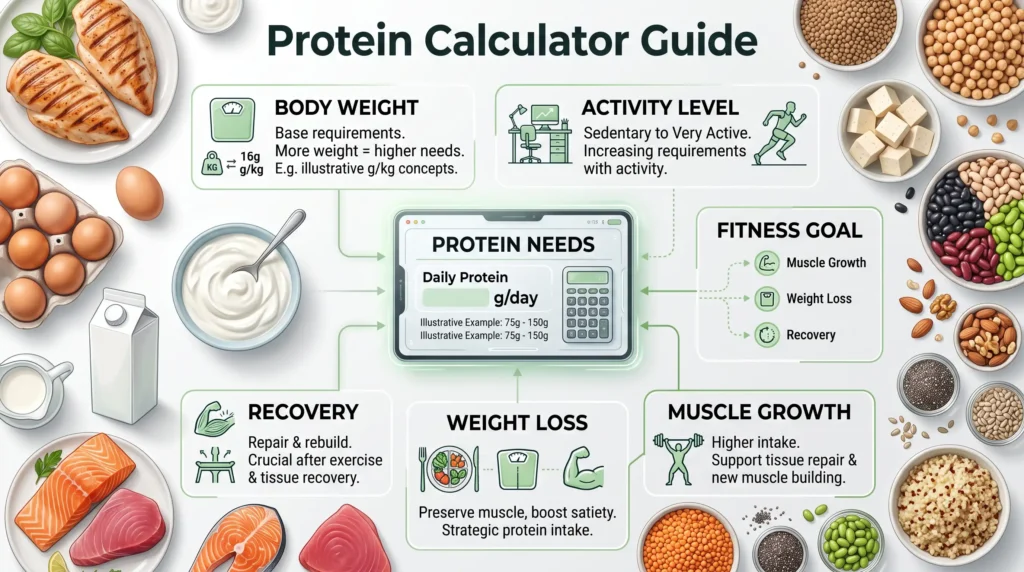
Protein is one of the three main macronutrients and plays an important role in maintaining muscle, supporting tissue repair, producing enzymes and hormones, and many other functions in the body.
A Protein Calculator can help estimate how much protein you may need each day based on factors such as body weight, activity level, fitness goals, and other personal information.
This guide explains how protein needs are estimated, how much protein different people may need, the best sources of protein, protein timing, and how to use a protein calculator as part of a balanced nutrition plan.
What Is a Protein Calculator?
A Protein Calculator is a nutrition tool that estimates your daily protein requirements using information about your body and lifestyle.
Depending on the calculator, you may enter your weight, age, sex, activity level, and fitness goal. The calculator then provides an estimated daily protein target.
You can use the Protein Calculator to estimate your daily protein needs and create a more structured nutrition plan.
Why Is Protein Important?
Protein is made up of amino acids, which the body uses to build and maintain tissues and perform many biological processes.
Protein is particularly important for maintaining and building muscle, especially when combined with resistance training and adequate overall nutrition.
- Supports muscle maintenance and growth.
- Helps repair and maintain body tissues.
- Contributes to enzymes and hormones.
- Supports normal immune function.
- Helps maintain many important body structures.
How Much Protein Do You Need Per Day?
Protein requirements vary from person to person. A single protein target does not work equally well for everyone.
Factors such as body weight, age, activity level, training volume, fitness goals, and overall health can influence protein needs.
For healthy adults, a commonly used baseline reference is around 0.8 grams of protein per kilogram of body weight per day. People who exercise regularly or have specific fitness goals may require more.
Example: A person weighing 70 kg using a 0.8 g/kg reference would consume approximately 56 g of protein per day.
This is a general reference and does not represent an ideal target for every person.
Protein Needs for Active People
People who exercise regularly may benefit from a higher protein intake than the basic minimum needed to prevent deficiency.
Athletes, resistance-training participants, and people working toward muscle growth often use protein targets based on body weight and training goals.
The appropriate amount depends on the individual and the overall diet rather than exercise alone.
Protein for Muscle Growth
Protein provides the amino acids needed to support muscle protein synthesis and recovery after training.
However, eating more protein by itself does not guarantee muscle growth. Resistance training, sufficient calories, recovery, sleep, and progressive overload also matter.
If your goal is building muscle, you can combine the Protein Calculator with the Calorie Calculator to consider both protein and total energy intake.
Protein for Weight Loss
Protein can also be useful when trying to lose weight. Higher-protein diets can help support muscle retention during a calorie deficit and may contribute to feelings of fullness.
Protein should still be considered as part of your overall calorie and nutrition plan.
If you are planning a calorie deficit, explore the Calorie Deficit Calculator to understand how calorie intake relates to your weight-management goal.
Protein and Body Weight
Body weight is commonly used to estimate protein requirements because protein needs are related in part to the amount of body tissue that needs to be maintained.
For some people, especially those with higher levels of body fat, using total body weight may not always be the most appropriate method for setting a protein target.
This is one reason why different protein calculators may produce different recommendations.
Protein and Exercise Level
Your activity level can influence how much protein you may need. Someone who is sedentary generally has different protein needs from someone performing frequent resistance training or endurance exercise.
| Activity Level | General Protein Consideration |
|---|---|
| Sedentary | Basic protein needs may be sufficient for many healthy adults. |
| Recreational Exercise | Protein needs may increase with regular training. |
| Resistance Training | Higher protein intake is commonly used to support muscle recovery and development. |
| Endurance Training | Adequate protein supports recovery alongside sufficient carbohydrate and energy intake. |
Best Sources of Protein
Protein can come from both animal and plant-based foods. Including a variety of protein sources can help create a balanced diet.
Animal Protein Sources
- Chicken and turkey.
- Fish and seafood.
- Eggs.
- Greek yogurt.
- Cottage cheese.
- Lean meat.
- Milk and dairy products.
Plant Protein Sources
- Lentils.
- Chickpeas.
- Beans.
- Tofu and soy products.
- Nuts and seeds.
- Quinoa.
- Peas.
Complete and Incomplete Proteins
Protein quality is influenced by the amino acids contained in a food. Some foods provide all nine essential amino acids in adequate proportions and are commonly described as complete protein sources.
Many animal-based proteins are complete proteins. Some plant foods, such as soy and quinoa, can also provide complete protein.
A varied plant-based diet can provide all essential amino acids by including different protein-rich foods throughout the day.
How to Use a Protein Calculator
Using a Protein Calculator is generally simple. The exact inputs depend on the tool, but many calculators ask for several basic details.
- Enter your age.
- Enter your sex when required.
- Enter your body weight.
- Select your activity level.
- Select your fitness or nutrition goal.
- Review your estimated daily protein target.
For the most useful result, enter current and accurate information. Your protein target can also be adjusted over time as your weight, training, and goals change.
Should You Spread Protein Throughout the Day?
Protein distribution can be useful for people who are trying to optimize muscle recovery and maintain a consistent intake.
Instead of consuming most of your protein in one meal, you can distribute protein-containing foods across breakfast, lunch, dinner, and snacks.
Focus first on reaching an appropriate total daily protein intake. Then consider distributing protein across several meals if that fits your routine.
Protein Before or After a Workout?
Protein can be consumed before or after exercise. The overall daily protein intake is generally more important than focusing on one specific meal immediately after training.
A protein-rich meal or snack around your workout can be a convenient way to support your daily intake and recovery.
Protein Powder: Is It Necessary?
Protein powder is not required to meet protein needs. Many people can get sufficient protein from ordinary foods.
Protein powder can nevertheless be convenient when it is difficult to consume enough protein through regular meals.
Whey, casein, soy, pea, and other protein powders can provide convenient sources of protein, depending on dietary preferences and tolerance.
Think of protein powder as a convenience food, not a requirement.
A balanced diet can provide protein from a wide variety of whole-food sources.
Protein and Calories
Protein provides approximately 4 calories per gram.
Because protein contributes to total energy intake, it should be considered together with carbohydrates and dietary fat when planning your overall nutrition.
Our Macro Calculator can help you estimate protein, carbohydrate, and fat targets together.
Protein, Carbohydrates, and Fat
A healthy nutrition plan usually includes all three major macronutrients: protein, carbohydrates, and fat.
- Protein: supports tissue maintenance and muscle-related functions.
- Carbohydrates: provide an important source of energy, particularly during many forms of exercise.
- Fat: supports energy needs, cell structures, hormones, and absorption of fat-soluble vitamins.
The ideal balance depends on your individual needs, preferences, activity level, and goals.
Common Protein Intake Mistakes
Eating Too Little Protein
People who exercise regularly may underestimate how much protein they consume. Tracking your intake for several days can reveal whether your meals provide enough protein.
Focusing Only on Protein
Protein is important, but it is only one part of a balanced diet. Vitamins, minerals, fiber, healthy fats, carbohydrates, and adequate calories also matter.
Ignoring Total Calories
Your calorie intake can influence your body-weight and fitness results even when protein intake is adequate.
Relying Only on Supplements
Protein supplements can be convenient, but whole foods also provide vitamins, minerals, fats, carbohydrates, and other nutrients.
Protein and Recovery
Exercise creates a need for recovery, particularly after demanding resistance or endurance training.
Adequate protein provides amino acids that help support tissue repair and muscle recovery.
Recovery also depends on sleep, hydration, sufficient calories, and appropriate training volume.
For hydration planning, you can also explore the Water & Electrolyte Calculator .
How Much Protein Should You Eat Per Meal?
There is no single meal-by-meal protein amount that works for everyone. Your total daily target is the most important starting point.
Once you know your daily protein goal, you can divide it across several meals based on your schedule and appetite.
For example, someone with a daily target of 120 grams could spread that amount across three meals and one snack instead of consuming nearly all of it at dinner.
Protein for Different Fitness Goals
Muscle Building
People trying to gain muscle generally combine resistance training with sufficient protein and energy intake.
Weight Loss
During weight loss, adequate protein can help support lean tissue while you maintain a calorie deficit.
Maintenance
For people maintaining their current weight, protein helps support normal tissue maintenance and daily nutritional needs.
Endurance Training
Endurance athletes also need protein for recovery, while adequate carbohydrate intake can support training energy requirements.
Frequently Asked Questions
What is a Protein Calculator?
A Protein Calculator estimates your daily protein needs based on factors such as body weight, activity level, age, sex, and fitness goals.
How much protein do I need per day?
Protein needs vary between individuals. A commonly used baseline reference for healthy adults is about 0.8 grams per kilogram of body weight per day, while active people may require higher amounts.
Is protein important for muscle growth?
Yes. Protein supplies amino acids needed to support muscle protein synthesis. Resistance training, sufficient energy, and recovery are also important for muscle growth.
Can protein help with weight loss?
Adequate protein can support muscle retention during a calorie deficit and may help with fullness, but successful weight loss still depends on overall energy balance.
Is protein powder necessary?
No. Protein powder is optional. Many people can meet their protein needs through foods such as eggs, dairy, meat, fish, legumes, soy, nuts, and seeds.
Is it better to eat protein before or after exercise?
Both can fit into a healthy nutrition plan. Total daily protein intake is generally more important than focusing on one specific post-workout window.
Does body weight affect protein needs?
Yes. Body weight is commonly used as one of the main factors for estimating daily protein requirements.
Can I eat too much protein?
Extremely high protein intake is not necessary for most people. Individual circumstances matter, particularly for people with certain medical conditions. A healthcare professional can provide personalized guidance when needed.
How should I distribute protein throughout the day?
You can distribute your daily protein target across several meals and snacks according to your schedule, appetite, and nutrition goals.